
Best Practices
24 September 2026
Circular economy in machinery manufacturing: policy gaps and industrial results from an EU workshop
Best Practices
24 September 2026
Login / create an account to be able to react
-
8
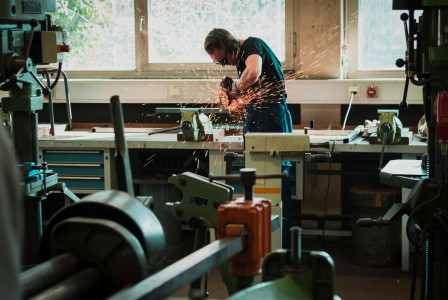
A June 2026 workshop hosted on the European Circular Economy Stakeholder Platform brought together the European Commission, researchers and manufacturers to examine why machinery, a sector responsible for around 5% of global greenhouse gas emissions through material use, remains an underexplored part of the circular economy agenda. The report combines the current EU policy landscape for machinery with concrete industrial cases showing the scale of material and emissions savings circular strategies can already deliver.
Editorial team
European Circular Stakeholder Platform
Topics
EU-27
Academic / Research and VET Institutions
Company with 250 or more employees
EU Institutions
Industry Associations and Chambers of Commerce
-
Advanced Manufacturing Organisation Types
-
-
Machine Tool Manufacturers
-
Other
-
-
Technology areas
-
-
Advanced materials
-
Data, Dynamic Data
-
Share
A Commission policy officer from DG GROW's Machinery, Equipment & AI unit confirmed that the incoming Machinery Regulation, applicable from 20 January 2027, remains focused on safety and free movement rather than circularity, meaning manufacturers currently have to track circular requirements through separate, only loosely aligned frameworks such as the WEEE Directive, the Ecodesign for Sustainable Products Regulation, the Critical Raw Materials Act and repairability rules, with two further initiatives in preparation, the Circular Economy Act and the European Product Act, expected to introduce clearer rules on secondary raw materials, digital product passports and requirements for reused, repaired or remanufactured products. Research presented at the workshop reviewed 86 life cycle assessment studies across 39 machinery technologies and found that manufacturing-stage impacts become significantly more important as machines are electrified and used less intensively, a pattern already familiar from electric vehicles, suggesting manufacturers of hybrid and electric tractors, excavators and similar equipment may need to prioritise lifetime extension and shared-use models over pure use-phase efficiency gains.
Three industrial cases gave concrete evidence of what circular strategies already deliver at scale. At Herrenknecht, which manufactures highly customised, multi-thousand-tonne tunnel boring machines, a buy-back and remanufacturing programme called REBUILD now rebuilds around 50,000 components a year at a dedicated facility near Strasbourg, cutting the carbon footprint of remanufactured components by more than 71% compared with newly produced ones, a figure verified through an independent greenhouse gas declaration. At Liebherr Components, remanufacturing hydraulic pumps, gearboxes and engines delivered 75-78% savings in primary material use and up to 53% reductions in embodied emissions, while Bosch's Feuerbach plant generated substantial cost and material savings simply by internally reusing around 1,500 industrial machines rather than replacing them, and ELWEMA Automotive cut around two tonnes of weight, and roughly 17% of emissions, from automotive assembly machinery by reducing steel wall thickness in machine beds and substituting steel with plastics in feeding systems. Across all cases, speakers stressed that scaling these approaches depends less on the technology itself than on solving trust and quality-assurance questions for remanufactured parts, resolving waste-classification rules that can treat returned components as waste and trigger cross-border legal barriers, and building the long-term supplier relationships and data systems that let components be tracked and returned in the first place.
#CircularEconomy #IndustrialSymbiosis
Documents
Comments (0)
Connected Partnership Opportunities
See also

What an EDIH actually delivers: an Irish hub's numbers for its first phase
- Categories
- Industrial Software & Technology Providers Machine Tool Manufacturers Other +16 more

How to submit content – Guide for EU Machinery and Advanced Manufacturing Ecosystem
- Categories
- Industrial Software & Technology Providers Machine Tool Manufacturers Other +16 more

How to register and get started – Guide for EU Machinery and Advanced Manufacturing Ecosystem
- Categories
- Industrial Software & Technology Providers Machine Tool Manufacturers Other +16 more