
Other actions
29 September 2026
Baltic Sea project tests wastewater treatment technologies for removing PFAS and micropollutants
Other actions
29 September 2026
Login / create an account to be able to react
-
<a href="/user/login?destination=/chemicals/other-actions/baltic-sea-project-tests-wastewater-treatment-technologies-removing-pfas%23comment-form">Log in</a> or <a href="/user/register?destination=/chemicals/other-actions/baltic-sea-project-tests-wastewater-treatment-technologies-removing-pfas%23comment-form">register</a> to post comments
-
6
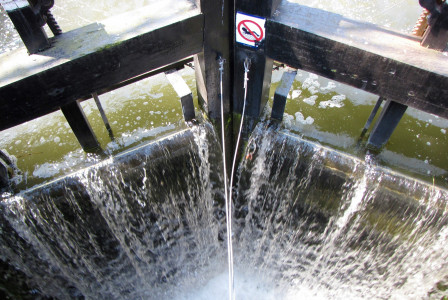
The Interreg-funded EMPEREST project, part of the HAZGONE platform, tested four wastewater treatment technologies, ozonation, granular activated carbon, ion exchange and nanofiltration, across seven treatment plants in the Baltic Sea Region, achieving removal rates of 89 to 100% for the micropollutants targeted under the EU's recast Urban Wastewater Treatment Directive. For companies and municipalities preparing for the quaternary treatment obligations that directive introduces, the project offers rare comparative, real-world performance data across multiple technology options.
Editorial team
EMPEREST consortium
Topics
Denmark
Estonia
Finland
Germany
Latvia
Lithuania
Norway
Poland
Sweden
Academic / Research and VET Institutions
Business Support Organisation
Local Authorities
National authorities
NGOs / Non-profits
-
Policy type
-
-
Green transition
-
Share
While removal rates for the broader group of micropollutants covered by the Directive were consistently strong, the project found results for PFAS compounds specifically to be more complex, reflecting the well-documented difficulty of removing these persistent substances through conventional water treatment, a challenge distinct from the mixture of pharmaceuticals and other organic micropollutants the same technologies handled more effectively. Beyond the technology piloting, the project produced two other outputs of practical relevance: a methodology for monitoring and assessing PFAS across the Baltic Sea and its catchment area, now feeding into the Baltic Sea Action Plan and OSPAR's parallel work on the North Sea, and a PFAS risk-assessment tool for local authorities, since adopted by cities in the region and now being extended through a follow-on project testing a municipal handbook in eleven municipalities across Sweden, Finland, Estonia and Latvia.
The project's own concluding message, that preventing pollution at source is more effective and cost-efficient than removing it afterwards even with advanced technology, echoes a position increasingly voiced across EU-level PFAS discussions, and the project explicitly calls for expanding the availability of PFAS-free products and for a general restriction on PFAS in industrial use, a policy position reflecting the project consortium's own advocacy rather than an EU institutional stance.
#PFAS #ChemicalSafety #GreenChemistry
Comments (0)
Connected Partnership Opportunities
See also
ZeroPM project concludes with conference on phasing out persistent chemicals
- Categories
Girls Go Circular empowers European schoolgirls in STEM
- Categories

Irish biopharma-chemicals association recognised for sector-wide sustainability strategy
- Categories