

Retail SMEs
15 January 2026
Local Retail, Global Trends: How Digital, Green and Skills Shifts in the EU are Reshaping SMEs in Towns and Cities
Retail SMEs
15 January 2026
Retail
Login / create an account to be able to react
-
128
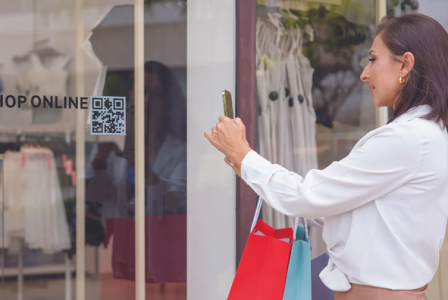
The Organisation for Economic Co-operation and Development (OECD) reports that retail and wholesale SMEs in the EU are undergoing significant structural changes driven by the twin digital and green transitions and rising competition from large firms and non-EU online platforms. Although production has increased in absolute terms, SMEs’ share of turnover, value added and employment has declined. Digital adoption is expanding but uneven, and while environmental performance has improved, data gaps make SME-specific tracking difficult. Support from EU and national policies is increasing, yet complex procedures and limited internal capacities continue to constrain many smaller firms.
Editorial team
Topics
EU-27
EU Institutions
-
Ecosystem
-
-
Retail
-
Share
According to the report, drawn by the OECD in the framework of a joint project with the European Commission, retail and wholesale SMEs in the EU are experiencing structural shifts linked to digitalisation, sustainability demands and market concentration. SMEs continue to account for half of turnover and more than half of value added and employment, yet their relative share has fallen over the last decade as larger firms have captured a growing portion of sector growth. Their output has increased in absolute terms, but productivity gaps remain persistent.
Digital adoption has expanded, especially in e-commerce, website use and social media. However, uptake of more advanced tools, such as cloud computing, AI and customer-relationship systems, remains uneven across countries and firm sizes. OECD analysis indicates that firms using web technologies tend to show stronger performance, although many micro and independent retailers still face barriers related to cost, skills and integration.
Environmental performance has improved, with notable declines in CO₂ and GHG emissions within retail activities. Progress varies across countries, and measurement gaps continue to limit the ability to assess SME-level developments.
The OECD also highlights ongoing labour and skills pressures. Employment growth has been minimal since 2015, and many SMEs rely on part-time and temporary contracts. Customer-facing roles are declining while digitally oriented back-end functions are increasing. The sector continues to employ a high share of women and young workers, but career progression remains limited for many.
Urban retail is changing as digital tools, hybrid work patterns and consumer expectations shift demand. Footfall in many city centres has become more volatile, while proximity-based retail and sustainability-related practices create opportunities for SMEs embedded in local areas. Demographic change adds further pressures, particularly in smaller towns facing stagnation or population decline.
The OECD notes that EU and national governments are responding with financial instruments, training initiatives and advisory support. However, access conditions, administrative complexity and capacity constraints continue to limit uptake among the smallest firms. More targeted, simple and coordinated support would help SMEs adapt to the digital and green transitions and strengthen their role in towns and cities.
Comments (0)
See also

Study on the twin transition of SME retailers
- Categories

Commission presents voluntary sustainability reporting standard to ease burden on SMEs
- Categories

Facing the future: Practical guide for fostering the revitalisation and modernisation of the small retail sector
- Categories