

Articles
27 April 2026
Advancing textile circularity in Europe: the case for system-level scale-up
Articles
27 April 2026
Login / create an account to be able to react
-
123
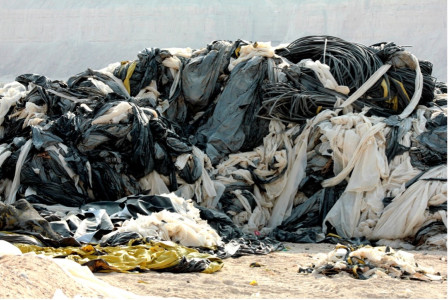
The report highlights the need for a systemic approach to scale textile circularity in Europe, with France positioned as a leading case study. Achieving meaningful impact requires coordinated action across the entire value chain, supported by policy, innovation, research and investment.
BCG
Topics
Albania
Armenia
Austria
Belgium
Bosnia and Herzegovina
Bulgaria
Croatia
Cyprus
Czechia
Denmark
Estonia
EU-27
Finland
France
Georgia
Germany
Greece
Hungary
Iceland
Ireland
Italy
Kosovo
Latvia
Liechtenstein
Lithuania
Luxembourg
Malta
Moldova
Montenegro
Netherlands
North Macedonia
Norway
Poland
Portugal
Romania
Serbia
Slovakia
Slovenia
Spain
Sweden
Switzerland
Türkiye
Ukraine
Other
Academic / Research and VET Institutions
Business Support Organisation
Company with 250 or more employees
Cluster Organisations
Consumer Organisations
Cultural and Heritage Organisations
Destination Management & Marketing Organisations
EU Institutions
Financial Institutions and Investors
Industry Associations and Chambers of Commerce
International Organisations
Local Authorities
Media / Journalist Organisations
National authorities
Networks and Federations / Confederations
NGOs / Non-profits
Notified Bodies
Regional Authorities
SMEs (a company with less than 250 employees)
Social Economy Entity
Trade Unions
Other
-
Transition Pathway's building blocks
-
-
Sustainable competitiveness
-
-
Industrial ecosystems
-
-
Textile
-
-
Textiles ecosystem areas
-
-
Fibres, yarns and fabrics
-
Apparel and clothing accessories
-
Household/interior textiles
-
Technical textiles
-
Leather and fur
-
Footwear
-
Research and Innovation
-
Technology and Machinery
-
Waste management, reuse and repair
-
Business support and Communication
-
Not area specific (interested in more than one of the above)
-
Share
The transition toward textile circularity in Europe requires a fundamental shift from fragmented initiatives to coordinated and system-level interventions capable of delivering measurable impact at scale. While numerous pilot projects and innovative solutions have emerged in recent years, their overall contribution remains limited without integration into a broader and cohesive framework.
France is identified as a leading case study, having developed a relatively advanced ecosystem supported by extended producer responsibility schemes, structured regulatory frameworks and active collaboration among stakeholders. This environment has enabled the development of collection, sorting and recycling systems that are more mature compared to other European markets. However, the report by BCG underlines that even in such favorable conditions, scaling circular solutions remains a complex and resource-intensive challenge.
Among the key barriers highlighted are the insufficient capacity and uneven quality of collection and sorting infrastructure, as well as technological and economic limitations in textile-to-textile recycling. In particular, the cost competitiveness of recycled fibers compared to virgin materials remains a critical issue, hindering wider market adoption.
To overcome these challenges, the report calls for stronger alignment of incentives across the value chain, including regulatory measures, financial support mechanisms and industry commitments. Investments in innovation and infrastructure are essential, alongside the development of stable and scalable end-markets for secondary raw materials.
The report also emphasises the importance of integrating circularity principles at the design stage, promoting durability, recyclability and material efficiency. In parallel, digital solutions such as traceability systems and product passports are identified as key enablers of transparency and circular flows. Consumer engagement is another critical dimension, as behavioural change is necessary to support reuse, repair, and recycling practices.
Ultimately, advancing textile circularity in Europe is not solely a technological or operational challenge, but a systemic transformation requiring coordinated action among policymakers, industry players and consumers. A system-level scale-up approach is therefore essential to unlock both environmental benefits and long-term economic opportunities.
Comments (0)
Connected Partnership Opportunities
See also
Introducing the ‘Themed Discussion Days’ on the EU Textiles Ecosystem Platform
- Categories
- Infrastructure Investments and funding R&I, techniques and technological solutions +26 more

Space Technologies as Enablers of Sustainable Fashion
- Categories
- R&I, techniques and technological solutions Skills Sustainable competitiveness +13 more
ECOSYSTEX Insight Series #22 highlighted skills for the textile ecosystem’s transition
- Categories
- R&I, techniques and technological solutions Skills Social dimension +13 more