

Articles
05 May 2026
The future of the fashion system in Emilia-Romagna Region (Italy). Environmental sustainability, circularity and transparency: implications for companies and supply chains
Articles
05 May 2026
Login / create an account to be able to react
-
84
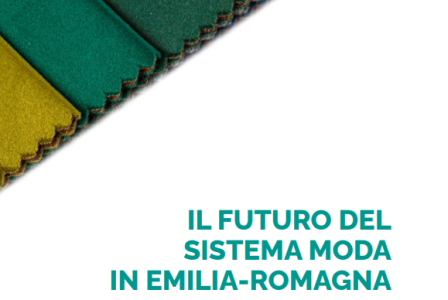
This research is coordinated by the Department for Sustainability of ENEA - the Italian National Agency for New Technologies, Energy and Sustainable Economic Development, in collaboration with the Department of Management of Bologna University, with the support of the Directorate-General for Knowledge, Research, Labour and Enterprises of the Emilia-Romagna Region.
Started in June 2024 with the publication of the Ecodesign for Sustainable Products Regulation - ESPR, this study aims to investigate fashion companies’ perceptions of the measures introduced by the regulation and possible transformation scenarios for production systems, currently largely outsourced, and supply chains, distributed across highly fragmented global networks.
ENEA
University of Bologna
Topics
Italy
Academic / Research and VET Institutions
-
Transition Pathway's building blocks
-
-
Ecosystem's readiness to support EU strategic autonomy and defence efforts
-
Skills
-
Sustainable competitiveness
-
-
Industrial ecosystems
-
-
Textile
-
-
Textiles ecosystem areas
-
-
Fibres, yarns and fabrics
-
Apparel and clothing accessories
-
Leather and fur
-
Footwear
-
Share
The potential of ESPR to act as a catalyst for systemic transformation of production systems and supply chains in the fashion industry
The study investigates the configuration of fashion organisations in the Emilia-Romagna region with the aim of analysing perceptions and implications of ecodesign policy on design practices, manufacturing processes, and supply chains. In particular, n. 19 leading companies with n. 35 brands have been engaged through a three-step research process, including the administration of a survey, the conduct of semi-structured interviews, and the participation in a focus group. Informants were mainly sustainability, supply chain and quality assurance managers working in different market segments (from luxury to fast-fashion) and product categories (from yarns and textiles to apparel and footwear).
Results reveal a highly heterogeneous degree of readiness: while high-end companies demonstrate a significant level of alignment with specific ecodesign requirements (e.g., durability, reliability, hazardous substances), overall implementation remains partial and fragmented. An interesting consideration concerns the impact of eco-design in a style-centric industry, revealing that although eco-design requirements refer to the product, their implications for business operations will be multifaceted. In this regard, the study develops a process model outlining key areas of intervention across both upstream and downstream supply chains, including the rethinking of internal governance, the implementation of reskilling programs, the development of reshoring strategies, and investments in collaborative research-oriented supply chains, as well as downstream processes to enhance product value from the after-use phase through to end-of-life management.
Documents
Comments (0)
Connected Partnership Opportunities
See also
Introducing the ‘Themed Discussion Days’ on the EU Textiles Ecosystem Platform
- Categories
- Infrastructure Investments and funding R&I, techniques and technological solutions +26 more
Takeaways from the event ‘Early Peek into the EU Textiles Ecosystem Platform’
- Categories
- Infrastructure Investments and funding R&I, techniques and technological solutions +28 more

Finding the common thread: The EU Textiles Ecosystem Platform has officially launched!
- Categories
- Infrastructure Investments and funding R&I, techniques and technological solutions +28 more