

Articles
24 June 2026
Next-gen bio-based materials as the future of the textile industry
Articles
24 June 2026
Login / create an account to be able to react
-
361
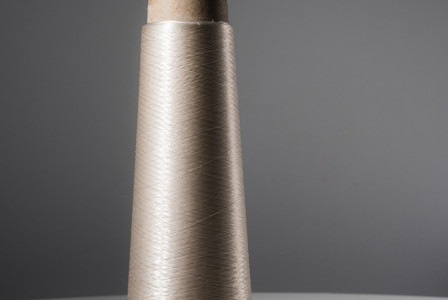
Bio-based solutions, such as bio-based fibres, are a promising sustainable and bio-engineered pathway to enabling enhanced performance and consistency of textiles.
European Commission
International Fiber Journal, Material Innovation Initiative
Joint Research Centre
World Economic Forum
Topics
Albania
Armenia
Austria
Belgium
Bosnia and Herzegovina
Bulgaria
Croatia
Cyprus
Czechia
Denmark
Estonia
EU-27
Finland
France
Georgia
Germany
Greece
Hungary
Iceland
Ireland
Italy
Kosovo
Latvia
Liechtenstein
Lithuania
Luxembourg
Malta
Moldova
Montenegro
Netherlands
North Macedonia
Norway
Poland
Portugal
Romania
Serbia
Slovakia
Slovenia
Spain
Sweden
Switzerland
Türkiye
Ukraine
Other
Academic / Research and VET Institutions
Business Support Organisation
Company with 250 or more employees
Cluster Organisations
Consumer Organisations
Cultural and Heritage Organisations
Destination Management & Marketing Organisations
EU Institutions
Financial Institutions and Investors
Industry Associations and Chambers of Commerce
International Organisations
Local Authorities
Media / Journalist Organisations
National authorities
Networks and Federations / Confederations
NGOs / Non-profits
Notified Bodies
Regional Authorities
SMEs (a company with less than 250 employees)
Social Economy Entity
Trade Unions
Other
-
Transition Pathway's building blocks
-
-
Investments and funding
-
R&I, techniques and technological solutions
-
Skills
-
Social dimension
-
Sustainable competitiveness
-
-
Industrial ecosystems
-
-
Retail
-
Textile
-
-
Textiles ecosystem areas
-
-
Fibres, yarns and fabrics
-
Share
According to the World Economic Forum, bio-innovation has the potential for far-reaching implication in every industry, offering social, economic, and environmental advantages through technological transformational change. Although biotech investments have often been misaligned with existing demand, where successful, they have been excellent examples of socially responsible commercial success.
In the textile industry, bio-based materials are gaining increasing momentum. As these are derived fully or partly from capture carbon or biomass, they are a structural piece to decarbonising the textile industry and moving away from fossil-based fibres. The European Union’s Joint Research Centre identifies three main types of bio-based fibres: natural, semi-synthetic, and synthetic, each having its own specific value chain and production technologies. Synthetic fibres account for the majority of greenhouse gas emission in fibre production, reviewing sustainable alternative is an essential step to help limit global warming.
Next-gen fibres are an emerging solution to this complex issue. Fashion for Good defines them as innovative fibres and materials that have desired improved environmental or social outcomes, compared to conventional options, but are not yet at scale. Based on the success of other climate tech sectors, such as that of electric vehicles, next-gen innovations in fashion seem to be a viable option for improving sustainability across the value chain.
According to International Fiber Journal, the most demanded bio-based synthetic fibres are polytrimethylene terephthalate (PTT) fibres, polylactic acid (PLA) fibres, polyethylene terephthalate (PET) fibres, and polyamide (PA) fibres. The Material Innovation Initiative (MII) estimated the total addressable market to be “significant” for next-gen silk, as innovators are creating alternative fibres which can mimic the high-performing properties of silk, while decreasing its environmental footprint.
In fact, several companies are working on the research and development (R&D) and commercialisation of these options. As highlighted in MII’s report companies such as AMSilk, Kintra, Lenzing, Spiber, and Tandem Repeat are turning artificial silk proteins into high-quality silk formulations.
The fur market represents a unique case, as the use of fur has been negatively viewed by the public, favouring a transition to synthetic alternatives, despite their elevated environmental cost. As fur raises issues with animal welfare and sustainability, next-gen fur materials are based on sustainable inputs and chemistry, thus avoiding animal cruelty.
The fibre industry is also working towards alternatives for wool, due to its high-maintenance properties and environmental and animal welfare impact. Similarly, the market for next-gen down and polyester fill could be an optimal solution to the serious animal welfare concerns associated with the traditional market.
In parallel, the European Union has put together several initiatives for the development of bio-based textiles. The EU Sustainable and Circular Textiles Strategy, European Industrial Strategy, and EU Bioeconomy Strategy promote the environmental, economic, and social benefits of bio-based textiles, and the European Commission’s Knowledge Centre for Bioeconomy makes evidence on these materials available to policymakers and experts.
Comments (0)
Related content
Connected Partnership Opportunities
See also
Introducing the ‘Themed Discussion Days’ on the EU Textiles Ecosystem Platform
- Categories
- Infrastructure Investments and funding R&I, techniques and technological solutions +26 more

The video tutorial on the EU Textiles Ecosystem Platform is now live!
- Categories
- Infrastructure Investments and funding R&I, techniques and technological solutions +26 more
Recap of the European Commission’s stakeholder event: ‘Shaping the future of a competitive textiles ecosystem’
- Categories
- Infrastructure Investments and funding R&I, techniques and technological solutions +17 more