

Articles
18 February 2026
Recap of the European Commission’s stakeholder event: ‘Shaping the future of a competitive textiles ecosystem’
Articles
18 February 2026
Login / create an account to be able to react
-
133
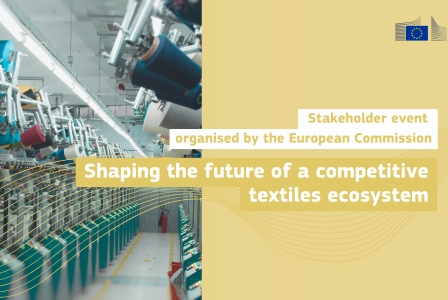
This article provides an overview of the stakeholder event ‘Shaping the future of a competitive textiles ecosystem’, organised by the European Commission on 16 January 2026 in Brussels. It highlights the event’s objectives, agenda and main themes discussed, including competitiveness, labelling, innovation, ecodesign, waste, market surveillance, and trade.
Topics
Albania
Armenia
Austria
Belgium
Bosnia and Herzegovina
Bulgaria
Croatia
Cyprus
Czechia
Denmark
Estonia
EU-27
Finland
France
Georgia
Germany
Greece
Hungary
Iceland
Ireland
Italy
Kosovo
Latvia
Liechtenstein
Lithuania
Luxembourg
Malta
Moldova
Montenegro
Netherlands
North Macedonia
Norway
Poland
Portugal
Romania
Serbia
Slovakia
Slovenia
Spain
Sweden
Switzerland
Türkiye
Ukraine
Other
Academic / Research and VET Institutions
Business Support Organisation
Company with 250 or more employees
Cluster Organisations
Consumer Organisations
Cultural and Heritage Organisations
Destination Management & Marketing Organisations
EU Institutions
Financial Institutions and Investors
Industry Associations and Chambers of Commerce
International Organisations
Local Authorities
Media / Journalist Organisations
National authorities
Networks and Federations / Confederations
NGOs / Non-profits
Notified Bodies
Regional Authorities
SMEs (a company with less than 250 employees)
Social Economy Entity
Trade Unions
Other
-
Transition Pathway's building blocks
-
-
Ecosystem's readiness to support EU strategic autonomy and defence efforts
-
Infrastructure
-
Investments and funding
-
R&I, techniques and technological solutions
-
Skills
-
Social dimension
-
Sustainable competitiveness
-
Regulation and public governance
-
-
Industrial ecosystems
-
-
Retail
-
Textile
-
-
Textiles ecosystem areas
-
-
Fibres, yarns and fabrics
-
Apparel and clothing accessories
-
Household/interior textiles
-
Technical textiles
-
Leather and fur
-
Footwear
-
Research and Innovation
-
Technology and Machinery
-
Waste management, reuse and repair
-
Business support and Communication
-
Not area specific (interested in more than one of the above)
-
Share
On 16 January 2026, the Directorate-General for Internal Market, Industry, Entrepreneurship and SMEs (DG GROW) brought together over 100 stakeholders across the European textiles ecosystem for a full-day event in Brussels. The meeting gathered a broad and diverse audience of EU textiles ecosystem stakeholders, including industry, and environment organisations representatives, to collectively listen, discuss and explore views and solutions how to strengthen competitiveness in a rapidly transforming textiles landscape. The event combined plenary sessions with themed breakout discussions, enabling both more strategic reflections and technical exchanges on EU policy priorities.
Competitiveness in a transforming ecosystem
The day opened with remarks by Kristin Schreiber, Director for Chemicals, Bioeconomy and Retail at DG GROW, followed by a keynote speech from Mario Jorge Machado, President of EURATEX. The interventions underscored the scale of the transformation facing the sector, from global competition and sustainability demands to the pace of technological change and the need for coordinated European action.
A panel discussion, ‘Unlocking competitiveness in a transforming ecosystem’, brought together leading voices from the ecosystem. The discussion centred on key opportunities and challenges across the textiles ecosystem, drawing on perspectives ranging from luxury craftsmanship to fibre innovation; from industrial labour representation to sustainability and trade; as well as on the critical policy priorities expected to shape the textiles industry.
Breakout sessions: deep dives into key policy areas
Four thematic breakout sessions, held in two parallel rounds allowed for more detailed discussions. Each session focused on gathering participants’ insights on ongoing and upcoming EU initiatives in related fields.
Breakout session 1: textile labelling
This session explored how the EU can improve textile labelling rules to balance clear consumer information with reduced administrative burden for businesses. Discussions focused on the planned revision of the EU Textile Labelling Regulation, pros and cons of greater harmonisation, and the potential role of digital labelling, particularly in synergy with the Digital Product Passport (DPP), to streamline requirements while maintaining accessibility and trust. Stakeholders reflected on which information should remain compulsory in a physical label, how to divide content between physical and digital formats, and how to best integrate other relevant information, notably in relation to sustainability and circularity.
Breakout session 2: driving innovation for the future of the textiles ecosystem
This session centred on the innovation needs of the European textiles industry which is undergoing structural transformations driven by sustainability, global competition and evolving consumer expectations. Participants discussed innovation challenges and opportunities across the entire textile value chain, identifying priority areas. The exchanges emphasised the role of Horizon Europe and EU policy frameworks in fostering collaborative research, scaling new technologies, supporting SMEs, and strengthening Europe’s long‑term competitiveness in sustainable textiles.
Breakout session 3: ecodesign and single market for textiles waste
This breakout session examined the planned introduction of ecodesign requirements for textiles and the creation of an efficient single market for textile waste/secondary raw materials. Stakeholders reflected on how to balance technical and economic feasibility with environmental ambition. Participants discussed what policies, incentives and infrastructure are needed to boost re-use, repair, recycling, and cross‑border waste movements, as well as the implementation of the forthcoming extended producer responsibility obligations, ultimately supporting a more circular and competitive European textiles sector.
Breakout session 4: ensuring a level playing field
This session focused first on insufficient enforcement of EU requirements across the Single Market and the need for stronger, more consistent market surveillance, especially amid rising e‑commerce imports and non‑compliant products. Participants discussed priority actions, including clearer responsibilities for platforms and economic operators, better coordination across Member States, and potential measures such as quicker product withdrawals or stronger penalties.
Trade issues were also discussed in this session, focusing on competitive pressures created by global supply chains, low‑cost imports and ultra‑fast fashion, exploring whether current customs and trade defence tools are adequate and how the EU might promote fairer competition through trade agreements, improved monitoring, and potential reshoring or nearshoring of production.
Presentation of the EU Textiles Ecosystem Platform and closing remarks
After the breakout discussions, the EU Textiles Ecosystem Platform was introduced to attendees. The presentation provided an overview of the platform's features, outlined the benefits of registering as a member, and included a brief guide on submitting pledges.
The event concluded with closing remarks from Kristin Schreiber, Director for Chemicals, Bioeconomy and Retail at DG GROW, who emphasised the importance of the input shared by the participants, continued dialogue and collaboration as the EU works towards a more competitive, sustainable and resilient textiles ecosystem.
Comments (0)
Related content

Connected Partnership Opportunities
See also
A platform that connects, informs and inspires: highlights from the 2025 community engagement survey
- Categories
- Infrastructure Investments and funding R&I, techniques and technological solutions +28 more
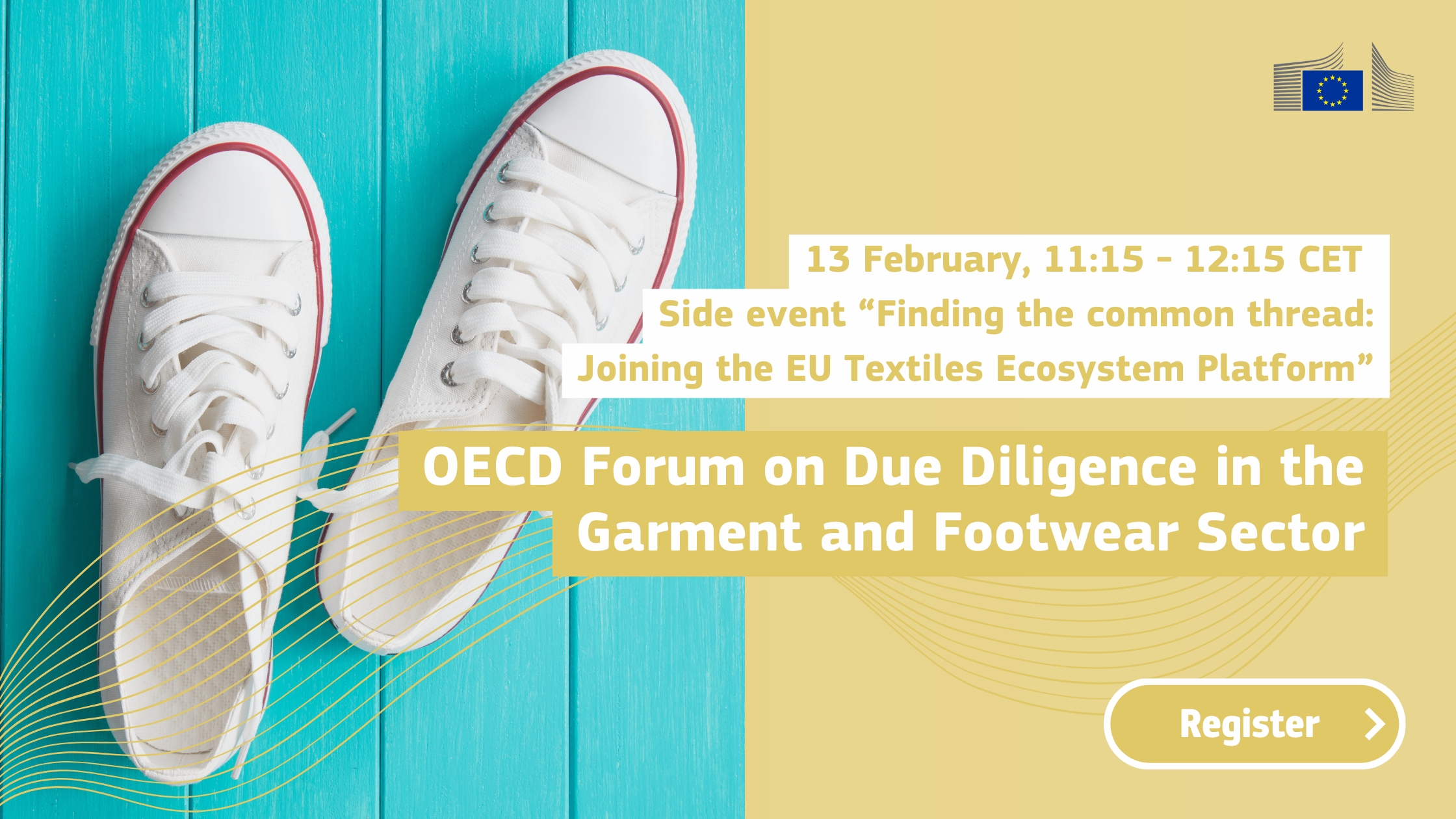
Wrapping up the side event at OECD Forum ‘Finding the common thread: Joining the EU Textiles Ecosystem Platform’
- Categories
- Infrastructure Investments and funding R&I, techniques and technological solutions +28 more

The video tutorial on the EU Textiles Ecosystem Platform is now live!
- Categories
- Infrastructure Investments and funding R&I, techniques and technological solutions +26 more