

Articles
22 December 2025
Resale on the rise: key insights from the ThredUp resale report 2025
Articles
22 December 2025
Login / create an account to be able to react
-
649
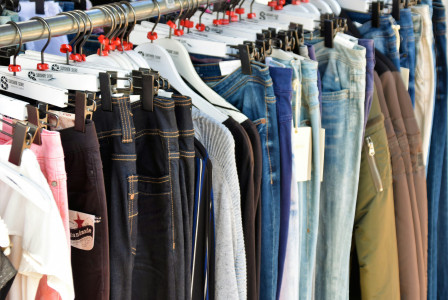
The ThredUp Resale Report 2025 shows that resale is becoming a mainstream pillar of the fashion industry. The global secondhand apparel market is projected to reach USD 367 billion by 2029, with consumer adoption accelerating and more brands integrating resale into their business models. By extending the life of garments, resale is emerging as a key driver of circularity, sustainability, and competitiveness in the textiles ecosystem.
ThreadUp
Topics
Albania
Armenia
Austria
Belgium
Bosnia and Herzegovina
Bulgaria
Croatia
Cyprus
Czechia
Denmark
Estonia
EU-27
Finland
France
Georgia
Germany
Greece
Hungary
Iceland
Ireland
Italy
Kosovo
Latvia
Liechtenstein
Lithuania
Luxembourg
Malta
Moldova
Montenegro
Netherlands
North Macedonia
Norway
Poland
Portugal
Romania
Serbia
Slovakia
Slovenia
Spain
Sweden
Switzerland
Türkiye
Ukraine
Other
Academic / Research and VET Institutions
Business Support Organisation
Company with 250 or more employees
Cluster Organisations
Consumer Organisations
Cultural and Heritage Organisations
Destination Management & Marketing Organisations
EU Institutions
Financial Institutions and Investors
Industry Associations and Chambers of Commerce
International Organisations
Local Authorities
Media / Journalist Organisations
National authorities
Networks and Federations / Confederations
NGOs / Non-profits
Notified Bodies
Regional Authorities
SMEs (a company with less than 250 employees)
Social Economy Entity
Trade Unions
Other
-
Transition Pathway's building blocks
-
-
R&I, techniques and technological solutions
-
Sustainable competitiveness
-
-
Industrial ecosystems
-
-
Textile
-
-
Textiles ecosystem areas
-
-
Not area specific (interested in more than one of the above)
-
Share
The ThredUp Resale Report 2025 highlights how secondhand and resale markets are becoming a central pillar of the global fashion system, driven by shifting consumer behaviour, economic pressures, and growing awareness of sustainability impacts. For brands resale strategies are becoming a key lever for their competitiveness in the market.
According to the report, the global secondhand apparel market is projected to reach USD 367 billion by 2029, growing at a pace significantly faster than the broader apparel market. In the United States alone, the online resale market is expected to reach USD 40 billion by 2029, expanding at a rate 8 times faster than traditional retail.
Consumer adoption continues to accelerate. The report shows that almost 60% of consumers bought secondhand apparel in 2024, with younger generations leading the trend. Gen Z and Millennials are the most active participants, driven not only by affordability but also by environmental concerns and the desire for more circular consumption models.
Economic factors are playing a key role. With inflation and cost-of-living pressures affecting purchasing decisions, secondhand is increasingly viewed as a smart and resilient alternative to buying new. At the same time, brands are responding: the report notes that more than 35% of retail executives say that they currently allow customers to shop secondhand through a social commerce platform, signalling a shift toward circular business models integrated into core strategies.
From a sustainability perspective, resale is positioned as a critical lever to reduce the environmental footprint of fashion. Extending the life of garments helps lower demand for virgin materials, reduce waste, and mitigate emissions associated with production. For brands, it also means better managing textile waste in accordance with the latest legislation about producer responsibility.
The findings of the ThredUp Resale Report 2025 underscore a broader transformation of the fashion ecosystem—one in which reuse, durability, and value retention are becoming mainstream. For policymakers, brands, and ecosystem actors, resale represents both a market opportunity and a concrete pathway toward more sustainable and resilient textile systems.
Comments (0)
Connected Partnership Opportunities
See also
Introducing the ‘Themed Discussion Days’ on the EU Textiles Ecosystem Platform
- Categories
- Infrastructure Investments and funding R&I, techniques and technological solutions +26 more

Space Technologies as Enablers of Sustainable Fashion
- Categories
- R&I, techniques and technological solutions Skills Sustainable competitiveness +13 more
ECOSYSTEX Insight Series #22 highlighted skills for the textile ecosystem’s transition
- Categories
- R&I, techniques and technological solutions Skills Social dimension +13 more