

Articles
30 January 2026
The rising importance of second-hand fashion for Gen Z
Articles
30 January 2026
Login / create an account to be able to react
-
1905
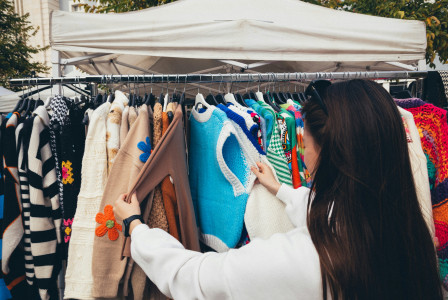
In recent years, second-hand fashion has moved from the margins of the industry to its very center, and no generation has driven this shift more decisively than Gen Z. Born into a world shaped by climate anxiety, economic uncertainty, and digital connectivity, Gen Z consumers are redefining what fashion means, and how it should be consumed.
Ipsos, Humana People to People
Topics
Albania
Armenia
Austria
Belgium
Bosnia and Herzegovina
Bulgaria
Croatia
Cyprus
Czechia
Denmark
Estonia
EU-27
Finland
France
Georgia
Germany
Greece
Hungary
Iceland
Ireland
Italy
Kosovo
Latvia
Liechtenstein
Lithuania
Luxembourg
Malta
Moldova
Montenegro
Netherlands
North Macedonia
Norway
Poland
Portugal
Romania
Serbia
Slovakia
Slovenia
Spain
Sweden
Switzerland
Türkiye
Ukraine
Other
Company with 250 or more employees
Consumer Organisations
NGOs / Non-profits
SMEs (a company with less than 250 employees)
-
Transition Pathway's building blocks
-
-
Sustainable competitiveness
-
-
Industrial ecosystems
-
-
Textile
-
-
Textiles ecosystem areas
-
-
Fibres, yarns and fabrics
-
Apparel and clothing accessories
-
Household/interior textiles
-
Technical textiles
-
Leather and fur
-
Footwear
-
Research and Innovation
-
Technology and Machinery
-
Waste management, reuse and repair
-
Business support and Communication
-
Not area specific (interested in more than one of the above)
-
Share
Digital platforms have been instrumental in normalizing and popularizing second-hand shopping. Apps and marketplaces such as Depop, Vinted, ThredUp, and Vestiaire Collective have transformed resale into a social and interactive experience. Buying and selling clothes becomes part of a circular ecosystem, where users are not just consumers but active participants in fashion culture.
Second-hand fashion also resonates with Gen Z’s desire for individuality. In contrast to mass-produced fast fashion, thrifted and vintage items offer uniqueness and authenticity. Owning a one-of-a-kind piece helps young consumers express their identity and stand out in a world dominated by trends that spread instantly through social media.
The findings of the 2024 study “Second Hand, First Choice?”, conducted by Ipsos in collaboration with Humana People to People, are particularly telling. The research was carried out on a sample of over 1,500 Italian people through an Ipsos panel involving different generations with varying attitudes toward consumption and the use of digital tools, with the aim of exploring the characteristics and implications of the second-hand phenomenon.
Among the main drivers influencing the purchase of a second-hand garment over a new one, the first factor is fit (“it fits me better”), followed by affordable price and the quality of materials. Only in fourth place comes the motivation of contributing to more ethical fashion.
Even if digital platforms have been key for the growth of resale market, according to Ipsos–Humana People to People, physical stores, flea markets, and fairs remain the preferred purchasing channels (79%), compared to online purchases (39%) and platforms such as Vinted (31%).
The research also shows that a key factor encouraging the purchase of second-hand clothing is economic savings (69%), while the main barrier remains concerns related to hygiene (55%).
According to the Ipsos–Humana People to People study, the second-hand market includes both resale and exchange activities and, as highlighted by the Ipsos survey, Gen Z plays a leading role: it ranks first among generations in terms of the percentage of buyers (26%) and sellers (10%).
In conclusion, the growing importance of second-hand fashion among Gen Z is not a passing trend, but a structural change in consumer behavior. It represents a new vision of fashion, one that values sustainability, individuality, and conscious consumption over novelty and excess. As Gen Z continues to gain purchasing power, second-hand fashion is set to remain a defining force in shaping the industry’s future.
Comments (0)
Connected Partnership Opportunities
See also
Introducing the ‘Themed Discussion Days’ on the EU Textiles Ecosystem Platform
- Categories
- Infrastructure Investments and funding R&I, techniques and technological solutions +26 more

EFRAG Invites Stakeholders to Engage in Outreach Sessions on Simplified ESRS Exposure Drafts
- Categories
- Sustainable competitiveness Regulation and public governance Textile +11 more

Space Technologies as Enablers of Sustainable Fashion
- Categories
- R&I, techniques and technological solutions Skills Sustainable competitiveness +13 more