

Articles
04 May 2026
Skills4Circularity project: Decoding industry urgency
Articles
04 May 2026
Login / create an account to be able to react
-
38
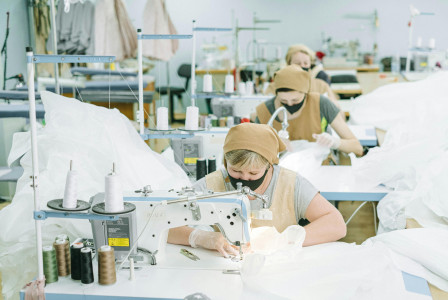
The article ‘Decoding industry urgency: empirical evidence from 183 European textile companies on circular skills gaps’ published on Skills4Circularity project’s website highlights critical workforce gaps limiting the textile sector’s circular transition, emphasising the need for targeted skills development and training systems.
Topics
Albania
Armenia
Austria
Belgium
Bosnia and Herzegovina
Bulgaria
Croatia
Cyprus
Czechia
Denmark
Estonia
EU-27
Finland
France
Georgia
Germany
Greece
Hungary
Iceland
Ireland
Italy
Kosovo
Latvia
Liechtenstein
Lithuania
Luxembourg
Malta
Moldova
Montenegro
Netherlands
North Macedonia
Norway
Poland
Portugal
Romania
Serbia
Slovakia
Slovenia
Spain
Sweden
Switzerland
Türkiye
Ukraine
Other
Academic / Research and VET Institutions
Business Support Organisation
Company with 250 or more employees
EU Institutions
Industry Associations and Chambers of Commerce
National authorities
Networks and Federations / Confederations
SMEs (a company with less than 250 employees)
-
Transition Pathway's building blocks
-
-
R&I, techniques and technological solutions
-
Skills
-
Social dimension
-
-
Industrial ecosystems
-
-
Textile
-
-
Textiles ecosystem areas
-
-
Research and Innovation
-
Technology and Machinery
-
Business support and Communication
-
Share
The article ‘Decoding industry urgency: empirical evidence from 183 European textile companies on circular skills gaps’, published by the Skills4Circularity project, presents an evidence-based analysis of skills gaps in the European textile sector. Drawing on data from 183 companies across 12 countries, supported by industry surveys, interviews, and labour market analysis, the study examines how well current workforce capabilities align with the demands of a circular and digitally transforming textile industry.
Key takeaways
• Significant mismatch between available and required skills
The study finds that while technologies for circular production exist, the workforce lacks the necessary skills to effectively implement and scale them across the value chain.
• Circular and digital skills are increasingly interconnected
Skills related to ecodesign, recycling processes, and sustainability must be combined with digital capabilities such as data analysis, Extended Producer Responsibility (ERP) systems, and digital product management.
• Growing demand for compliance and reporting expertise
Companies are placing greater emphasis on skills linked to environmental regulation, documentation, and traceability, reflecting stricter EU policy frameworks and market expectations.
• Emerging need for specialised technical roles
There is rising demand for expertise in areas such as advanced recycling technologies, Artificial Intelligence (AI), and machine learning, highlighting the sector’s technological transformation.
• Evidence-based approach to skills mapping
The study combines survey data, expert interviews, and AI-assisted analysis of job advertisements to provide a detailed and realistic picture of current industry needs.
• Skills gaps identified as a key barrier to circular transition
The lack of adequately trained professionals is highlighted as a critical constraint in achieving circular economy objectives in the textile sector.
• Need for targeted education and training systems
The findings underline the importance of aligning vocational education, higher education, and industry training with evolving market demands, particularly through initiatives like Massive Open Online Courses (MOOCs), bootcamps, and collaborative learning models.
The article highlights that addressing skills gaps is essential for enabling the textile sector’s transition towards circular and sustainable models. Without targeted investment in education, training, and workforce development, the industry risks falling behind in implementing existing technologies and meeting regulatory and market expectations.
To read the entire article, readers can visit the official website of Skills4Circularity.
Comments (0)
Connected Partnership Opportunities
See also
Introducing the ‘Themed Discussion Days’ on the EU Textiles Ecosystem Platform
- Categories
- Infrastructure Investments and funding R&I, techniques and technological solutions +26 more
ECOSYSTEX Insight Series #22 highlighted skills for the textile ecosystem’s transition
- Categories
- R&I, techniques and technological solutions Skills Social dimension +13 more

Finding the common thread: The EU Textiles Ecosystem Platform has officially launched!
- Categories
- Infrastructure Investments and funding R&I, techniques and technological solutions +28 more