

Articles
20 January 2026
Spain pilots a new system to incentivise clothing recycling
Articles
20 January 2026
Login / create an account to be able to react
-
291
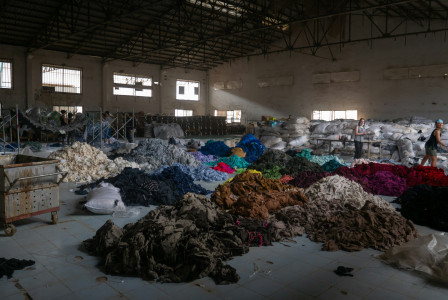
A pilot initiative in Spain is testing a technology-based system that rewards consumers for returning used clothing, with the aim of improving textile collection rates and supporting circular practices across the fashion value chain.
Moda ES
Topics
Albania
Armenia
Austria
Belgium
Bosnia and Herzegovina
Bulgaria
Croatia
Cyprus
Czechia
Denmark
Estonia
EU-27
Finland
France
Georgia
Germany
Greece
Hungary
Iceland
Ireland
Italy
Kosovo
Latvia
Liechtenstein
Lithuania
Luxembourg
Malta
Moldova
Montenegro
Netherlands
North Macedonia
Norway
Poland
Portugal
Romania
Serbia
Slovakia
Slovenia
Spain
Sweden
Switzerland
Türkiye
Ukraine
Other
Local Authorities
National authorities
Regional Authorities
-
Transition Pathway's building blocks
-
-
Infrastructure
-
Sustainable competitiveness
-
-
Industrial ecosystems
-
-
Textile
-
-
Textiles ecosystem areas
-
-
Technology and Machinery
-
Waste management, reuse and repair
-
Share
A new pilot project underway in Spain is exploring how digital tools and incentive mechanisms can encourage consumers to recycle unwanted clothing. The initiative introduces smart textile collection points placed in public locations, designed to assess garments automatically and facilitate their reintegration into reuse and recycling channels.
The system enables users to deposit used apparel into intelligent containers that analyse the condition and composition of items. Based on this assessment, participants may receive a form of compensation linked to the potential second-hand or recycling value of the garments. This approach seeks to strengthen consumer engagement while improving the quality and traceability of collected textiles.
The project also supports the development of new operational models for textile collection and sorting, with a focus on extending product lifecycles and reducing the volume of garments directed to disposal. Digital identification and data management play a central role, contributing to more efficient handling of post-consumer textiles.
By testing this model in a real-world context, the initiative provides practical insight into how behavioural incentives and technology can work together to advance circularity in the textile sector and respond to growing sustainability expectations.
Comments (0)
Connected Partnership Opportunities
See also
Introducing the ‘Themed Discussion Days’ on the EU Textiles Ecosystem Platform
- Categories
- Infrastructure Investments and funding R&I, techniques and technological solutions +26 more
European Fashion Council
- Categories
- Investments and funding R&I, techniques and technological solutions Skills +13 more

Finding the common thread: The EU Textiles Ecosystem Platform has officially launched!
- Categories
- Infrastructure Investments and funding R&I, techniques and technological solutions +28 more