

Articles
19 February 2026
Tackling the Gender Pay Gap in the Turkish Fashion Industry
Articles
19 February 2026
Login / create an account to be able to react
-
69
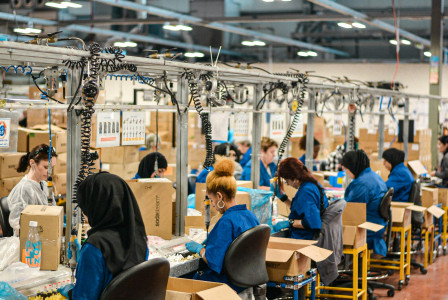
The fashion industry has changed significantly to support an inclusive and resilient transition towards sustainability. A new study conducted by the Global Fashion Agenda explores the pay equity in the sector in Türkiye, providing actionable recommendations for all stakeholders involved in the value production chain.
Global Fashion Agenda
Topics
Türkiye
Academic / Research and VET Institutions
Business Support Organisation
Company with 250 or more employees
Cluster Organisations
Consumer Organisations
Cultural and Heritage Organisations
EU Institutions
Financial Institutions and Investors
Industry Associations and Chambers of Commerce
International Organisations
Local Authorities
Media / Journalist Organisations
National authorities
Networks and Federations / Confederations
NGOs / Non-profits
Regional Authorities
SMEs (a company with less than 250 employees)
Social Economy Entity
-
Transition Pathway's building blocks
-
-
Investments and funding
-
Skills
-
Social dimension
-
Regulation and public governance
-
-
Industrial ecosystems
-
-
Proximity and social economy
-
Retail
-
Textile
-
-
Textiles ecosystem areas
-
-
Apparel and clothing accessories
-
Research and Innovation
-
Not area specific (interested in more than one of the above)
-
Share
Social inclusiveness is at the core of a fair and resilient transition for the fashion industry. More specifically, recent years have witnessed increasing efforts in addressing the gender pay gap, which was estimated to be around 12% in the EU in 2023. The sector has been undergoing major shifts, as retailers, manufacturers, and institutions are working together to advance environmental and social agendas.
In this global supply chain, Türkiye has grown to be a major global textile and apparel hub and is the third largest supplier of textile and clothing to the EU (2024). The study ‘Unpacking Pay Equity in Fashion: Türkiye’, conducted by the Global Fashion Agenda (GFA) and published in February 2026, explores the situation of pay equity in the country’s fashion sector. The report aims to inform policy makers, brands, and key stakeholders to identify opportunities for collaboration and coordinated action across the industry.
Among its main findings, the GFA highlights that Türkiye’s gender pay gap is estimated to be between 15.6% and 17.4%, well above the EU average. These disparities are found to be driven by structural issues, including unequal pay for the same job, occupational segregation, differences in career progression and training opportunities, and cultural and care norms.
Importantly, there is a significant gender difference in role representation. While women mainly cover lower-paid production jobs, such as sewing and quality control, men occupy higher-paid roles. Among the surveyed companies, only 17% had a woman as a role administrator, and 18% had a female CEO.
Governmental and institutional action plays a key role in tackling the gender pay gap. The GFA recommends the expansion of childcare, parental support, and women’s employment incentives to help reduce occupational segregation. Moreover, the report suggests the enhancement of reporting and transparency, such that companies can collaborate in developing corrective actions.
Suppliers, brands and buyers are also recommended to prioritise responsibility, transparency, and gender responsiveness. Stakeholders are advised to adopt responsible purchasing models to support equitable wage systems and to publish gender-disaggregated wage reporting and social assessments to ensure transparency. Furthermore, investment in women’s skills training, gender-neutral expectations, and family support are key components to build gender-equitable workforces.
The study was presented during a closed-door industry roundtable at the OECD Forum on Due Diligence in the Garment and Footwear Sector in Paris, and the full report can be downloaded for free at https://globalfashionagenda.org/resource/unpacking-pay-equity-in-fashion-turkiye/.
Comments (0)
Connected Partnership Opportunities
See also

Finding the common thread: The EU Textiles Ecosystem Platform has officially launched!
- Categories
- Infrastructure Investments and funding R&I, techniques and technological solutions +28 more
A platform that connects, informs and inspires: highlights from the 2025 community engagement survey
- Categories
- Infrastructure Investments and funding R&I, techniques and technological solutions +28 more
Wrapping up the side event at OECD Forum ‘Finding the common thread: Joining the EU Textiles Ecosystem Platform’
- Categories
- Infrastructure Investments and funding R&I, techniques and technological solutions +28 more