

Best practices
29 June 2026
Digitalisation as a lever for sustainability: the example of textile microfactories
Best practices
29 June 2026
Login / create an account to be able to react
-
1147
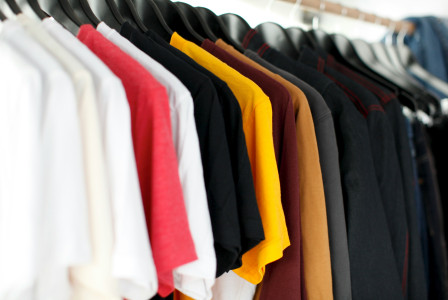
Overproduction and long, fragmented supply chains are key challenges for the textile and clothing industry, as they carry a heavy environmental footprint. The microfactory concept offers an alternative logic by bringing design and production together in a compact, digitally networked cell, enabling on-demand, local production and reduced resource use. This approach is also giving rise to new business models that embed digital technologies at their core, reshaping the way fashion products are designed, produced and delivered. The Digital Textile Micro Factory developed by the DITF and the commercial applications pursued by Rodinia Generation and OMIMAI provide concrete examples of how the microfactory model is being implemented through digitally enabled, local and on-demand production.
DITF - German Institutes of Textile and Fiber Research Denkendorf
Topics
Albania
Armenia
Austria
Belgium
Bosnia and Herzegovina
Bulgaria
Croatia
Cyprus
Czechia
Denmark
Estonia
EU-27
Finland
France
Georgia
Germany
Greece
Hungary
Iceland
Ireland
Italy
Kosovo
Latvia
Liechtenstein
Lithuania
Luxembourg
Malta
Moldova
Montenegro
Netherlands
North Macedonia
Norway
Poland
Portugal
Romania
Serbia
Slovakia
Slovenia
Spain
Sweden
Switzerland
Türkiye
Ukraine
Other
Academic / Research and VET Institutions
Business Support Organisation
Company with 250 or more employees
Cluster Organisations
Consumer Organisations
Cultural and Heritage Organisations
Destination Management & Marketing Organisations
EU Institutions
Financial Institutions and Investors
Industry Associations and Chambers of Commerce
International Organisations
Local Authorities
Media / Journalist Organisations
National authorities
Networks and Federations / Confederations
NGOs / Non-profits
Notified Bodies
Regional Authorities
SMEs (a company with less than 250 employees)
Social Economy Entity
Trade Unions
Other
-
Transition Pathway's building blocks
-
-
R&I, techniques and technological solutions
-
Sustainable competitiveness
-
-
Industrial ecosystems
-
-
Textile
-
-
Textiles ecosystem areas
-
-
Fibres, yarns and fabrics
-
Apparel and clothing accessories
-
Research and Innovation
-
Technology and Machinery
-
Share
From overproduction to microfactories
Garments are often produced in large volumes before actual demand is known, leaving a significant share unsold, discounted, returned or discarded. This fuels systemic overproduction across the textile and clothing industry. At the same time, long global supply chains generate extended lead times and heavy transport emissions, while demand is shifting faster and customers increasingly expect personalised products. The search for processes that can make products more quickly, in more customised formats, and with a lower footprint is precisely what led to the development of the microfactory concept.
The Digital Textile Micro Factory developed by the German Institutes of Textile and Fibre Research
The German Institutes of Textile and Fibre Research in Denkendorf began studying microfactory solutions more than a decade ago, initially focusing on flexible production systems that can respond quickly to changing demand. This research evolved into the Digital Textile Micro Factory (DTMF), a demonstrator of sustainable, digitally networked textile production, from design to finished product. By linking 3D simulation, digital twins and physical production, the DTMF connects virtual design directly with garment manufacturing. Presented at several trade fairs, including DRUPA 2024,1 it shows how microfactory setups can save resources, reduce overproduction and returns, improve quality, enable complex product personalisation and support new business models.
From concept to business
Around this concept, a number of start-ups and companies have begun building their business models, leveraging different microfactory setups to focus on onshore, on-demand garment production.
One example is the Danish company Rodinia Generation, founded in 2017 and headquartered in Copenhagen, where it runs its production unit and R&D laboratory. Rather than a fashion brand, Rodinia describes itself as a technology company at the intersection of software, hardware and apparel manufacturing. Its patented O-FACTORY® system automates the entire clothing production process. A single O-FACTORY® setup occupies around 200 square metres, can produce thousands of unique garments per day, and can deliver in as little as 48 hours from order, while covering most clothing categories. By making only what actually sells and producing close to the consumer, Rodinia reports meaningful reductions in CO₂ and water per garment. It frames its mission as ending overproduction through a global network of automated, on-demand, low-impact factories.
A second example is the German start-up OMIMAI, established in 2025 and based in Amt Wachsenburg (Thuringia). The core of OMIMAI is the freedom to configure made-to-measure garments of various types, produced in Germany from high-quality, sustainable fabrics, at accessible prices. The company offers a self-tailored decentralised on-demand apparel manufacturing system, that leads clients to the design and hyper-local production of custom-made apparel, enabling economically viable manufacturing from lot size one onward. This keeps production close and personal to the customer, shortens transport routes and avoids waste, while giving customers a genuinely tailored product rather than off-the-rack standard sizing. The approach combines localised and networked production, digital design workflows, and industrial manufacturing standards to support both B2C and B2B applications. Production processes are developed with consideration for sustainability, circularity, and technological integration.
Digitalisation in support of sustainability
These setups and business models directly address the main sustainability pain points in garment production: long supply chains, overproduction, and inefficient processes. The shift to regional, on-demand and made-to-measure manufacturing is where digitalisation pays off most clearly, and several studies point to substantial environmental gains. The ECO-Shoring project, funded by the German Federal Environmental Foundation (DBU) and carried out by Assyst and the DITF, is a useful reference. Combining nearshoring, made-to-measure and on-demand production in regional networks — supported by digital avatars, virtual fitting and fully digital production processes — the consortium estimates that the carbon footprint of clothing could be cut by up to 98% compared with fast fashion, primarily through green electricity, reduced overproduction and longer garment use.
From "design, make, sell" to "design, sell, make"
The deeper change these models introduce is one of sequence. The conventional industry works on a design–make–sell logic, producing first and hoping to sell later. The microfactory model inverts it into a design–sell–make model: the garment is designed and sold, and is made only then. Whereas this model seems not suited to bulk volumes and the mass market, it adds real value in customisation and premium production. By integrating digital design directly with the digital production process, it becomes possible to produce in short lead times and in virtually unlimited formats, turning personalisation into a viable, scalable proposition rather than a costly exception.
The model is continuously evolving. The most compelling direction is the move towards a network of microfactories: distributed, locally rooted production cells that together can serve the market while keeping manufacturing close to the customer. Recent initiatives on on-demand production point in the same direction, including the first projects financed by the EU “Textiles of the Future” Partnership, focused on digitally enabled local-for-local textile and apparel production.
Conclusion
Microfactory setups and business models are increasingly appealing. Along with environmental benefits, these business models create growth opportunities by leveraging customisation, speed, and proximity. As digital design and digital production continue to converge, microfactories offer a path towards a textile industry that produces less waste, fewer emissions and more of what people actually want.
1 DRUPA is major international trade fair for the printing, packaging production, graphic arts, and print technology industries organized by Messe Düsseldorf in Germany- www.drupa.com
Comments (0)
Connected Partnership Opportunities
See also
The role of trade fairs in supporting an ecosystem approach: the case of Textiles Recycling Expo
- Categories
- Infrastructure Investments and funding R&I, techniques and technological solutions +11 more
Prolonging the lifespan of denim: repair and reuse services at Nudie Jeans
- Categories
- R&I, techniques and technological solutions Skills Social dimension +10 more
BALI Chaire: Multi-stakeholder collaboration as a driver of systemic change
- Categories
- R&I, techniques and technological solutions Skills Social dimension +9 more