

Best practices
30 March 2026
Industrial symbiosis: textile waste as a resource for furniture production
Best practices
30 March 2026
Login / create an account to be able to react
-
162
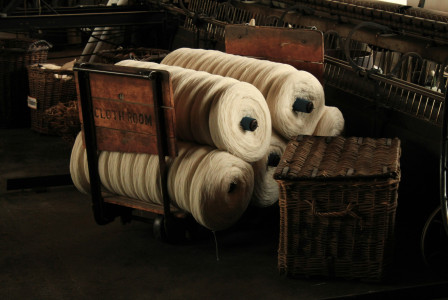
The intersection between the textiles and furniture sectors offers concrete opportunities for industrial symbiosis. By redirecting textile waste streams into new production cycles, industrial symbiosis supports circularity objectives, reduces environmental impact, and fosters cross-sectoral innovation. The companies Planq and Kvadrat Really, which are investing in this direction, demonstrate the viability of this approach.
Topics
Albania
Armenia
Austria
Belgium
Bosnia and Herzegovina
Bulgaria
Croatia
Cyprus
Czechia
Denmark
Estonia
EU-27
Finland
France
Georgia
Germany
Greece
Hungary
Iceland
Ireland
Italy
Kosovo
Latvia
Liechtenstein
Lithuania
Luxembourg
Malta
Moldova
Montenegro
Netherlands
North Macedonia
Norway
Poland
Portugal
Romania
Serbia
Slovakia
Slovenia
Spain
Sweden
Switzerland
Türkiye
Ukraine
Other
Academic / Research and VET Institutions
Business Support Organisation
Company with 250 or more employees
Cluster Organisations
Consumer Organisations
Cultural and Heritage Organisations
Destination Management & Marketing Organisations
EU Institutions
Financial Institutions and Investors
Industry Associations and Chambers of Commerce
International Organisations
Local Authorities
Media / Journalist Organisations
National authorities
Networks and Federations / Confederations
NGOs / Non-profits
Notified Bodies
Regional Authorities
SMEs (a company with less than 250 employees)
Social Economy Entity
Trade Unions
Other
-
Transition Pathway's building blocks
-
-
Ecosystem's readiness to support EU strategic autonomy and defence efforts
-
Infrastructure
-
Investments and funding
-
R&I, techniques and technological solutions
-
Skills
-
Social dimension
-
Sustainable competitiveness
-
Regulation and public governance
-
-
Industrial ecosystems
-
-
Textile
-
-
Textiles ecosystem areas
-
-
Fibres, yarns and fabrics
-
Apparel and clothing accessories
-
Household/interior textiles
-
Research and Innovation
-
Waste management, reuse and repair
-
Share
Design and sustainability as drivers of industrial symbiosis
Waste generation throughout the value chain remains a major challenge for the textile sector. Overcoming this challenge requires the development of circular solutions, both within the textile ecosystem and in collaboration with other sectors. In this context, industrial symbiosis offers a promising and increasingly viable approach. Among others, the furniture sector is an appealing destination for textile by-products and waste. The EU furniture industry is, in fact, strongly design-driven and innovation-oriented, which makes it particularly receptive to the adoption of new materials and solutions, including the integration of recycled textile-based materials to respond to the increasing demand for sustainable products and furniture finishes. Planq and Kvadrat Really exemplify companies developing innovative solutions to repurpose textile waste into durable, multi-functional materials for the furniture industry.
Planq scaling recycled textile-based materials in B2B and contract furniture markets
Planq is a Netherlands-based SME founded in 2017. It is a design-driven furniture company that develops and commercialises tables, chairs, panels, and interior elements, as well as semi-finished materials that can be integrated into third-party production processes. These solutions are targeted mainly at B2B markets, including office furniture, interior design, retail, hospitality, and architectural applications. The company has developed a process to shred textile waste, such as old denim, army clothing, suits, etc., as well as biobased fibres, such as flax, hemp, and jute coffee bags, into fibers, which are then carded into a felt material. The felt material is then pressed with a biobased binder to produce Rezign®. Originally developed as a cladding panel, the material found its true potential in interior applications, where it is used as a structural and aesthetic component in tabletops, seating, cubic cabinets, and other interior elements produced by the company. The material, which consists of a relevant share (approximately 50%) of textile waste, can be used to substitute plastic-based options commonly used in furniture finishing. By transforming heterogeneous textile waste streams into a consistent and manufacturable material, the company addresses a key barrier to circular material adoption. Additionally, with a full circular approach, the company’s products are specifically designed to be reused, repaired, and remanufactured (e.g. with the use of reversible glue to enable disassembly).
Kvadrat Really integrating textile waste in premium applications
Kvadrat Really is partly owned by Kvadrat, the Danish textile company that develops and supplies high-performance textiles and high-end interior solutions for both commercial and residential environments. Kvadrat Really focuses on the production of solid surfaces, tabletops, boards, and acoustic panels made entirely from upcycled end-of-life textiles. Its operations process approximately 550 tonnes of textile waste annually, converting materials that are unsuitable for fibre-to-fibre recycling into high-quality, durable products. For example, the company’s Textile Tabletop™, which is produced using 70% textile waste, is estimated to achieve a 30% reduction in CO2-equivalent emissions compared to a conventional tabletop, considering the entire lifecycle from material extraction to a finished tabletop ready for mounting. Although production volumes remain relatively limited compared to mass-market materials, this activity represents another example of potentially scalable industrial symbiosis with a positive environmental impact, without compromising performance or aesthetics in architecture and large-scale interior applications. Moreover, the sustainability profile of Kvadrat Really is further strengthened by its manufacturing process, which uses no water in fibre processing, generates no residual waste, and avoids dyes as well as toxic chemicals. Consequently, this production model reinforces the company’s circular proposition by combining waste valorisation with a cleaner and more resource-efficient manufacturing approach.
Conclusion
The examples of Planq and Kvadrat Really illustrate how industrial symbiosis can contribute to the transition of the textiles ecosystem by enabling the reuse of materials that would otherwise be discarded, as well as to strengthening resilience by diversifying material inputs and reducing dependence on virgin resources. These initiatives demonstrate replicability within the broader furniture and interior design sectors, particularly in B2B and contract markets where demand for sustainable solutions is growing. More broadly, these cases underline the importance of creativity, design, and innovation as enablers of circularity, and they highlight a viable pathway for scaling industrial symbiosis through value-driven markets rather than volume alone.
Comments (0)
Connected Partnership Opportunities
See also
The role of trade fairs in supporting an ecosystem approach: the case of Textiles Recycling Expo
- Categories
- Infrastructure Investments and funding R&I, techniques and technological solutions +11 more
Introducing the ‘Themed Discussion Days’ on the EU Textiles Ecosystem Platform
- Categories
- Infrastructure Investments and funding R&I, techniques and technological solutions +26 more
Call for pledges to advance the EU Textiles Ecosystem
- Categories
- Infrastructure Investments and funding R&I, techniques and technological solutions +16 more