

Best practices
21 November 2025
Lindström: a professional textile service model grounded in circular economy principles
Best practices
21 November 2025
Login / create an account to be able to react
-
296
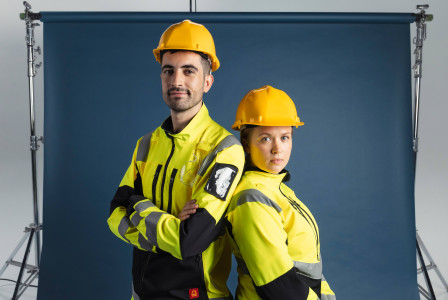
Lindström is a Finnish company that provides rental and maintenance services for professional textiles. Its business model illustrates how service providers can reduce waste, extend product lifetime, and deliver measurable environmental benefits when supported by robust infrastructure and long-term investment.
Lindström
Topics
Albania
Armenia
Austria
Belgium
Bosnia and Herzegovina
Bulgaria
Croatia
Cyprus
Czechia
Denmark
Estonia
EU-27
Finland
France
Georgia
Germany
Greece
Hungary
Iceland
Ireland
Italy
Kosovo
Latvia
Liechtenstein
Lithuania
Luxembourg
Malta
Moldova
Montenegro
Netherlands
North Macedonia
Norway
Poland
Portugal
Romania
Serbia
Slovakia
Slovenia
Spain
Sweden
Switzerland
Türkiye
Ukraine
Other
Academic / Research and VET Institutions
Business Support Organisation
Company with 250 or more employees
Cluster Organisations
Consumer Organisations
Cultural and Heritage Organisations
Destination Management & Marketing Organisations
EU Institutions
Financial Institutions and Investors
Industry Associations and Chambers of Commerce
International Organisations
Local Authorities
Media / Journalist Organisations
National authorities
Networks and Federations / Confederations
NGOs / Non-profits
Notified Bodies
Regional Authorities
SMEs (a company with less than 250 employees)
Social Economy Entity
Trade Unions
Other
-
Transition Pathway's building blocks
-
-
Infrastructure
-
R&I, techniques and technological solutions
-
Sustainable competitiveness
-
-
Industrial ecosystems
-
-
Textile
-
-
Textiles ecosystem areas
-
-
Apparel and clothing accessories
-
Technical textiles
-
Research and Innovation
-
Waste management, reuse and repair
-
Share
Introduction
In the transition toward a circular textile economy, service and rental-based business models are increasingly recognised as effective ways to extend product lifecycles, improve resource efficiency, and reduce waste. Because service providers remain responsible for the product throughout its entire lifecycle - unlike in other segments where responsibilities are fragmented - they have complete visibility over product performance. They can make coherent, environmentally aligned decisions on design, maintenance, logistics, and end-of-life management. Retaining ownership also creates a direct economic incentive to ensure durability, proper maintenance, and efficient handling. This model is particularly prevalent in markets where textiles are used for professional or industrial purposes.
Lindström at a glance
Lindström is a Finnish, family-owned textile service company. Established in 1848, it now operates in 24 countries across Europe and Asia, with over 88 000 customers, 21 million pieces of textiles in circulation, and over 200 000 tons of textiles washed per year (data for 2024 available here). The company supplies textiles for industrial workwear, cleanrooms, hospitality, healthcare, restaurants, retail environments and other professional markets. Lindström generally maintains ownership of all items, managing them end-to-end, from procurement and design through to washing, repair, and end-of-life processing.
A comprehensive approach to sustainability and circularity
Circularity is integrated across the company’s operations. Lindström emphasises durability and repairability in the design phase, choosing materials and construction techniques that withstand repeated washing, handling and use. The company’s efforts also target the reduction in the use of virgin materials: purchased textiles with recycled content stood at 36% in 2024 (doubling from the previous year).
Products are tested for longevity and maintained through systematic inspection and repair processes. The company, for example, was able to repair around 4.5 million textile workwear items in a single year, extending product life and reducing the need for new production.
When textiles can no longer fulfil their primary function, the company channels them into reuse in lower-grade applications or into recycling processes where possible. In 2024, 70% of textile waste was recycled, thanks to dedicated sorting, reuse, and recycling systems. The recycling rates vary across segments (i.e., from 100% in restaurant textiles to 71% for workwear). Recycling pathways include converting the material into fibres for new textiles, industrial applications, or other materials such as insulation or filling products.
In the maintenance process, specific attention is also given to resources: the company’s industrial laundry facilities are designed to optimise water, energy, and chemical use. Current water usage per washed textile kilogram is 7.08 lt/kg, diminishing from the 2020 value of 7.48 lt/kg. Focused efforts are put on regions experiencing water stress, where laundries are prioritising water-saving technologies, recycling systems and operational adjustments to reduce water consumption.
Priority actions towards 2050 net-zero target lay on decarbonising the laundry operations, delivery service and supply chain together with partners. In 2024, the company reported a -7% reduction in total greenhouse gas emissions compared to the previous year.
The overall company’s efforts towards sustainability and social responsibility have been recognised by an EcoVadis Platinum rating, as well as multiple awards from the European Textile Services Association (ETSA) for Corporate Social Responsibility, Customer Experience, and Employer of the Year.
A bridge between manufacturers and end users
The company collaborates with customers to design solutions that promote the efficient use of textiles and facilitate structured end-of-life handling. It also engages with manufacturers to enhance product durability, repairability, and recyclability by testing materials and applying eco-design principles. At the industry level, Lindström also contributes to shared initiatives through the European Textile Services Association (ETSA), participating in working groups and common projects. With these forms of cooperation, the company helps in the promotion and alignment of green practices within the whole ecosystem.
Conclusion
The textile service/rental industry still consumes resources such as water, energy for laundering, transportation, and chemicals. However, Lindström’s experience demonstrates how a service-based approach can deliver important environmental benefits as well: reduced waste and overproduction, extended product lifetime, and resource savings. By integrating durable design, efficient industrial laundering, systematic repair processes and structured take-back and recycling systems, the company provides a replicable example of how the textile sector can advance toward circularity. These results also highlight how service models can achieve measurable improvements when implemented consistently and supported by adequate infrastructure, data monitoring and long-term investment.
Comments (0)
Connected Partnership Opportunities
See also
The role of trade fairs in supporting an ecosystem approach: the case of Textiles Recycling Expo
- Categories
- Infrastructure Investments and funding R&I, techniques and technological solutions +11 more
Industrial symbiosis: textile waste as a resource for furniture production
- Categories
- Infrastructure Investments and funding R&I, techniques and technological solutions +10 more

BIOTEXFUTURE: transforming the textile industry towards bio-based materials
- Categories
- Investments and funding R&I, techniques and technological solutions Social dimension +6 more