

Best practices
17 August 2026
Textile waste as a resource: RETEX’s path towards technical materials
Best practices
17 August 2026
Login / create an account to be able to react
-
75
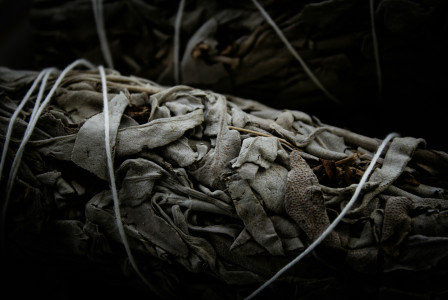
RETEX is a Czech manufacturer with a long-established business model centred on the production of recycled nonwovens and technical textiles, supported by the development of diversified industrial applications for recovered fibres. Its trajectory shows how product innovation, customer co-operation and sector-specific certification can transform textile waste into stable demand across an expanding range of value chains, including strategically relevant sectors such as defence.
RETEX
Topics
Albania
Armenia
Austria
Belgium
Bosnia and Herzegovina
Bulgaria
Croatia
Cyprus
Czechia
Denmark
Estonia
EU-27
Finland
France
Georgia
Germany
Greece
Hungary
Iceland
Ireland
Italy
Kosovo
Latvia
Liechtenstein
Lithuania
Luxembourg
Malta
Moldova
Montenegro
Netherlands
North Macedonia
Norway
Poland
Portugal
Romania
Serbia
Slovakia
Slovenia
Spain
Sweden
Switzerland
Türkiye
Ukraine
Other
Academic / Research and VET Institutions
Business Support Organisation
Company with 250 or more employees
Cluster Organisations
Consumer Organisations
Cultural and Heritage Organisations
Destination Management & Marketing Organisations
EU Institutions
Financial Institutions and Investors
Industry Associations and Chambers of Commerce
International Organisations
Local Authorities
Media / Journalist Organisations
National authorities
Networks and Federations / Confederations
NGOs / Non-profits
Notified Bodies
Regional Authorities
SMEs (a company with less than 250 employees)
Social Economy Entity
Trade Unions
Other
-
Transition Pathway's building blocks
-
-
Ecosystem's readiness to support EU strategic autonomy and defence efforts
-
R&I, techniques and technological solutions
-
Sustainable competitiveness
-
-
Industrial ecosystems
-
-
Construction
-
Mobility, transport, automotive
-
Textile
-
-
Textiles ecosystem areas
-
-
Technical textiles
-
Research and Innovation
-
Waste management, reuse and repair
-
Share
A textiles recycler with a long industrial lineage
RETEX is a medium-sized Czech company that has operated as a nonwovens manufacturer since 1950. Textile recycling has been integral to RETEX’s operations since its early years, when the company began processing reclaimed materials such as discarded military uniforms. The company has grown over the past decade, increasing its turnover by more than 20% to approximately EUR 30 million in 2025, and currently employs over 200 people. It operates two plants with an annual capacity of approximately 15,000 tonnes.
Its model rests largely on open-loop recycling, in which recovered fibres are reprocessed into nonwovens. Recycled inputs are the core component of RETEX’s production model, accounting for 70% of the total volume of raw materials processed. The company handles both post-industrial and post-consumer waste, though post-industrial material currently accounts for the larger share. This model is supported by a significant domestic sourcing base, with around half of its textile feedstock coming from the Czech Republic.
Engineering functional value from recovered fibres
RETEX’s core proposition is the conversion of recovered fibre into materials with defined functional properties - thermal and acoustic insulation, flame resistance and water retention among them - developed in collaboration with customers and adapted to specific applications. The company’s R&D capabilities are further strengthened through partnerships with universities and research institutions in the Czech Republic and abroad, as well as through its involvement as an industry stakeholder in the TEX-DAN project, where it contributes its expertise in textile recycling and circular production practices.
The company’s productive capacity was expanded in 2025 with a new production line capable of producing textiles with up to eight layers and processing both single-material and mixed inputs, with a laminating section that permits additional materials to be incorporated to improve material performance. The investment, which added roughly 4,000 tonnes of annual capacity, was supported through the Czech National Recovery and Resilience Plan and financed by the European Union.
The company’s portfolio covers a broad range of applications, including products designed to meet stringent performance and safety requirements.
Diversification as a strategy for viability
The company has pursued a diversification strategy to reduce its dependence on any single sector. Automotive, historically the company’s dominant market, now accounts for about half of its activity, compared with around 80% in 2017. Although it remains the company’s main market, the business has become increasingly diversified. The company now serves the transport, construction, household appliances, agriculture, furniture, footwear, healthcare, and defence sectors, both in the Czech Republic and abroad, with exports accounting for approximately 70% of its turnover. The company’s products include materials for vehicle carpeting and soundproofing, thermal and acoustic insulation for rolling stock - including trams and high-speed trains - and water-retention boards for green roofs. In some applications, the company’s products replace conventional materials such as polystyrene, polyurethane foams and mineral wool. Serving heterogeneous markets has led the company to develop correspondingly varied compliance programs: for example, RETEX holds automotive (IATF 16949) and railway (IRIS) certifications alongside OEKO-TEX® STANDARD 100 for textiles tested for harmful substances, and OEKO-TEX® STeP for environmentally and socially responsible production facilities.
Defence applications
RETEX also supplies the defence sector, including firms developing armoured and specialised vehicles. In addition, the company is exploring further applications related to ballistic protection and reducing the thermal visibility of vehicles.1 While still at the development stage, these objectives reflect the company’s efforts to exploit technical competence accumulated in civilian applications to further expand into security-related applications.
Conclusion
Textile circularity is frequently framed as a collection challenge, but recovered fibres create value only where stable, economically viable and technically compliant markets exist. RETEX illustrates this demand-side dimension by transforming mainly post-industrial textile waste into products for a broad range of sectors, including defence-related applications, which are becoming strategically relevant at the EU level. While the company’s model is largely open-loop and therefore does not close the textile-to-textile cycle, its strategy, which combines product development, customer collaboration, multi-sector certification, and continued access to suitable post-industrial textile waste feedstock, provides a practical route for keeping recovered fibres in productive use and widening demand for recycled materials.
1.Source: https://ekonomickydenik.cz/aby-auta-nebyla-videt-na-termokamerach-textilka/
Comments (0)
Connected Partnership Opportunities
See also

EU Ecolabel reinforces trust in circular economy at the EU Green Week 2025
- Categories
- Infrastructure R&I, techniques and technological solutions Social dimension +26 more

The video tutorial on the EU Textiles Ecosystem Platform is now live!
- Categories
- Infrastructure Investments and funding R&I, techniques and technological solutions +26 more
Introducing the ‘Themed Discussion Days’ on the EU Textiles Ecosystem Platform
- Categories
- Infrastructure Investments and funding R&I, techniques and technological solutions +26 more