

Legislative developments
23 March 2026
Revised Waste Framework Directive enters into force to boost circularity of textile sector and slash food waste
Legislative developments
23 March 2026
Login / create an account to be able to react
-
193
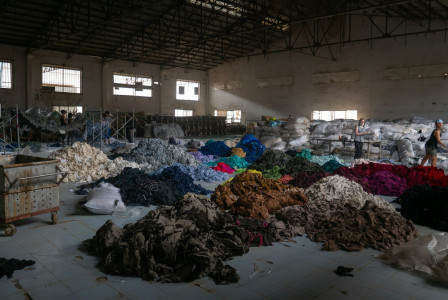
The EU's textile and clothing sector is a significant economic force, but textile production and consumption also have significant environmental impacts.
Topics
Albania
Armenia
Austria
Belgium
Bosnia and Herzegovina
Bulgaria
Croatia
Cyprus
Czechia
Denmark
Estonia
EU-27
Finland
France
Georgia
Germany
Greece
Hungary
Iceland
Ireland
Italy
Kosovo
Latvia
Liechtenstein
Lithuania
Luxembourg
Malta
Moldova
Montenegro
Netherlands
North Macedonia
Norway
Poland
Portugal
Romania
Serbia
Slovakia
Slovenia
Spain
Sweden
Switzerland
Türkiye
Ukraine
Other
Academic / Research and VET Institutions
Business Support Organisation
Company with 250 or more employees
Cluster Organisations
Consumer Organisations
Cultural and Heritage Organisations
Destination Management & Marketing Organisations
EU Institutions
Financial Institutions and Investors
Industry Associations and Chambers of Commerce
International Organisations
Local Authorities
Media / Journalist Organisations
National authorities
Networks and Federations / Confederations
NGOs / Non-profits
Notified Bodies
Regional Authorities
SMEs (a company with less than 250 employees)
Social Economy Entity
Trade Unions
Other
-
Transition Pathway's building blocks
-
-
Regulation and public governance
-
-
Industrial ecosystems
-
-
Agri-food
-
Construction
-
Cultural and creative industries
-
Digital
-
Energy intensive industries
-
Energy-renewables
-
Health
-
Mobility, transport, automotive
-
Proximity and social economy
-
Retail
-
Textile
-
Tourism
-
-
Textiles ecosystem areas
-
-
Fibres, yarns and fabrics
-
Apparel and clothing accessories
-
Household/interior textiles
-
Technical textiles
-
Leather and fur
-
Footwear
-
Research and Innovation
-
Technology and Machinery
-
Waste management, reuse and repair
-
Business support and Communication
-
Not area specific (interested in more than one of the above)
-
Share
The targeted revision of the Waste Framework Directive entered into force on 16 October 2025 introducing common rules for extended producer responsibility (EPR) for textiles and setting binding food waste reduction targets for Member States.
It will help reduce waste, mitigate environmental damage, and enhance the EU’s economic security and resilience by driving innovation in sustainable practices and reducing dependency on raw materials, in line with the EU’s Competitiveness Compass and Strategic Agenda for 2024-29.
Sustainable management of textile waste
The EU's textile and clothing sector is a significant economic force, generating a turnover of €170 billion in 2023 and employing 1.3 million people across 197,000 companies.
However, textile production and consumption also have significant environmental impacts. In 2020, in the EU, the textile sector was the consumption area with the third highest impact on water and land use, and the fifth highest in terms of raw material use and greenhouse gas emissions.
Moreover, textile waste is a pressing issue, with about 12.6 million tonnes generated in 2019, of which only one-fifth was separately collected for reuse or recycling.
The revised Waste Framework Directive introduces two main sets of measures to tackle these impacts, while boosting the competitiveness and circularity of the sector.
More information is available via the European Commission’s official page.
Comments (0)
Connected Partnership Opportunities
See also
Governance of the Energy Union and Climate Action
- Categories
- Aerospace and defence Agri-food Construction +21 more

Commission presents proposal for EU Inc. - unlocking the full potential of the Single Market for Europe's entrepreneurs
- Categories
- Aerospace and defence Agri-food Construction +21 more

EU Regulation to eliminate forced labour from global trade
- Categories
- Aerospace and defence Agri-food Construction +21 more