

Library and support resources
13 October 2026
3D Printing for sustainable textiles and fabrics
Library and support resources
13 October 2026
Login / create an account to be able to react
-
<a href="/user/login?destination=/textiles/library-and-support-resources/3d-printing-sustainable-textiles-and-fabrics%23comment-form">Log in</a> or <a href="/user/register?destination=/textiles/library-and-support-resources/3d-printing-sustainable-textiles-and-fabrics%23comment-form">register</a> to post comments
-
1 view
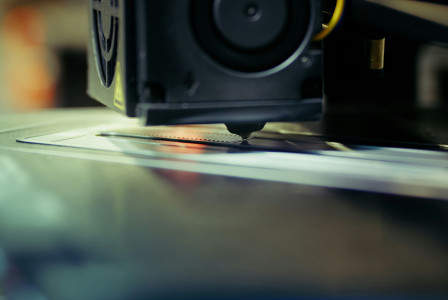
3D Printing for sustainable textiles and fabrics (3DP-STeF) explores the potential of 3D printing and digital design to support customised textile applications and more targeted material use, while highlighting the importance of material choices, energy use, durability and recyclability in determining environmental impact.
Topics
Albania
Armenia
Austria
Belgium
Bosnia and Herzegovina
Bulgaria
Croatia
Cyprus
Czechia
Denmark
Estonia
EU-27
Finland
France
Georgia
Germany
Greece
Hungary
Iceland
Ireland
Italy
Kosovo
Latvia
Liechtenstein
Lithuania
Luxembourg
Malta
Moldova
Montenegro
Netherlands
North Macedonia
Norway
Poland
Portugal
Romania
Serbia
Slovakia
Slovenia
Spain
Sweden
Switzerland
Türkiye
Ukraine
Other
Academic / Research and VET Institutions
Business Support Organisation
Company with 250 or more employees
Cluster Organisations
EU Institutions
Industry Associations and Chambers of Commerce
Networks and Federations / Confederations
SMEs (a company with less than 250 employees)
-
Transition Pathway's building blocks
-
-
R&I, techniques and technological solutions
-
Skills
-
Sustainable competitiveness
-
-
Industrial ecosystems
-
-
Textile
-
-
Textiles ecosystem areas
-
-
Research and Innovation
-
Technology and Machinery
-
Waste management, reuse and repair
-
Share
The 3DP-STeF project explores how 3D printing, textile technologies and digital design can support sustainable innovation in the textile and fashion industries. The project highlights the potential of printing directly onto textiles to enable new design possibilities, greater customisation and more targeted material use.
Key insights
• New design possibilities: 3D printing directly onto textiles can expand design options and enable customised textile and fashion applications.
• More targeted material use: The technology offers opportunities to use materials more selectively in product design and manufacturing.
• Sustainability depends on implementation: 3D printing is not automatically sustainable. Its environmental impact depends on factors including the materials used, energy consumption, product durability and recyclability.
• Digital and green skills: Integrating 3D printing and digital design into education and training can help learners and professionals develop the skills needed to apply these technologies in textile and fashion workflows.
• Connecting technology and education: Through its educational programmes, 3DP-STeF aims to bring additive manufacturing, digital technologies and sustainability into textile and fashion education and professional training.
By connecting digital manufacturing technologies with sustainability and skills development, 3DP-STeF aims to support new approaches to textile and fashion design and production.
Read the entire article of on 3DPSTeF website.
Comments (0)
Connected Partnership Opportunities
See also
Information on nano-enabled textiles
- Categories
- Infrastructure Investments and funding R&I, techniques and technological solutions +9 more
The EU’s 2024 Industrial Report reveals green and digital pathways for textiles transformation
- Categories
- Infrastructure Investments and funding R&I, techniques and technological solutions +16 more
The EIT KICs Position Paper for a Circular and Sustainable Fashion and Textiles Industry in Europe
- Categories
- Infrastructure Investments and funding R&I, techniques and technological solutions +20 more