

Library and support resources
18 August 2026
EU textile trade briefing examines import and export flows
Library and support resources
18 August 2026
Login / create an account to be able to react
-
85
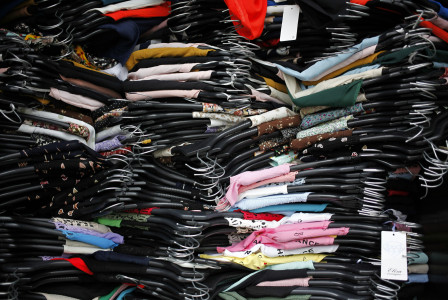
The briefing ‘EU trade in textiles: Import and export flows’ examines EU textile and clothing imports and exports from 2014 to 2023, highlighting the EU’s dependence on imported clothing, the growing policy relevance of used textile exports, and sustainability and compliance challenges across global textile value chains.
Topics
Austria
Belgium
Bulgaria
Croatia
Cyprus
Czechia
Denmark
Estonia
EU-27
Finland
France
Germany
Greece
Hungary
Ireland
Italy
Latvia
Lithuania
Luxembourg
Malta
Moldova
Netherlands
Poland
Portugal
Romania
Slovakia
Slovenia
Spain
Sweden
Other
Academic / Research and VET Institutions
Business Support Organisation
Company with 250 or more employees
Cluster Organisations
Consumer Organisations
Cultural and Heritage Organisations
Destination Management & Marketing Organisations
EU Institutions
Industry Associations and Chambers of Commerce
International Organisations
Local Authorities
National authorities
Networks and Federations / Confederations
NGOs / Non-profits
Regional Authorities
SMEs (a company with less than 250 employees)
Social Economy Entity
Trade Unions
-
Transition Pathway's building blocks
-
-
Social dimension
-
Sustainable competitiveness
-
Regulation and public governance
-
-
Industrial ecosystems
-
-
Textile
-
-
Textiles ecosystem areas
-
-
Fibres, yarns and fabrics
-
Apparel and clothing accessories
-
Household/interior textiles
-
Technical textiles
-
Leather and fur
-
Footwear
-
Waste management, reuse and repair
-
Share
The briefing ‘EU trade in textiles: Import and export flows’, authored by Dr Toni Sharma and published by the European Parliament’s Directorate-General for External Policies examines EU trade in textiles and clothing between 2014 and 2023. It covers imports of new textile and clothing products and exports of used textiles, examining trade patterns, environmental and labour-related challenges, compliance pressures and related trade-policy responses.
Key takeaways
- The EU remains a net importer of textiles and clothing. Imports remained consistently higher than exports between 2014 and 2023, although the trade deficit narrowed somewhat as exports increased over the period.
- Finished garments dominate EU textile imports. In 2023, finished garments accounted for nearly three-quarters of total import value, reflecting the EU’s dependence on external suppliers for labour-intensive clothing production.
- China, Bangladesh, Türkiye, Vietnam and India are the main suppliers. The briefing identifies these countries as the leading suppliers of EU textile and clothing imports, while noting a shift in clothing sourcing between 2014 and 2023, including a decline in China’s share and a rise in Bangladesh’s share.
- Used textile exports are significant in volume terms. EU exports of used textiles reached approximately 1.37 million tonnes in 2023. While these exports represented around 1% of the €115 billion in extra-EU textile exports by value, their significance was considerably greater in volume terms.
- Used textile exports mainly flow to Africa and Asia. These destinations are identified as regions where reuse, sorting and recycling activities are most developed.
- The briefing highlights transparency and quality concerns around used textile exports. It examines whether textiles exported as reusable consistently meet quality thresholds and whether existing frameworks provide sufficient transparency about what happens to them after export.
- EU sustainability requirements are creating compliance pressures across textile value chains. The briefing considers the implications of due-diligence legislation and other trade-policy instruments, including their indirect effects on smaller firms in supplier countries.
The briefing examines the interaction between EU textile trade, sustainability objectives and trade policy, highlighting the importance of transparency in used textile exports, labour and sustainability standards across value chains, and trade instruments and partnerships that support more sustainable and equitable production conditions.
To read further, please visit European Union Publication website.
Comments (0)
Related content
Connected Partnership Opportunities
See also
The EIT KICs Position Paper for a Circular and Sustainable Fashion and Textiles Industry in Europe
- Categories
- Infrastructure Investments and funding R&I, techniques and technological solutions +20 more
The EU’s 2024 Industrial Report reveals green and digital pathways for textiles transformation
- Categories
- Infrastructure Investments and funding R&I, techniques and technological solutions +16 more

Unlocking environmental gains through increased textile recycling
- Categories
- R&I, techniques and technological solutions Social dimension Sustainable competitiveness +13 more