

Library and support resources
17 November 2025
New Eurofound and Cedefop study highlights digitalisation trends for SMEs
Library and support resources
17 November 2025
Login / create an account to be able to react
-
60
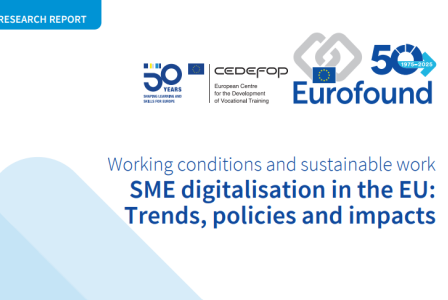
Eurofound and Cedefop have released a new report analysing how SMEs across Europe are progressing with digitalisation, highlighting uneven uptake and persistent gaps in skills and investment.
The study reviews national and EU policy measures that support this transition and showcases initiatives that have achieved concrete results. Its findings are particularly relevant for textile and apparel companies, where effective use of digital tools and stronger digital skills can directly reinforce competitiveness.
EURATEX
Cedefop
Topics
Albania
Armenia
Austria
Belgium
Bosnia and Herzegovina
Bulgaria
Croatia
Cyprus
Czechia
Denmark
Estonia
EU-27
Finland
France
Georgia
Germany
Greece
Hungary
Iceland
Ireland
Italy
Kosovo
Latvia
Liechtenstein
Lithuania
Luxembourg
Malta
Moldova
Montenegro
Netherlands
North Macedonia
Norway
Poland
Portugal
Romania
Serbia
Slovakia
Slovenia
Spain
Sweden
Switzerland
Türkiye
Ukraine
Other
Academic / Research and VET Institutions
Business Support Organisation
Company with 250 or more employees
Cluster Organisations
Consumer Organisations
Cultural and Heritage Organisations
Destination Management & Marketing Organisations
EU Institutions
Financial Institutions and Investors
Industry Associations and Chambers of Commerce
International Organisations
Local Authorities
Media / Journalist Organisations
National authorities
Networks and Federations / Confederations
NGOs / Non-profits
Notified Bodies
Regional Authorities
SMEs (a company with less than 250 employees)
Social Economy Entity
Trade Unions
Other
-
Transition Pathway's building blocks
-
-
Investments and funding
-
R&I, techniques and technological solutions
-
Skills
-
-
Industrial ecosystems
-
-
Aerospace and defence
-
Agri-food
-
Construction
-
Cultural and creative industries
-
Digital
-
Energy intensive industries
-
Energy-renewables
-
Health
-
Mobility, transport, automotive
-
Proximity and social economy
-
Retail
-
Textile
-
Tourism
-
-
Textiles ecosystem areas
-
-
Fibres, yarns and fabrics
-
Apparel and clothing accessories
-
Household/interior textiles
-
Technical textiles
-
Leather and fur
-
Footwear
-
Research and Innovation
-
Technology and Machinery
-
Waste management, reuse and repair
-
Business support and Communication
-
Not area specific (interested in more than one of the above)
-
Share
Overview of the publication
Eurofound and Cedefop have published a joint report examining how small and medium-sized enterprises across Europe are adapting to digital transformation. The study, SME digitalisation in the EU: Trends, policies and impacts (2025), offers an overview of current developments and identifies the main barriers that companies continue to face.
Key findings on SME digital uptake
The report notes that the average level of basic digital intensity among SMEs in the EU is 73 percent. Only a small number of countries have reached the Digital Decade target of 90 percent. There are substantial differences between Member States, with northern and western regions generally displaying higher adoption rates.
Digitalisation in many SMEs is shaped by immediate pressures such as labour shortages or the need to recover from recent disruptions, rather than by long-term strategic planning. The analysis highlights gaps in investment, skills availability and technological readiness. It also identifies three groups of SMEs based on digital intensity, each facing different challenges relating to job design, autonomy and training.
Policy measures supporting the transition
National and EU initiatives are helping firms to accelerate their digital transformation. Many countries are using Recovery and Resilience Facility resources to invest in digital infrastructure, training and modernisation programmes. Incentives such as vouchers, advisory schemes and partnerships with technology providers have proven useful in helping SMEs start or deepen their digital journey.
The report suggests that governments should set clear and measurable targets for SME digitalisation, support innovation through cooperation across industrial ecosystems and expand modular training initiatives to reduce the persistent digital skills gap.
Relevance for the textile and apparel ecosystem
Given the strong presence of SMEs in the European TCLF sector, the study offers insights that are directly relevant for companies across the value chain. Digital tools can help firms improve supply chain transparency, reduce production times and expand market access.
The observed gaps in skills and investment underline the need for targeted support that helps SMEs strengthen their digital capabilities while preparing for wider green and digital transitions.
The publication is available on the Eurofound website:
https://www.eurofound.europa.eu/en/publications/all/sme-digitalisation-eu-trends-policies-and-impacts
Comments (0)
Connected Partnership Opportunities
See also
Get the most out of the EU Textiles Ecosystem Platform: the Beginner kit is now available
- Categories
- Infrastructure Investments and funding R&I, techniques and technological solutions +28 more

Small mid‑caps: bridging the gap between SMEs and large companies
- Categories
- Infrastructure Investments and funding R&I, techniques and technological solutions +28 more

The EU’s vision for sustainable fashion: transforming the textiles sector by 2030
- Categories
- Infrastructure Investments and funding R&I, techniques and technological solutions +28 more