

Library and support resources
09 June 2026
UNECE-ECLAC joint study - Making trade work for circularity: Improving circularity in second-hand clothing through trade regulation (2026)
Library and support resources
09 June 2026
Login / create an account to be able to react
-
64
This study builds on the 2024 UNECE-ECLAC Joint Study - Reversing direction in the used clothing crisis: Global, European and Chilean perspectives by examining how trade policy can be leveraged to address systemic challenges in the global second-hand clothing market. It highlights the complex interface between sustainability objectives and international trade rules, focusing on how current trade practices can either enable or hinder circularity across textile value chains.
UNECE
UNECE
Topics
Albania
Armenia
Austria
Belgium
Bosnia and Herzegovina
Bulgaria
Croatia
Cyprus
Czechia
Denmark
Estonia
EU-27
Finland
France
Georgia
Germany
Greece
Hungary
Iceland
Ireland
Italy
Kosovo
Latvia
Liechtenstein
Lithuania
Luxembourg
Malta
Moldova
Montenegro
Netherlands
North Macedonia
Norway
Poland
Portugal
Romania
Serbia
Slovakia
Slovenia
Spain
Sweden
Switzerland
Türkiye
Ukraine
Other
International Organisations
National authorities
-
Transition Pathway's building blocks
-
-
Infrastructure
-
Investments and funding
-
R&I, techniques and technological solutions
-
Skills
-
Social dimension
-
Sustainable competitiveness
-
Regulation and public governance
-
-
Industrial ecosystems
-
-
Retail
-
Textile
-
-
Textiles ecosystem areas
-
-
Apparel and clothing accessories
-
Footwear
-
Technology and Machinery
-
Waste management, reuse and repair
-
Share
The study provides a practical regulatory blueprint to shift second-hand textile trade from “waste displacement” toward value‑preserving circularity. It identifies key challenges faced by countries, including inconsistent definitions, quality concerns, limited traceability, and the risk of trade measures creating unintended barriers. It proposes WTO‑consistent design options, including clear distinctions between waste and re‑wearable textiles, mandatory pre‑export sorting supported by verifiable data, and digital documentation aligned with emerging standards and due diligence frameworks. It also highlights enabling conditions already in place, from EU waste shipment rules and eco-design and Digital Product Passport requirements to advances in automated sorting and growing momentum in global trade and environmental policy.
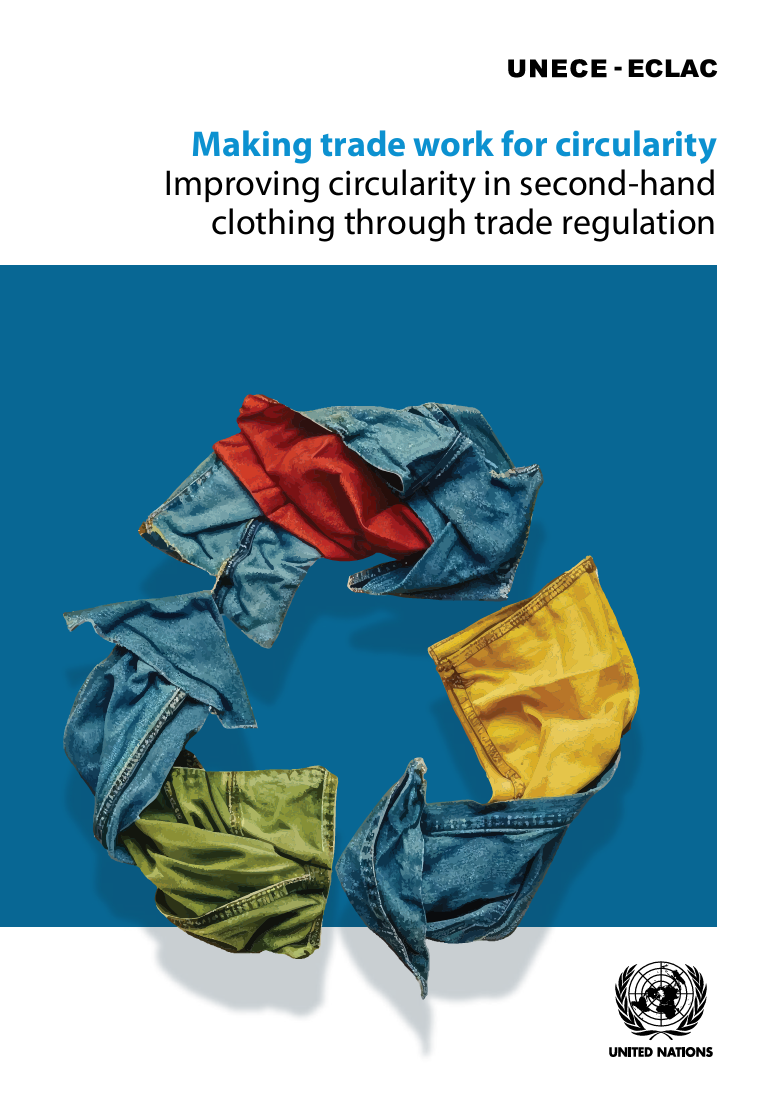
By offering practical guidance to both exporting and importing countries, the report highlights pathways to align trade governance with circular economy goals and improve environmental, social, and economic outcomes. Launched on 10 February 2026 at a dedicated side session of the OECD Forum on Due Diligence in the Garment and Footwear Sector, the study complements earlier findings by moving from diagnosis to actionable policy design, supporting strengthened cooperation between trading partners and more sustainable second-hand clothing value chains.
The study was produced with financial support from the EU Directorate-General for International Partnerships (DG INTPA), under the UNECE project on Enhancing Transparency and Traceability of Value Chains in Strategic Sectors, and with technical support from ECLAC.
Comments (0)
Related content

Connected Partnership Opportunities
See also
The EIT KICs Position Paper for a Circular and Sustainable Fashion and Textiles Industry in Europe
- Categories
- Infrastructure Investments and funding R&I, techniques and technological solutions +20 more

Small mid‑caps: bridging the gap between SMEs and large companies
- Categories
- Infrastructure Investments and funding R&I, techniques and technological solutions +28 more
Get the most out of the EU Textiles Ecosystem Platform: the Beginner kit is now available
- Categories
- Infrastructure Investments and funding R&I, techniques and technological solutions +28 more