

Library and support resources
28 May 2026
UNECE-ECLAC Joint Study - Reversing direction in the used clothing crisis: Global, European and Chilean perspectives (2024)
Library and support resources
28 May 2026
Login / create an account to be able to react
-
61
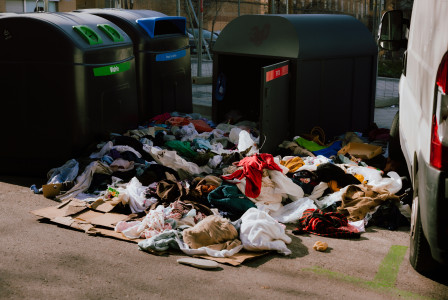
This joint 2024 UNECE–ECLAC study examines the global trade in used clothing and highlights a systemic challenge in current textile value chains. It finds that large volumes of low-quality and difficult-to-recycle textiles are exported from developed regions, particularly Europe, to countries in the Global South, where they often end up in dumpsites or low-value applications, generating significant environmental, health, and socio-economic impacts.
UNECE
UNECE
Topics
Albania
Armenia
Austria
Belgium
Bosnia and Herzegovina
Bulgaria
Croatia
Cyprus
Czechia
Denmark
Estonia
EU-27
Finland
France
Georgia
Germany
Greece
Hungary
Iceland
Ireland
Italy
Kosovo
Latvia
Liechtenstein
Lithuania
Luxembourg
Malta
Moldova
Montenegro
Netherlands
North Macedonia
Norway
Poland
Portugal
Romania
Serbia
Slovakia
Slovenia
Spain
Sweden
Switzerland
Türkiye
Ukraine
Other
International Organisations
-
Transition Pathway's building blocks
-
-
Infrastructure
-
Investments and funding
-
Social dimension
-
Sustainable competitiveness
-
Regulation and public governance
-
-
Industrial ecosystems
-
-
Textile
-
-
Textiles ecosystem areas
-
-
Fibres, yarns and fabrics
-
Apparel and clothing accessories
-
Leather and fur
-
Footwear
-
Research and Innovation
-
Technology and Machinery
-
Waste management, reuse and repair
-
Business support and Communication
-
Share
The study underscores the urgent need for a stronger regulatory framework, including clearer export and import definitions, minimum quality standards, improved traceability systems, and extended producer responsibility schemes. It also identifies gaps in information requirements, recycling targets, infrastructure, financing mechanisms, and engagement with economic partners. By putting forward coordinated policy recommendations for both exporting and importing countries, the report aims to improve the economic, social, and environmental outcomes of used clothing trade, while supporting the implementation of the EU Strategy for Sustainable and Circular Textiles and national circular economy strategies, particularly by addressing second-hand clothing and textile waste flows and their impacts in importing countries.
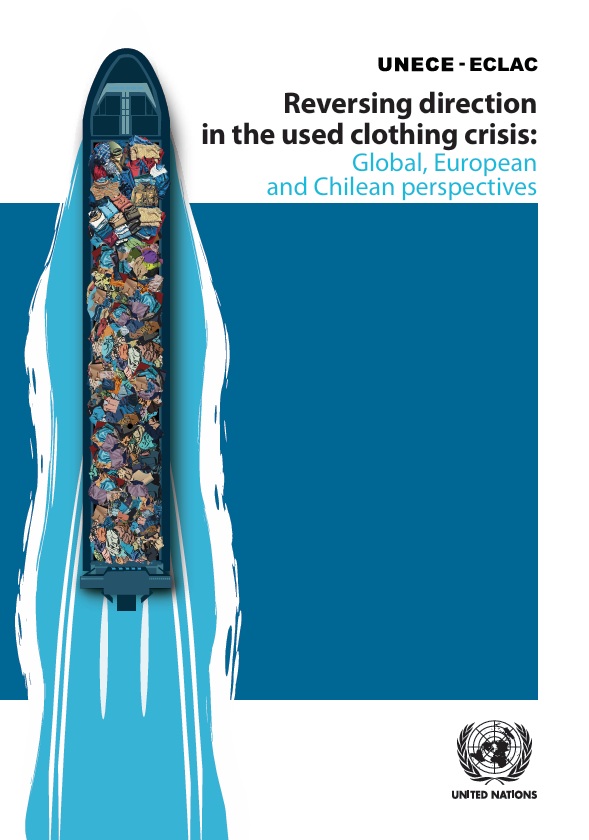
The study was produced with financial support from the EU Directorate-General for International Partnerships (DG INTPA), under the UNECE project on Enhancing Transparency and Traceability of Sustainable Value Chains in the Garment and Footwear Sector, and with technical support from ECLAC.
This study is complemented by a subsequent publication Making Trade Work for Circularity: Improving Circularity in Second-Hand Clothing Through Trade Regulation (2026), which translates its findings into practical, WTO-consistent policy options to enhance sustainability and circularity in global second-hand clothing trade.
Comments (0)
Connected Partnership Opportunities
See also

An empirical exploration of the unintended effects of circular economy policies in the EU: the case of textiles
- Categories
- Investments and funding R&I, techniques and technological solutions Skills +16 more
The EU’s 2024 Industrial Report reveals green and digital pathways for textiles transformation
- Categories
- Infrastructure Investments and funding R&I, techniques and technological solutions +16 more
The first Report on Stakeholder Pledges is out!
- Categories
- Infrastructure Investments and funding R&I, techniques and technological solutions +19 more