

News
23 June 2026
Achieving a circular economy for the textile sector
News
23 June 2026
Login / create an account to be able to react
-
177

The European Commission’s CORDIS Results Pack: Achieving a Circular Economy for the Textile Sector showcases EU-funded projects advancing textile recycling, digital traceability, consumer engagement, and circular business models, highlighting practical pathways towards a more sustainable and circular textile ecosystem.
Topics
Albania
Armenia
Austria
Belgium
Bosnia and Herzegovina
Bulgaria
Croatia
Cyprus
Czechia
Denmark
Estonia
EU-27
Finland
France
Georgia
Germany
Greece
Hungary
Iceland
Ireland
Italy
Kosovo
Latvia
Liechtenstein
Lithuania
Luxembourg
Malta
Moldova
Montenegro
Netherlands
North Macedonia
Norway
Poland
Portugal
Romania
Serbia
Slovakia
Slovenia
Spain
Sweden
Switzerland
Türkiye
Ukraine
Other
Academic / Research and VET Institutions
Business Support Organisation
Company with 250 or more employees
Cluster Organisations
EU Institutions
Industry Associations and Chambers of Commerce
Local Authorities
National authorities
Networks and Federations / Confederations
Regional Authorities
SMEs (a company with less than 250 employees)
-
Transition Pathway's building blocks
-
-
R&I, techniques and technological solutions
-
Skills
-
Sustainable competitiveness
-
Regulation and public governance
-
-
Industrial ecosystems
-
-
Textile
-
-
Textiles ecosystem areas
-
-
Fibres, yarns and fabrics
-
Apparel and clothing accessories
-
Technical textiles
-
Research and Innovation
-
Technology and Machinery
-
Waste management, reuse and repair
-
Business support and Communication
-
Share
The European Commission’s CORDIS Results Pack: Achieving a Circular Economy for the Textile Sector highlights the outcomes of several EU-funded research and innovation projects working to accelerate circularity across the textile value chain. Published in 2026, the report examines developments in textile recycling, digital traceability, circular business models, stakeholder engagement, and sustainable product design. Together, the featured projects demonstrate how technological innovation, collaboration, and policy support can help address textile waste and strengthen Europe’s transition towards a more circular textile ecosystem.
Key Insights
- Textile recycling requires coordinated action across the entire value chain
The report highlights that successful textile circularity depends on collaboration between collectors, sorters, recyclers, brands, researchers, and policymakers. Several projects demonstrated how integrated approaches can improve collection, sorting, recycling, and the use of recycled fibres in new products. - The T-REX project demonstrated the potential of textile-to-textile recycling
T-REX developed and tested an EU-based circular value chain for post-consumer textile waste, successfully recycling polyester, polyamide 6, and cellulosic materials. The project also delivered a blueprint for scaling textile-to-textile chemical recycling in Europe and showed that mixed-composition garments can be recycled and transformed into new products. - Textile waste remains a significant challenge in Europe
According to the report, approximately 6.94 million tonnes of textile waste were generated in the EU in 2022, with around 85% ending up in mixed household waste streams where reuse and recycling opportunities are limited. - Digital technologies can improve transparency and traceability
The TRICK project developed a digital platform using blockchain and artificial intelligence to support traceability, circularity, sustainability assessments, and future Digital Product Passport requirements. The platform was designed to help SMEs improve compliance while increasing transparency across textile supply chains. - Digital Product Passports are expected to play a growing role in circular textiles
The report notes that the Ecodesign for Sustainable Products Regulation (ESPR) introduces requirements that will improve access to information about product composition, environmental performance, and lifecycle impacts. These tools are expected to support more sustainable purchasing, production, and recycling decisions. - Consumer engagement remains essential for circularity
The tExtended project demonstrated that technical solutions alone are not sufficient. Through social innovation workshops and community activities across several European countries, the project promoted textile reuse, pre-sorting, and consumer participation in circular practices. - Circularity combines technology, policy, and behavioural change
Across the projects featured in the report, a common finding is that achieving large-scale circularity requires a combination of advanced technologies, supportive policy frameworks, sustainable business models, and active stakeholder engagement.
The report demonstrates how EU-funded projects are developing practical solutions to address textile waste, improve resource efficiency, and strengthen circular value chains. By combining innovation, collaboration, and digital technologies, these initiatives provide valuable insights into the future of a more sustainable and circular European textile sector.
Readers can consult the full report for detailed project findings and recommendations on European Union Website.
Comments (0)
Connected Partnership Opportunities
See also
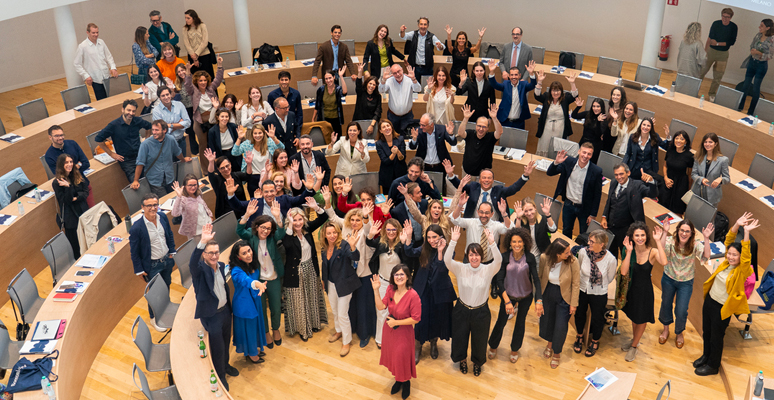
Transform to perform: M4CF 2025/2026 multistakeholder event
- Categories
- Skills Social dimension Sustainable competitiveness +13 more

Share your views: Take part in the Stakeholder Support Platform (SSP) survey by 8 May 2026
- Categories
- Infrastructure Investments and funding R&I, techniques and technological solutions +28 more
Join the upcoming Themed Discussion on digitalisation in textiles!
- Categories
- Skills Sustainable competitiveness Regulation and public governance +15 more