

News
05 December 2025
Altagamma 2025: A year of resilience and recalibration for Europe’s high-end textiles and fashion ecosystem
News
05 December 2025
Login / create an account to be able to react
-
97
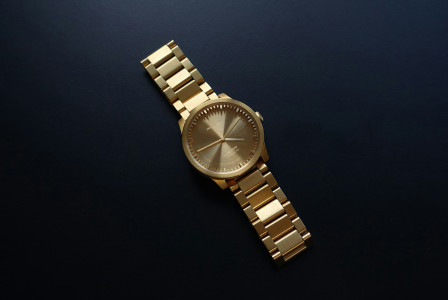
The 24th Altagamma Observatory shows a stable but shifting luxury market in 2025, with the global high-end sector holding at around €1.44 trillion. Beneath this stability, consumer behaviour is changing: experiential luxury is growing, aspirational shoppers are weakening due to high prices, and brand engagement is softening.
Despite these pressures, the sector remains resilient, with a +5% rebound expected in 2026. For the EU textiles ecosystem, the findings underline both risks and opportunities, highlighting the need to invest in talent, sustainability, and innovation to navigate this transition.
Altagamma
Topics
Albania
Armenia
Austria
Belgium
Bosnia and Herzegovina
Bulgaria
Croatia
Cyprus
Czechia
Denmark
Estonia
EU-27
Finland
France
Georgia
Germany
Greece
Hungary
Iceland
Ireland
Italy
Kosovo
Latvia
Liechtenstein
Lithuania
Luxembourg
Malta
Moldova
Montenegro
Netherlands
North Macedonia
Norway
Poland
Portugal
Romania
Serbia
Slovakia
Slovenia
Spain
Sweden
Switzerland
Türkiye
Ukraine
Other
Academic / Research and VET Institutions
Business Support Organisation
Company with 250 or more employees
Cluster Organisations
Consumer Organisations
Cultural and Heritage Organisations
Destination Management & Marketing Organisations
EU Institutions
Financial Institutions and Investors
Industry Associations and Chambers of Commerce
International Organisations
Local Authorities
Media / Journalist Organisations
National authorities
Networks and Federations / Confederations
NGOs / Non-profits
Notified Bodies
Regional Authorities
SMEs (a company with less than 250 employees)
Social Economy Entity
Trade Unions
Other
-
Transition Pathway's building blocks
-
-
Sustainable competitiveness
-
-
Industrial ecosystems
-
-
Textile
-
-
Textiles ecosystem areas
-
-
Apparel and clothing accessories
-
Leather and fur
-
Footwear
-
Share
The 24th Altagamma Observatory results, presented this November, offers a nuanced picture of the global luxury landscape, one that is neither euphoric nor pessimistic, but grounded in a clear sense of transition. For the European textiles ecosystem, these findings serve as both a mirror and a compass: they reflect the pressures facing producers, brands, and artisans, while also pointing toward strategic priorities for the years just ahead.
According to the Altagamma-Bain luxury market monitor, the broader high-end market is expected to close 2025 at around €1.44 trillion, essentially maintaining last year’s levels despite geopolitical instability and erratic consumer sentiment. Within this, the personal luxury goods segment, perhaps the most watched indicator for fashion and textiles, shows a slight contraction in nominal terms but remains stable at constant exchange rates. This apparent steadiness, however, masks important shifts beneath the surface.
One of the clearest signals emerging from the Observatory is a redefinition of what “luxury” means to today’s consumers. Growth is increasingly driven by experiential luxury: wellness, travel, longevity, and other forms of immersive, intangible value. These trends do not necessarily undermine the luxury fashion and textiles sector, but they do challenge brands to rethink how they position material goods in an economy where meaning, rather than possession, is becoming the central driver of desire.
At the same time, the market continues to polarize. Ultra-high-net-worth clients remain active, gravitating toward jewellery, bespoke craftsmanship, and unique experiences. But the once-crucial “aspirational consumer” is under strain. Years of steady price increases, important for margins, but increasingly difficult to justify, have begun to erode accessibility and, in some cases, perceived value. Altagamma warns that such dynamics can weaken brand loyalty and risk excluding the younger or more budget-constrained segments that historically fuel growth and cultural relevance.
This recalibration is not limited to consumers. Brands themselves are experiencing a softening of engagement. The Observatory notes declining interaction rates and a need to restore the sense of authenticity, creativity, and cultural resonance that once made European luxury not only desirable but aspirational. Behind the scenes, profitability and operational efficiency have become more challenging, compelling companies, especially smaller firms within the textile supply chain, to rethink long-term resilience.
Yet amid these challenges lies a strong sense of forward momentum. The forecast for 2026, a projected +5% rebound, is not merely a statistical adjustment but an expression of confidence in luxury’s enduring structural strength.
The Observatory’s conclusions also carry a clear caution. Economic volatility, geopolitical uncertainty, energy-related risks, and fragile consumer confidence all form part of the 2025 backdrop. For textile and fashion companies, many of which operate upstream, with thinner margins and greater exposure to fluctuating costs, these risks underscore the importance of collaboration, policy support, and shared innovation efforts.
But if the numbers show resilience, the narrative shows something deeper: an industry in the midst of a cultural and strategic recalibration. The luxury ecosystem is redefining value, investing in skills, and searching for new forms of meaning that go beyond product and profit. For the European textiles ecosystem, this moment offers an opportunity to reinforce its strengths, craftsmanship, sustainability, innovation, and collaboration, while preparing the foundations for a more robust, inclusive, and future-proof growth cycle.
Comments (0)
Connected Partnership Opportunities
See also
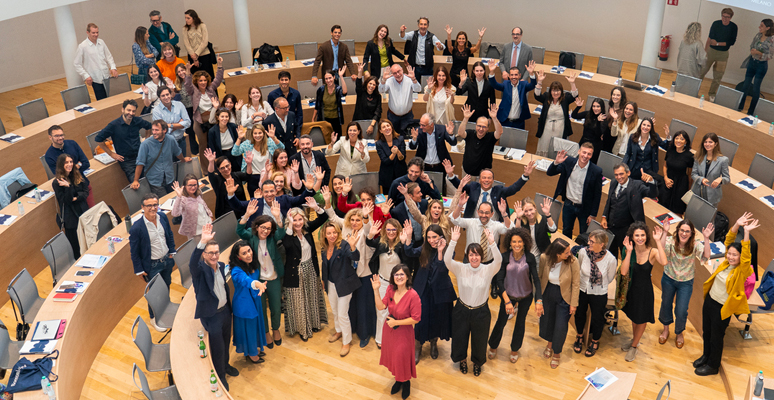
Transform to perform: M4CF 2025/2026 multistakeholder event
- Categories
- Skills Social dimension Sustainable competitiveness +13 more

eBay expands circular fashion fund to Europe and North America, boosting textile innovation
- Categories
- Sustainable competitiveness Textile Fibres, yarns and fabrics +10 more
EU launches video showcasing progression towards Circular Economy Act
- Categories
- Skills Social dimension Sustainable competitiveness +17 more