

Opinions
26 May 2026
The EU Ban on the Destruction of Unsold Clothing: Scope, Exceptions and Open Questions
Opinions
26 May 2026
Login / create an account to be able to react
-
371
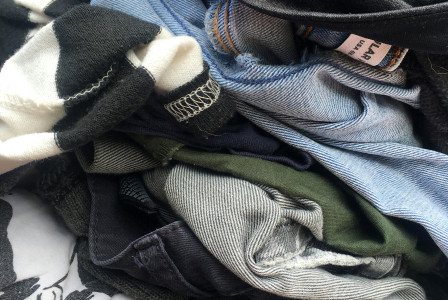
On 19 July 2026, the ban on the destruction of unsold clothing will come into force as set out in Article 25 of the European Sustainable Products Ecodesign Regulation (ESPR 2024/1781). The ban will apply immediately to large enterprises. Medium-sized companies (50–249 employees and a turnover of up to €50 million) will be subject to the ban from 2030, whilst small and micro-enterprises are exempt.
Blumine
Topics
Albania
Armenia
Austria
Belgium
Bosnia and Herzegovina
Bulgaria
Croatia
Cyprus
Czechia
Denmark
Estonia
EU-27
Finland
France
Georgia
Germany
Greece
Hungary
Iceland
Ireland
Italy
Kosovo
Latvia
Liechtenstein
Lithuania
Luxembourg
Malta
Moldova
Montenegro
Netherlands
North Macedonia
Norway
Poland
Portugal
Romania
Serbia
Slovakia
Slovenia
Spain
Sweden
Switzerland
Türkiye
Ukraine
Other
Academic / Research and VET Institutions
Company with 250 or more employees
Cluster Organisations
Consumer Organisations
Financial Institutions and Investors
Industry Associations and Chambers of Commerce
International Organisations
Networks and Federations / Confederations
NGOs / Non-profits
SMEs (a company with less than 250 employees)
Social Economy Entity
-
Transition Pathway's building blocks
-
-
Ecosystem's readiness to support EU strategic autonomy and defence efforts
-
Investments and funding
-
Social dimension
-
Sustainable competitiveness
-
Regulation and public governance
-
-
Industrial ecosystems
-
-
Cultural and creative industries
-
Energy intensive industries
-
Proximity and social economy
-
Retail
-
Textile
-
-
Textiles ecosystem areas
-
-
Fibres, yarns and fabrics
-
Apparel and clothing accessories
-
Technical textiles
-
Leather and fur
-
Footwear
-
Waste management, reuse and repair
-
Share
The measure aims to curb or eliminate a harmful practice that results in resource waste and GHG emissions from destruction by incineration or landfill. Every year in Europe, between 250,000 and 600,000 tonnes of unsold clothing are destroyed, accounting for between 4% and 9% of the total garments placed on the market. These disposal processes generate approximately 5.6 million tonnes of CO2eq greenhouse gas (GHG) emissions annually.
A high proportion of unsold stock is inherent in the fashion industry due to the extreme variability and unpredictability of consumer tastes, which make demand forecasts inaccurate. Errors in production planning, product defects, poor batch management, and the rapid obsolescence of fashion trends compound this. Another increasingly significant factor is the volume of items returned after purchase on major e-commerce platforms, due to incorrect sizing, unsatisfactory fit, or simply a change of mind. According to the EEA, in Europe, the average return rate for clothes bought online is estimated at over 20%; in other words, one in five items sold is returned, and around one-third of returned items are destined for destruction.
In addition to the ban on destruction, the regulation also establishes a transparency obligation (Art. 24) requiring the publication of data on unsold volumes and their destination, and also sets out a limited list of exceptions permitting destruction in specific circumstances:
- the product is a dangerous product and destruction is the appropriate and proportionate corrective action;
- the product is unfit for purpose by reason that it is non-compliant with Union or national law;
- it is found that the product infringes intellectual property rights (IPR);
- the product is unsuitable for preparing for reuse or remanufacturing because it is technically unfeasible either to remove or render permanently inaccessible labels, logos or recognizable product design characteristics;
- the product is unfit for the purpose for which it was intended due to design or manufacturing defects for which corrective measures are not technically feasible;
- the product is non-compliant with applicable, or voluntary company policies or third-party standards related to chemical safety, and destruction is the appropriate and proportionate corrective action;
- no recipient could be found for them through sale, donation or other forms of transfer.
The impact of the ban on destruction will be far-reaching, and the business sector is currently ill-prepared for it, given the still-weak reuse supply chain and the volumes of products involved. Added to this are the inherent limitations of the fashion market, which render ‘out-of-fashion’ garments unsuitable for sale, and the fact that repair is not economically viable for garments of low unit value. Finally, there is the difficulty of removing the brand’s distinctive marks from the garments; the issue goes beyond IPR infringement, as resold or donated recognizable items can negatively impact the brand’s position.
The questions and points for discussion raised by the measure are therefore numerous, such as:
- What checks will be carried out and by whom to verify the correct application of the regulations?
- How will companies and shops be encouraged to adopt preventive systems to reduce the unsold items rate (e.g., ERP using AI to plan on-demand production)?
- What resources will be made available to economic operators who take on the management of unsold stock, incentivizing new business models (such as repair and remanufacturing of goods) and the creation of platforms for industrial symbiosis?
Comments (1)
Connected Partnership Opportunities
See also

European Innovation Act – a challenging opportunity
- Categories
- R&I, techniques and technological solutions Skills Social dimension +26 more

Share your views: Take part in the Stakeholder Support Platform (SSP) survey by 8 May 2026
- Categories
- Infrastructure Investments and funding R&I, techniques and technological solutions +28 more

Finding the common thread: The EU Textiles Ecosystem Platform has officially launched!
- Categories
- Infrastructure Investments and funding R&I, techniques and technological solutions +28 more
Repair Cafe Galway,
Ireland
I am curious how this will work and be regulated. I am doing a project using unsold donations from a charity shop in Galway (these are unsaleable donations headed for export). Half of the last pieces I collected in May were new unworn clothes deliberatel damaged with a blade.....it is what some retailers do to write off stock.....how it ended up in charity donations I do not know.....and why they just didn't remove labels to donate.....