

Support resources
06 February 2026
Booking.com and OpenAI launch SME AI Accelerator
Support resources
06 February 2026
Login / create an account to be able to react
-
296
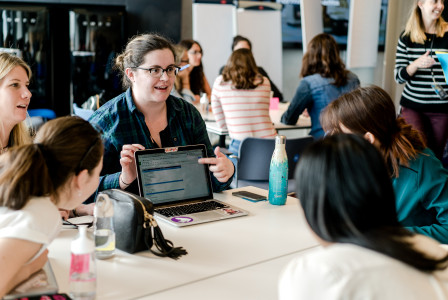
Booking.com and OpenAI are launching the SME AI Accelerator, a free program designed to equip 20,000 small and medium-sized businesses across Europe with practical AI skills. Through hands-on workshops, expert-led webinars, and virtual sessions, the initiative aims to help independent hospitality businesses turn readily available AI tools into everyday operational advantages — without requiring technical prerequisites or upfront investment.
Booking.com
Booking.com
Booking.com
Topics
France
Germany
Ireland
Italy
Poland
Company with 250 or more employees
-
Specific types of tourism
-
-
Adventure tourism
-
Coastal, maritime and inland water tourism
-
Cultural tourism
-
Ecotourism
-
Education tourism
-
Festival tourism
-
Gastronomy tourism
-
Health and medical tourism
-
MICE tourism
-
Mountain tourism
-
Religious tourism
-
Rural tourism
-
Sports tourism
-
Urban/city tourism
-
Wellness tourism
-
-
Transition Pathway Strategic Areas
-
-
Best practices, peer learning and networking
-
Digitalisation of tourism SMEs and destinations
-
Green Transition of Tourism Companies and SMEs
-
Innovative tourism services
-
Skills needs for twin transition
-
Training opportunities
-
-
Business activities
-
-
Activities of amusement parks and theme parks
-
Activities of associations and other organisations supporting tourism
-
Air passenger transport
-
Camping grounds, recreational vehicle parks and trailer parks
-
Events catering and other food services
-
Festivals, cultural and entertainment activities
-
Gardens and nature reserves activities
-
Holiday Housing / Apartments and other short stay accommodation
-
Hotel and similar accommodation
-
Mobile beverage services
-
Mobile food services
-
Museums
-
Operation of historical sites
-
Other
-
Other accommodation
-
Other amusement and recreation activities
-
Other food and beverage services
-
Other holiday reservation services
-
Other tourism transportation activities
-
Rail Passenger transport
-
Recreational and sport activities
-
Restaurants, cafes and bars (Food and Beverage serving activities)
-
Road passenger transport
-
Tour operator activities
-
Travel agency activities
-
Water (sea, coastal and inland) passenger transport
-
Share
Supporting Europe's small and independent hospitality businesses
Europe's structural disadvantage
Hospitality has long faced slower productivity growth than many other sectors. The reasons are well known: service delivery is labor-intensive, demand is variable, and most businesses are small — making it hard to justify new systems, dedicated tech staff, or long implementation cycles.
In Europe, those dynamics are amplified by market fragmentation. Roughly 70% of hotels are small, independent properties, which can limit access to the time, budget, and expertise needed to evaluate and adopt new technologies at speed.
When technology becomes accessible, adoption follows
The advent of AI presents a tremendous opportunity for productivity improvement. AI's near-term impact in hospitality is likely to come less from standalone AI products and more from AI embedded into existing tools and workflows. But meaningful gains are also possible right now with freely accessible applications: improving guest messaging, generating marketing content, drafting SOPs and training materials, streamlining review responses, and building lightweight workflows for repetitive admin tasks.
History has taught us that when technology becomes easier to use, adoption tends to follow. A 2021 analysis by the European Central Bank found that the European accommodation sector saw measurable productivity improvements within existing firms over time — driven in large part by widely accessible digital distribution. This shows the potential of new technologies, if they are easy to use.
The AI gap
Despite growing awareness, AI adoption remains uneven. Smaller firms are far less likely than large enterprises to report using AI tools, and hospitality's heavy reliance on people and process makes capability gaps especially costly. Only 17% of small businesses use at least one AI technology, compared with 55% among large enterprises. For an industry built on fast, accurate service and operational consistency, low adoption represents both risk and missed opportunity.
Booking.com research points to a familiar set of barriers: limited knowledge of available solutions, perceived setup costs, technical complexity, and shortages in relevant skills. At the same time, 88.2% of hotel workers have expressed interest in training to improve their skills — suggesting the core bottleneck is not motivation, but practical enablement.
Introducing the SME AI Accelerator
The SME AI Accelerator is built to address that bottleneck directly. Running from March through June 2026 across six markets — France, Germany, Italy, Poland, Ireland, and the United Kingdom — the program combines three formats designed to translate AI curiosity into working habits: recorded webinars featuring AI experts focused on practical concepts and real hospitality use cases; in-person workshops built around hands-on exercises and guided build sprints; and scalable virtual sessions that support broader participation and follow-through.
The program is free and requires no technical prerequisites. Local partnerships in each market are intended to ensure the content reflects real operational constraints — small teams, peak-time pressure, limited training hours — rather than abstract experimentation.
From training to practice
The curriculum targets fundamentals tied directly to day-to-day hotel needs. Workshop build sprints are designed to help participants develop tangible outputs they can use immediately — such as guest communication playbooks, review-response workflows, marketing content systems, or simple automation ideas tailored to their property.
To extend impact beyond direct participants, the program will also produce a Small Business AI Adoption Guide and a final report summarizing learnings and practical recommendations. Peer operators will share real use cases during events, helping address a common concern among independent hoteliers: that automation might come at the expense of the personal touch that defines great hospitality.
The bigger picture
The SME AI Accelerator won't solve every structural challenge facing European hospitality. But it targets a decisive constraint: the human capacity to adopt and apply AI effectively. In a sector where skills development can translate directly into better service and stronger performance, enabling 20,000 SMEs with practical, low-friction AI capability could be a meaningful step toward closing the gap.
Registrations open in February 2026. For independent hotels and small chains looking to compete in an AI-shaped market, the opportunity is less about chasing novelty — and more about turning accessible tools into consistent operational advantage.
Comments (1)
Related content



Connected Partnership Opportunities
See also

EU Guide Helps Tourism Stakeholders Navigate Funding for the Green and Digital Transition
- Categories
- Coastal, maritime and inland water tourism Cultural tourism Ecotourism +64 more

Funding opportunities in Ireland
- Categories
- Coastal, maritime and inland water tourism Cultural tourism Ecotourism +64 more
Funding opportunities in Poland
- Categories
- Coastal, maritime and inland water tourism Cultural tourism Ecotourism +64 more
PricewaterhouseCoopers Business Solutions SA,
Greece
A very important and timely initiative! This training addresses the real bottleneck for hospitality SMEs — not lack of interest in AI, but lack of practical, accessible guidance. Focusing on real use cases it can genuinely help small businesses turn AI into everyday operational value.