

News
28 August 2026
JRC: Europe leads virtual worlds research but is losing the race to commercialise it
News
28 August 2026
Login / create an account to be able to react
-
<a href="/user/login?destination=/adv-man/news/jrc-europe-leads-virtual-worlds-research-losing-race-commercialise-it%23comment-form">Log in</a> or <a href="/user/register?destination=/adv-man/news/jrc-europe-leads-virtual-worlds-research-losing-race-commercialise-it%23comment-form">register</a> to post comments
-
5
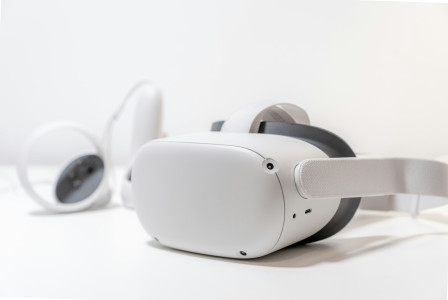
Three JRC studies published on 22 April 2026 give the most detailed picture yet of where Europe stands in virtual worlds - the extended-reality, AI and connectivity technologies already used to test production-line designs before they are physically built - and the picture is mixed: strong on research, weak on turning it into business.
Editorial team
Joint Research Centre
Topics
EU-27
Academic / Research and VET Institutions
Company with 250 or more employees
EU Institutions
Financial Institutions and Investors
SMEs (a company with less than 250 employees)
-
Advanced Manufacturing Organisation Types
-
-
Industrial Software & Technology Providers
-
-
Technology areas
-
-
Networks & Connectivity
-
XR, VR, Augmented reality, Mixed reality, Metaverse
-
Share
The EU produces 30% of the world's virtual-worlds research publications, more than any other region, but that leadership does not carry through to patents or investment. On venture capital, the EU ranks fourth globally with just a 16% share, well behind the United States (around EUR 17 billion invested by the end of 2024) and behind China and the UK too. A second study, examining 22 real-world use cases spanning manufacturing, healthcare, education, defence and entertainment, finds that the technology's biggest practical foothold so far is workplace training, since a VR headset naturally blocks out real-world distractions in a way that suits step-by-step, hands-on learning. A third study surveying virtual-worlds companies and university programmes found nearly 60% of firms rely on external partners to fill technical skills gaps, and that virtual-worlds content makes up just 1% of EU master's degree programmes despite most workers entering the field through higher education. The Commission has also launched an interactive data explorer letting users browse the underlying patent, research and company data directly.
#VirtualWorlds #XR #JRC #Skills
Comments (0)
Connected Partnership Opportunities
See also

How to submit content – Guide for EU Machinery and Advanced Manufacturing Ecosystem
- Categories
- Industrial Software & Technology Providers Machine Tool Manufacturers Other +16 more

How to register and get started – Guide for EU Machinery and Advanced Manufacturing Ecosystem
- Categories
- Industrial Software & Technology Providers Machine Tool Manufacturers Other +16 more
JRC: manufacturing is the biggest sectoral winner from the EU's digital recovery spending
- Categories
- Industrial Software & Technology Providers Machine Tool Manufacturers Other +16 more