

News & articles
19 November 2026
Council and Parliament agree to raise free ETS allowances for industries under heat and fuel benchmarks
News & articles
19 November 2026
Login / create an account to be able to react
-
13
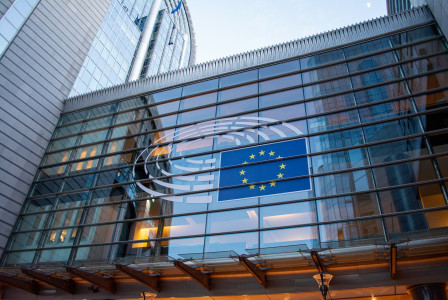
The Council and the European Parliament have reached a provisional agreement to increase free allowances under the EU Emissions Trading System (ETS) for 2026 to 2030 for installations covered by the heat and fuel benchmarks. These benchmarks apply to many chemical processes, and the deal provides a buffer of around 121 million free allowances, including 5 million reserved for sectors most exposed to carbon leakage.
Editorial team
Council of the European Union
Topics
EU-27
Company with 250 or more employees
EU Institutions
Industry Associations and Chambers of Commerce
National authorities
SMEs (a company with less than 250 employees)
Trade Unions
-
Policy type
-
-
Cross-cutting policy
-
Share
Under the ETS, one allowance must be surrendered for every tonne of CO2 emitted. Installations in sectors at risk of carbon leakage receive part of their allowances for free, based on benchmarks. Product benchmarks cover specific products, while the heat and fuel benchmarks, known as fallback benchmarks, apply to all processes without a product-specific benchmark and use heat or fuel consumption as a proxy for efficiency. These fallback benchmarks account for about a quarter of total free allocation. The sectors most affected include chemicals, pulp and paper, food, ceramics and glass.
Fallback benchmarks matter particularly for the chemical industry, where many processes have no dedicated product benchmark. Benchmark values adopted for 2026 to 2030 cut both fallback benchmarks by 34%. According to an analysis by the consultancy Capstone, they have been tightened by 50% compared with 2013 to 2020 levels. The same analysis notes that the current method does not distinguish between processes running at different temperatures. Lower-temperature activities such as district heating push the benchmark down, while high-temperature chemical processes receive less free allocation. The analysts add that the EU chemical industry has faced a wave of closures, squeezed by rising carbon and electricity costs and by cheap imports.
The agreed buffer combines about 88 million allowances proposed by the Commission, 28 million that had remained unallocated, and 5 million set aside as targeted support. According to reporting on the deal, the 28 million allowances had been withheld because installations had not met certain ETS requirements, including obligations on energy efficiency audits and climate neutrality plans. Any of the 5 million reserved allowances that are not used will go to investment support through the Modernisation Fund and to innovation in ETS sectors through the Innovation Fund.
The Commission will establish sector-specific fuel benchmarks for the 2026 to 2030 allocation period, replacing a single approach for all sectors. Ireland’s Minister for Climate, Energy and the Environment, Darragh O’Brien, said the agreement would quickly increase free allowances for energy-intensive sectors and give industry the predictability it needs. The provisional agreement must now be endorsed by the Council and the Parliament and formally adopted. The Commission will then adopt implementing rules for calculating the new heat and fuel benchmarks.
#EnergyIntensiveIndustries #ChemicalsCompetitiveness #IndustrialDecarbonisation #EUChemicalIndustry
Comments (0)
Connected Partnership Opportunities
See also

First meeting of teh collaborative platform on Alternatives to Animal Testing
- Categories

Transition Pathway: the 2024 annual progress report is now available
- Categories
- Digital transition EU Policy Green transition

Share Your Feedback on the Transition Pathways Platform - Survey Open Until 8 May
- Categories
- Digital transition EU Policy Green transition