
News & articles
12 August 2026
Fermentation at Evonik's Slovak site emerges as a model for the bioeconomy
News & articles
12 August 2026
Login / create an account to be able to react
-
13
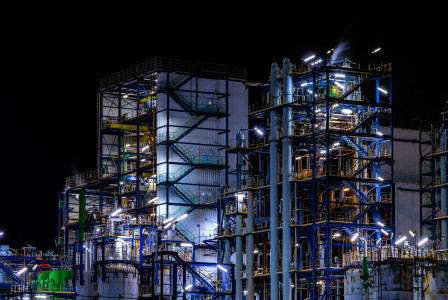
Evonik's Fermas fermentation plant in Slovakia has become one of the industry's most successful examples of specialty chemical production via microbial fermentation, offering a potential blueprint for shifting more chemical manufacturing from petroleum to renewable feedstocks. For an industry still searching for scalable, cost-competitive alternatives to petrochemical synthesis, the site's three-decade evolution offers a rare, concrete case study rather than a laboratory-scale proof of concept.
Editorial team
Chemical & Engineering News
Topics
Slovakia
Academic / Research and VET Institutions
Business Support Organisation
Company with 250 or more employees
EU Institutions
Industry Associations and Chambers of Commerce
National authorities
-
Policy type
-
-
Green transition
-
Share
Originally built in the 1990s to ferment amino acids for animal feed, Fermas has since diversified its 23 fermentation tanks and reconfigurable downstream processing into biosurfactants, pharmaceutical ingredients, feed supplements, biopolymers and other specialty chemicals, a breadth that reflects decades of accumulated institutional knowledge about which chemicals microbes can be engineered to produce profitably. Its flagship product, rhamnolipid biosurfactants made from a genetically engineered Pseudomonas putida strain fed on local corn sugar, reached commercial scale in 2024 and is used by Unilever as a more sustainable surfactant alternative in household products sold across multiple continents.
Evonik is now repeating this scale-up model for contract-manufactured pharmaceutical ingredients, backed by a $94 million investment announced in April 2026, even as the company cuts 6,000 jobs globally, a contrast that underscores how selectively the company is allocating capital toward sites it considers strategically differentiated rather than investing uniformly across its global footprint. Regional officials see the site, powered largely by Slovakia's nuclear and renewable electricity mix, as a seed for a broader biotech cluster, having attracted EU grants and partnerships with local universities including the Slovak University of Technology.
For chemical companies weighing whether fermentation routes can genuinely compete with established petrochemical synthesis at commercial scale, Fermas offers a rare data point suggesting the answer can be yes, provided a company is willing to invest the years of process development and downstream engineering the site's history illustrates, rather than expecting fermentation to substitute for existing chemistry on a like-for-like cost basis from day one.
#BioBasedChemicals #FeedstockSubstitution #ProcessInnovation
Comments (0)
Connected Partnership Opportunities
See also

Transition Pathway: the 2024 annual progress report is now available
- Categories
- Digital transition EU Policy Green transition
Commission unveils 2026 work programme
- Categories
- Digital transition EU Policy Green transition

Webinar material: From the Transition Pathway to the Action Plan: what’s next?
- Categories
- Digital transition EU Policy Green transition