

News & articles
01 July 2025
New study maps challenges in detecting carbon-based nanomaterials
News & articles
01 July 2025
Login / create an account to be able to react
-
24
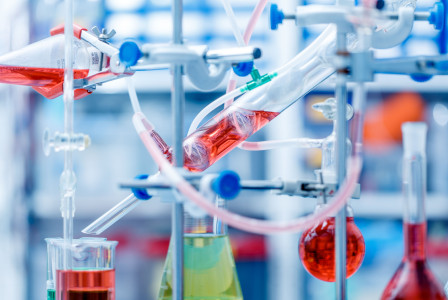
An EUON study highlights major obstacles in identifying and regulating carbon-based nanomaterials and sets out a roadmap for improving analytical methods.
Editorial team
EUON
Topics
Albania
Armenia
Austria
Belgium
Bosnia and Herzegovina
Bulgaria
Croatia
Cyprus
Czechia
Denmark
Estonia
EU-27
Finland
France
Georgia
Germany
Greece
Hungary
Iceland
Ireland
Italy
Kosovo
Latvia
Liechtenstein
Lithuania
Luxembourg
Malta
Moldova
Montenegro
Netherlands
North Macedonia
Norway
Poland
Portugal
Romania
Serbia
Slovakia
Slovenia
Spain
Sweden
Switzerland
Türkiye
Ukraine
Other
Other
-
Policy type
-
-
Cross-cutting policy
-
Share
A new study by the European Observatory for Nanomaterials (EUON) explores the challenges of detecting, characterising, and quantifying carbon-based nanomaterials (CBNMs) in environmental and biological settings. Despite their wide application potential in sectors like medicine, electronics, and energy, the unique properties of CBNMs – combined with the presence of natural carbon –complicate their analysis and regulation.
The study assesses current analytical techniques, flagging issues such as matrix interference, sensitivity limitations, and the lack of standardised protocols. It stresses the importance of using multiple complementary techniques to improve detection accuracy and reproducibility.
To address these gaps, the study proposes a roadmap:
- In the short term, develop and validate fit-for-purpose reference materials.
- In the medium term, update regulatory frameworks like REACH and OECD guidelines, incorporating AI and machine learning.
- In the long term, create international standards and real-time monitoring tools, calling for cross-disciplinary collaboration.
The report supports more informed regulation and safer innovation in nanomaterials. The study was conducted by NovaMechanics Ltd and commissioned by EUON, which is hosted by the European Chemicals Agency (ECHA).
Comments (0)
See also

Commission unveils 2026 work programme
- Categories
- Digital transition EU Policy Green transition

Transition Pathway: the 2024 annual progress report is now available
- Categories
- Digital transition EU Policy Green transition

Share Your Feedback on the Transition Pathways Platform - Survey Open Until 8 May
- Categories
- Digital transition EU Policy Green transition