
Other actions
14 October 2026
EU-funded project develops mechanochemical recycling of fluoropolymers and other PFAS waste
Other actions
14 October 2026
Login / create an account to be able to react
-
3
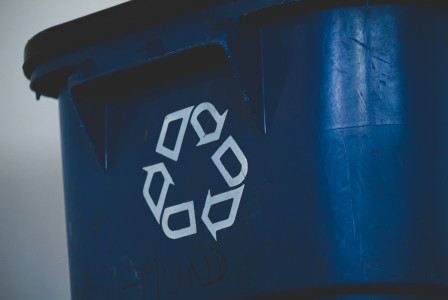
TriFluorium, an EIC Pathfinder project coordinated by AC2T research GmbH in Austria, is developing tribolysis, a mechanochemical process that breaks down highly stable organofluorine waste, including PFAS and fluoropolymers, into inorganic fluorides such as fluorspar. It targets a gap in which fluoropolymers have very limited disposal options, while fluorspar, an EU critical raw material, is imported and recycled at only about 1%.
Editorial team
CORDIS
Topics
Austria
Belgium
Germany
Poland
Spain
Academic / Research and VET Institutions
Company with 250 or more employees
EU Institutions
SMEs (a company with less than 250 employees)
-
Policy type
-
-
Green transition
-
Share
Tribolysis uses a tribocontact site to trigger mechanically induced reactions, creating local high-energy spots that break down even perfluorinated compounds. In a single step, safe reactants such as alkaline earth metal salts or oxides convert the organofluorides into stable inorganic products, a process called mineralisation, regardless of chemical structure, molecular weight or whether the waste is liquid or solid. The project aims to prove the principle at technology readiness level 3 and to build a laboratory-scale Tribo-Reactor for validation at level 4, supported by toxicological and life cycle assessments.
The EU contribution is €3.36 million. Partners include Fundación Tekniker in Spain, GreenDelta in Germany, which develops the environmental and economic assessment, the Vrije Universiteit Brussel, Daikin Chemical Europe in Germany and QSAR Lab in Poland. Fluoropolymers matter beyond the chemical industry itself, since they are used in semiconductors and in green technologies such as hydrogen production, fuel cells and electric vehicles.
The work is at an early stage, so results on efficiency and scale-up are still to come. If validated, a route that converts persistent organofluorine waste into fluorspar would connect two themes the chemicals ecosystem follows closely: the management of PFAS at end of life and the security of critical raw material supply.
#PFAS #ChemicalRecycling #FeedstockDiversification
Comments (0)
Connected Partnership Opportunities
See also
ZeroPM project concludes with conference on phasing out persistent chemicals
- Categories

Baltic Sea project tests wastewater treatment technologies for removing PFAS and micropollutants
- Categories
Consumer chemicals maker commended for three-decade plastic reduction and refill strategy
- Categories