
Other actions
22 October 2026
Pilot recycling routes for polyamide 6 from end-of-life vehicles win two industry awards
Other actions
22 October 2026
Login / create an account to be able to react
-
12
Two pilot-scale technologies for recycling polyamide 6 (PA6), depolymerisation and solvent-based recycling, have won the MATERIALICA Award 2026 in the “CO2 Efficiency” category and second place in the “Sustainability” category of the Fakuma Innovation Award 2026. Developed with partners from the automotive value chain to recover high-quality PA6 from end-of-life vehicles, they are described by the company as technically feasible at pilot scale, with further development and scaling still required before industrial use.
Editorial team
BASF
Topics
Germany
Academic / Research and VET Institutions
Company with 250 or more employees
Industry Associations and Chambers of Commerce
SMEs (a company with less than 250 employees)
-
Policy type
-
-
Green transition
-
Share
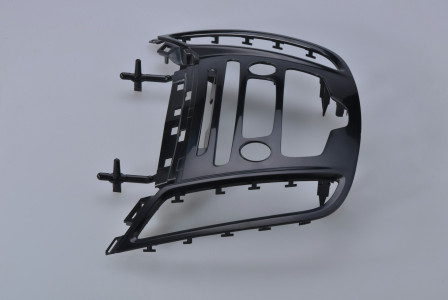
In the depolymerisation pilot, used PA6 components, including heavily contaminated gearbox oil pans from end-of-life vehicles, were chemically broken down into their original monomer, caprolactam. After purification and repolymerisation, the resulting PA6 had properties comparable to virgin material. Together with ZF Group, the glass-fibre-reinforced compound was processed into a stabiliser link for Mercedes-Benz, and the parts met all mechanical requirements under the conditions tested.
The solvent-based pilot targeted complex waste fractions such as automotive shredder residue. PA6 and PA66 were separated from the mixed shredder fraction and PA6 was selectively recovered by solvent extraction. With Pöppelmann K-TECH, the recyclate was made into a chain guide rail for Mercedes-Benz, a highly stressed engine component with demanding requirements for wear, temperature and media resistance. The company notes that any later industrialisation would not necessarily be carried out by BASF itself, but by other market participants.
If scaled up, both routes could help meet the requirements of the EU End-of-Life Vehicles Regulation, which sets recycled plastic content targets of 15% from 2032 and 25% from 2036. First life cycle analyses at pilot level point to a significantly lower product carbon footprint than virgin material, but the company states that this is not yet proof of performance at industrial scale. The results show how chemical and solvent-based recycling are being tested on automotive waste streams that mechanical recycling has so far handled poorly.
#ChemicalRecycling #CircularEconomy #ProcessInnovation
Comments (0)
Connected Partnership Opportunities
See also
Pilot plant in Rostock produces methanol and its derivatives using CO2 as the only carbon source
- Categories
German project to recover benzene and toluene from car shredder residues as an alternative to naphtha cracking
- Categories

EU-funded project develops mechanochemical recycling of fluoropolymers and other PFAS waste
- Categories