

Sectorial reports
15 September 2026
Cefic Q2 2026 report: Europe's chemical industry shows fragile signs of recovery
Sectorial reports
15 September 2026
Login / create an account to be able to react
-
<a href="/user/login?destination=/chemicals/sectorial-reports/cefic-q2-2026-report-europes-chemical-industry-shows-fragile-signs%23comment-form">Log in</a> or <a href="/user/register?destination=/chemicals/sectorial-reports/cefic-q2-2026-report-europes-chemical-industry-shows-fragile-signs%23comment-form">register</a> to post comments
-
35
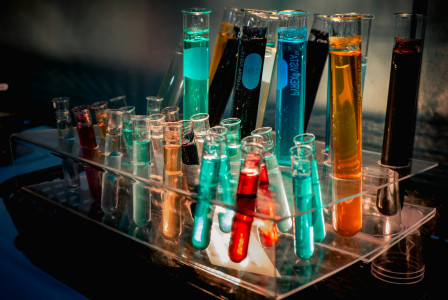
Europe's chemical industry performed somewhat better than expected in the first half of 2026, an improvement Cefic links partly to supply chain disruptions stemming from the situation in the Strait of Hormuz and the wider Middle East. Even so, the recovery remained fragile, uneven across Member States and well below the sector's long-term historical norms, with the structural competitiveness challenges facing European producers left largely unchanged.
Editorial team
CEFIC
Topics
EU-27
Academic / Research and VET Institutions
Company with 250 or more employees
EU Institutions
Financial Institutions and Investors
Industry Associations and Chambers of Commerce
National authorities
SMEs (a company with less than 250 employees)
-
Policy type
-
-
Cross-cutting policy
-
Share
Market conditions improved modestly, driven more by higher producer prices than by a genuine rebound in production volumes, a pattern that points to continued weakness in underlying demand. Business confidence rose 4.1 points compared with the same period in 2025, supported by an 8.0-point increase in recent production, though both indicators remained in negative territory and employment expectations continued to deteriorate.
Capacity utilisation climbed only gradually, reaching 75.0% in the third quarter, still 6.3 percentage points below the sector's long-term average and noticeably behind the 77.9% recorded across manufacturing as a whole, with Belgium and Germany showing the weakest operating rates and Spain and France performing comparatively better.
Energy costs remain a central constraint on the sector's global competitiveness. European gas prices averaged €45.1 per MWh between January and July, up 15.7% year-on-year, while prices in the United States fell over the same period, widening the EU-US gas price ratio from 2.8 to 3.6, a gap that continues to weigh on investment decisions for energy-intensive production such as basic chemicals and polymers.
Production performance diverged sharply across Member States, with France and Spain returning to growth while output kept contracting in the Netherlands, Germany and Italy, and 'other organic basic chemicals' and polymers remained the weakest-performing segments amid persistent global oversupply.
Trade flows also softened, with extra-EU27 chemical exports and imports both declining during the first half of the year, driven largely by weaker sales to the United States; the trade surplus narrowed to €18.4 billion even as the physical volume deficit improved.
Globally, chemical production growth slowed to 1.5% year-on-year, with China's continued expansion increasingly isolated against contraction across most other major producing regions, including the EU27, Germany, Japan and the United States, underscoring the widening gap between Europe's chemical sector and its fastest-growing global competitors.
#ChemicalsCompetitiveness #EUTrade #EnergyIntensiveIndustries
Documents
Comments (0)
Connected Partnership Opportunities
See also
Five years on: ECHA takes stock of how REACH and CLP work in practice
- Categories
Cefic publishes its first Chemical Trends Report for 2026 (January to March)
- Categories
- Digital transition EU Policy Green transition

Two-year recap maps future skills needs for Europe's chemical industry
- Categories