

Sectorial reports
19 November 2026
EU climate progress report finds chemical industry emissions fell mainly through process efficiency gains
Sectorial reports
19 November 2026
Login / create an account to be able to react
-
10
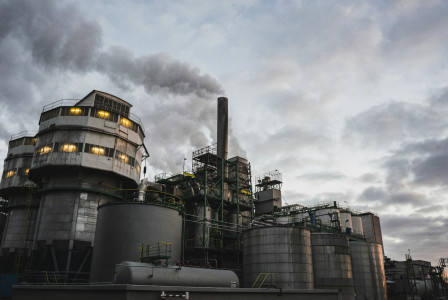
The European Commission’s Climate Action Progress Report 2026 includes an analysis of emissions and competitiveness in energy-intensive industries, including chemicals. Between 2010 and 2024, direct emissions from these industries fell by 27%, and in the chemical sector the reductions came largely from improvements in process efficiency.
Editorial team
Directorate-General for Climate Action
Topics
EU-27
Company with 250 or more employees
EU Institutions
Financial Institutions and Investors
Industry Associations and Chambers of Commerce
National authorities
SMEs (a company with less than 250 employees)
-
Policy type
-
-
Green transition
-
Share
The report identifies five energy-intensive industries: chemicals and chemical products, basic metals, non-metallic minerals, paper and pulp, and refined petroleum products. In 2024 they employed 4.1 million people and generated around 16% of manufacturing value added. They account for about three quarters of EU industrial greenhouse gas emissions. Their direct emissions fell from 764 to 567 MtCO2-eq between 2010 and 2024; including indirect emissions from electricity use, the decline reaches 40%.
According to the Commission’s decomposition analysis for 2014 to 2024, emission cuts in the chemical and mineral industries were driven mostly by better process efficiency, while lower economic activity played a bigger role in the metals sector. The report also notes a sharper fall in production and value added in the chemical and basic metals sectors during the 2019 to 2024 crisis period. Over 2019 to 2024, EU production of chemicals and pharmaceuticals grew by 3%, compared with 15% in the United States. Extra-EU chemical imports stayed almost flat in volume between 2019 and 2025 (+1%). The report also points to weak domestic demand and global overcapacity as reasons for rising imports of chemicals and basic metals.
The report highlights a Modernisation Fund project in Ostrava, Czechia, which received €60 million to replace ageing nitric acid units with a more energy-efficient plant producing 150,000 tonnes a year. The new line recovers heat from production to generate steam and electricity. It produced its first nitric acid at the end of September 2026 and then entered trial operation. The plant belongs to BorsodChem, which uses the nitric acid in the aniline production chain at its Ostrava site. It was built on a turnkey basis by Casale, a technology and engineering company, using its dual-pressure nitric acid technology. Casale reports that around 1,000 tonnes had been produced shortly after start-up and that steam export had begun.
Across the whole ETS, verified emissions fell by 2.0% in 2025, and auctions raised €43.2 billion. Of the revenue reported by Member States, €5.1 billion went to compensating electro-intensive industries for indirect carbon costs.
#EnergyIntensiveIndustries #IndustrialDecarbonisation #ChemicalsCompetitiveness #ResourceEfficiency
Comments (0)
Connected Partnership Opportunities
See also
Cefic publishes its first Chemical Trends Report for 2026 (January to March)
- Categories
- Digital transition EU Policy Green transition
Cefic Q3 2026 report: Europe’s chemical production down 2.0% as recovery stays fragile
- Categories
- Green transition

Study assesses green ammonia supply from India to industrial clusters in Northwest Europe
- Categories