
Sectorial reports
10 November 2026
Study assesses green ammonia supply from India to industrial clusters in Northwest Europe
Sectorial reports
10 November 2026
Login / create an account to be able to react
-
13
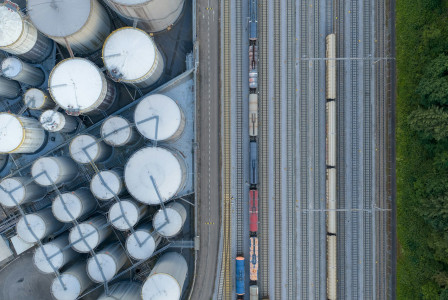
A prefeasibility study by Rocky Mountain Institute (RMI), developed with the Flemish Institute for Technological Research (VITO), finds scope for at least 1 million tonnes a year of green ammonia trade between the Indian state of Odisha and Northwest Europe by 2030. The target clusters are Antwerp-Bruges, Hamburg, North Rhine-Westphalia and Rotterdam.
Editorial team
Flemish Institute for Technological Research
Topics
Belgium
EU-27
Germany
Netherlands
Company with 250 or more employees
Cluster Organisations
Financial Institutions and Investors
Industry Associations and Chambers of Commerce
National authorities
-
Policy type
-
-
Green transition
-
Share
The four clusters examined already use about 1.8 million tonnes of hydrogen a year, almost all of it made from natural gas. Imported green ammonia is one option to replace this fossil-based hydrogen and diversify supply. The study draws on almost two years of input from more than 20 organisations, including European off-takers, Indian producers, port authorities and infrastructure developers. It was supported by the New Energy Industrial Strategy Center (NEIS Center).
According to the report, Odisha has attracted more than 6.5 million tonnes a year of announced capacity across eight developers, and about 0.8 million tonnes is under construction. RFNBO-compliant green ammonia from Odisha could reach Northwest European ports at about €665 to €774 per tonne.
The authors see refineries as the first likely buyers, because the Renewable Energy Directive (RED III) sets targets for renewable hydrogen in transport fuels. Refineries in Hamburg and North Rhine-Westphalia could need about 0.8 million tonnes of green ammonia by 2030 if they met their share entirely through imports. The report estimates that hydrogen cracked from imported ammonia would add €30 to €90 per tonne of fuel, mostly below Germany’s penalty of €88 to €210 per tonne. Fertiliser, chemical and shipping demand could follow, the study notes.
The main obstacles identified are weak coordination along the value chain, slow national transposition of EU targets, and missing import and cracking infrastructure. RMI and VITO now plan a full feasibility assessment and a formal coalition to build the corridor.
#HydrogenInfrastructure #FeedstockDiversification #SupplyChainResilience #IndustrialDecarbonisation
Comments (0)
Connected Partnership Opportunities
See also
Cefic publishes its first Chemical Trends Report for 2026 (January to March)
- Categories
- Digital transition EU Policy Green transition
Cefic Q3 2026 report: Europe’s chemical production down 2.0% as recovery stays fragile
- Categories
- Green transition
EU climate progress report finds chemical industry emissions fell mainly through process efficiency gains
- Categories