

News
04 August 2026
Phase change materials offer a route to smarter building cooling
News
04 August 2026
Login / create an account to be able to react
-
39
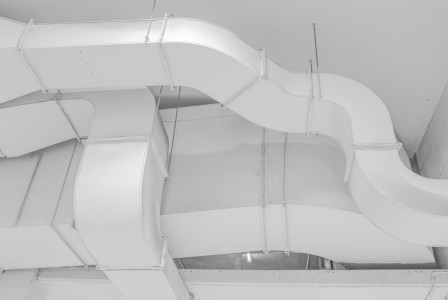
This BUILD UP technical article outlines an ongoing Slovenian research project developing guidelines and an open-source online tool to help designers select phase change materials (PCM) for use in building elements such as walls, ceilings and façades. PCMs can store and release heat to reduce indoor overheating and cooling energy demand, particularly in lightweight prefabricated buildings. The article is relevant to architects, engineers, manufacturers and renovation professionals seeking practical, evidence-based approaches to climate-resilient building design.
BUILD UP
Topics
EU-27
Slovakia
Academic / Research and VET Institutions
Business Support Organisation
SMEs (a company with less than 250 employees)
-
Focus Areas
-
-
Research, Innovation, Technology
-
Towards a fair and safe built environment
-
Share
Published on the European Commission's BUILD UP portal, the article by Dr Eva Zavrl of the University of Ljubljana presents an ongoing project funded by the Slovenian Research Agency (ARIS), which is developing guidelines and an open-source online tool for determining the thermal characteristics of phase change materials (PCM) in building elements; the article explains that rising cooling demand and overheating risk, particularly in lightweight prefabricated buildings with low thermal mass, are increasingly important issues under the revised Energy Performance of Buildings Directive and the new Construction Products Regulation, and that PCMs can help by storing and releasing heat through phase transitions, stabilising indoor temperatures and reducing reliance on mechanical cooling when integrated into walls, ceilings, floors, roofs or façades. Key aspects of the project include analysing how PCM characteristics have been determined in existing research to produce practical selection guidance for different applications, exploring active-passive PCM systems that combine thermal storage with ventilation-based heat removal, validating computational models through outdoor testing under real environmental conditions, and developing a user-friendly online tool that will estimate suitable PCM properties based on inputs such as climate, building geometry, envelope properties and ventilation strategy; the project also involves manufacturers, renovation designers and other stakeholders through interviews and testing to ensure the tool is practical for real-world use. For the construction ecosystem, this work is relevant to the wider renovation wave and climate adaptation agenda, offering architects, engineers, product manufacturers and renovation professionals a clearer, evidence-based route from PCM research to practical specification, with the stated aim of supporting more energy-efficient, comfortable and climate-resilient buildings across Europe; readers are directed to the original BUILD UP article for full technical detail, figures and references.
#EUConstruction #GreenTransition #ConstructionInnovation #EnergyEfficiency #BuildingsRenovation #ClimateResilience #SustainableBuildings
Comments (0)
Connected Partnership Opportunities
See also
Call for evidence and a public consultation for the forthcoming Advanced Materials Act.
- Categories
- Skills and talent Regulatory framework Research, Innovation, Technology +2 more

The European Construction Observatory is back: new data, new publications, new webinar
- Categories
- Skills and talent Regulatory framework Research, Innovation, Technology +2 more
Share Your Feedback on the Transition Pathways Platform - Survey Open Until 8 May
- Categories
- Skills and talent Regulatory framework Research, Innovation, Technology +2 more