

Best practices
06 August 2025
The Mapa Latinoamericano de Feminicidios (Latin American Femicide Map)
Best practices
06 August 2025
Partnerships
Transformative Digital Transition
Proximity and social economy
+13 more
-
18
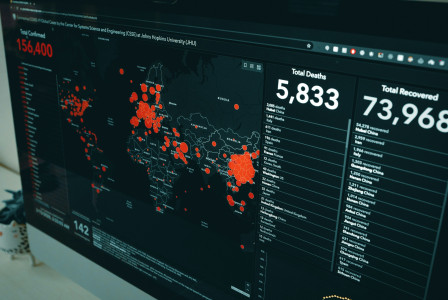
The Mapa Latinoamericano de Feminicidios (Latin American Femicide Map), coordinated by MundoSur, is a powerful regional initiative that uses data to expose and confront gender-based violence across Latin America and the Caribbean. The map compiles and visualises data on feminicides—murders of women committed because of their gender—collected by 16 civil society organisations (CSOs) operating in countries including Argentina, Brazil, Colombia, and Peru. It functions not only as a repository of information but also as a crucial advocacy tool, shedding light on state inaction and strengthening demands for justice and accountability.
Topics
Albania
Armenia
Austria
Belgium
Bosnia and Herzegovina
Bulgaria
Croatia
Cyprus
Czechia
Denmark
Estonia
EU-27
Finland
France
Georgia
Germany
Greece
Hungary
Iceland
Ireland
Italy
Kosovo
Latvia
Liechtenstein
Lithuania
Luxembourg
Malta
Moldova
Montenegro
Netherlands
North Macedonia
Norway
Poland
Portugal
Romania
Serbia
Slovakia
Slovenia
Spain
Sweden
Switzerland
Türkiye
Ukraine
Other
EU Institutions
Networks and Federations / Confederations
NGOs / Non-profits
Social Economy Entity
-
Thematic area
-
-
Partnerships
-
Transformative Digital Transition
-
-
Interlinkages with other sectors
-
-
Proximity and social economy
-
Health
-
-
Action areas and keywords
-
-
Access to technology
-
Boosting digital skills by - and in the social economy
-
Data sharing, Data management & Code of Conduct
-
Digital Platforms
-
Strategy for Data
-
Tech for Good
-
-
Ecosystem focus
-
-
Proximity economy
-
Social economy
-
-
Scope of activity
-
-
International
-
Local/neighbourhood
-
National
-
Regional
-
Share
The project was born out of urgent necessity. During the COVID-19 pandemic, reports of increased gender-based violence highlighted significant gaps in the official data provided by states—data which often failed to recognise or categorise killings as feminicides. In response, a coalition of feminist organisations came together to establish the Latin American Network against Gender Violence (RLCVG), now comprising CSOs from 25 countries. Their aim is to monitor, document, and influence state responses to feminicide at the national and regional level.
The map embodies democratic values by enabling civil society to hold states accountable through data-driven evidence. In contexts where protest and activism are restricted or criminalised, the ability to document and publish verified information on feminicides offers a form of resistance that amplifies citizen voices. This data gives legitimacy to protest and advocacy efforts, supporting compliance with international frameworks such as the Inter-American Convention of Belém do Pará.
The initiative also promotes equity by addressing the structural discrimination that places women at greater risk. It highlights the disparity in how states treat violence against women and demonstrates the need for informed, preventative policies. In countries where state institutions fail to record feminicides accurately or transparently, the map fills a critical data gap, ensuring that these acts are recognised, counted, and not forgotten.
Building trust has been central to the initiative’s success. Recognising the risks faced by CSOs in politically hostile environments, the project allows organisations to submit and publish data using context-sensitive strategies. A framework agreement ensures confidentiality where necessary and provides shared ethical standards for all participating members. Through this collaborative, secure approach, the Femicide Map stands as a model of how grassroots-led digital tools can uphold human rights, foster regional solidarity, and push for structural change.
Several notable European initiatives comparable to the Latin American Femicide Map, each harnessing data-driven approaches to monitor and combat gender-related killings:
The European Femicide Observatory, supported by COST Action IS1206, brings together researchers from around 30 countries to collect and compare data on femicides, aiming to reduce discrepancies in national records and inform EU-wide policies. Through its work, it has produced cross-country comparisons and offered training for young researchers, as well as engaging national parliaments and UN platforms with evidence-based advocacy.
In the Western Balkans, the FemPlatz map presents an interactive visualisation of femicide cases in Albania, Montenegro, and Serbia since 2019. Developed with UN Women and EU funding, it gathers publicly reported incidents from media sources to serve both as awareness‑raising tool and a template for future regional femicide observatories,
In Serbia, Albania, Montenegro and Bosnia and Herzegovina, local women’s organisations partnered with UN Women to establish femicide watches—mechanisms for systematic data collection, analysis of court convictions and institutional response, and advocacy. The methodology developed in Serbia in particular has been replicated across these countries, forming part of a regional research report published in 2023 that outlined recommendations for national monitoring frameworks and femicide prevention strategies.
In Malta, Spain, Portugal, Germany and Cyprus, the FEM‑UnitED project published a comparative report in December 2023, revealing that between 2019 and 2020 over 629 women were killed in intimate‑partner contexts across those five countries, representing 60 % of femicides in that period. The report aimed to guide preventative policies and improve evidence‑based responses.
Additionally, the European Data Journalism Network (EDJNet) compiled a continental dataset covering up to 2021 by requesting official statistics and filling gaps where needed, estimating at least 3,232 femicide victims in 20 European countries between 2010 and 2021. The project highlighted massive inconsistencies across national reporting and visualises trends via a pan‑European map.
Furthermore, the European Institute for Gender Equality (EIGE) has worked to harmonise data collection on femicide across EU Member States. Its framework proposes standardised classification and measurement indicators, with pilot data expected from countries such as Hungary, in order to support comparable official statistics across jurisdictions.
Comments (0)
See also

OECD Private Philanthropy for Development: Data for Action dashboard
- Categories
- Partnerships Transformative Digital Transition Proximity and social economy +24 more

We are packing up! Proximity and social economy community is moving
- Categories
- Partnerships Regenerative Green Transition Skills +68 more
From Pathway to Practice: a closing note from the EU PSE Platform editorial team
- Categories
- Partnerships Regenerative Green Transition Skills +68 more