

Articles
16 June 2026
Empowering women across textile value chains
Articles
16 June 2026
Login / create an account to be able to react
-
42
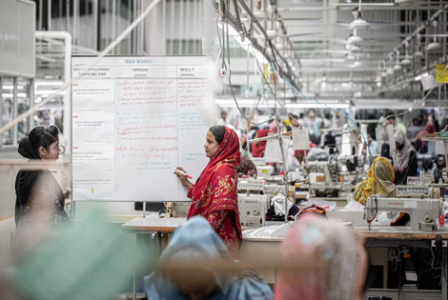
Women play a fundamental role throughout textile value chains, from fibre production and processing, to manufacturing, retail, and entrepreneurship. As the global textile ecosystem undergoes a transition towards greater sustainability and resilience, empowering women through equal access to resources, skills, capacity building, finance, and leadership opportunities is becoming increasingly important. Supporting women's participation contributes not only to social inclusion, but also to innovation, productivity, growth, and long-term competitiveness across the sector.
European Commission
International Fund for Agricultural Development, International Labour Organisation
Topics
Albania
Armenia
Austria
Belgium
Bosnia and Herzegovina
Bulgaria
Croatia
Cyprus
Czechia
Denmark
Estonia
EU-27
Finland
France
Georgia
Germany
Greece
Hungary
Iceland
Ireland
Italy
Kosovo
Latvia
Liechtenstein
Lithuania
Luxembourg
Malta
Moldova
Montenegro
Netherlands
North Macedonia
Norway
Poland
Portugal
Romania
Serbia
Slovakia
Slovenia
Spain
Sweden
Switzerland
Türkiye
Ukraine
Other
Academic / Research and VET Institutions
Company with 250 or more employees
International Organisations
NGOs / Non-profits
SMEs (a company with less than 250 employees)
-
Transition Pathway's building blocks
-
-
Skills
-
Social dimension
-
Sustainable competitiveness
-
-
Industrial ecosystems
-
-
Proximity and social economy
-
Textile
-
-
Textiles ecosystem areas
-
-
Fibres, yarns and fabrics
-
Apparel and clothing accessories
-
Business support and Communication
-
Share
Women have long played a central role in the textile and garment industry. They contribute across the value chain, from fibre production and processing to manufacturing, retail and entrepreneurship. The sector remains an important source of employment and income for women worldwide. The International Labour Organisation notes that the garment industry alone provides employment to more than 90 million people globally and is a vital source of livelihood, particularly for women, who make up most of its workforce.
This issue is especially relevant in 2026. In April 2026, IndustriALL Global Union’s textile, garment, sportswear and leather sector adopted a gender policy focused on advancing equality for textile and garment workers. The policy highlights that women remain central to the sector, while still facing unequal pay, discrimination, violence, harassment and limited access to rights and opportunities. This recent development reinforces a key point for the future of textiles: women’s empowerment must be treated as part of the sector’s social and economic transition, not as a separate concern.
Despite their contributions, many women still face unequal access to finance, training, technology and leadership opportunities. They are also underrepresented in decision-making positions, which can reduce their influence over policies and business practices. Addressing these challenges is increasingly important as the industry adapts to current economic, social and environmental changes.
In many regions, particularly rural areas, women are involved in producing, processing and selling raw materials that later enter textile supply chains. Improving women’s access to markets, skills development and economic opportunities can strengthen livelihoods and support broader community development. The International Fund for Agricultural Development's (IFAD) 2026 Markets and Value Chains Brief underlines the importance of investing in market systems and value chains for rural producers and small enterprises, which is directly relevant to women’s economic participation in supply chains.
Women are also helping to shape change within the textile and apparel sector. Many women-led community initiatives are exploring more sustainable approaches to production and trade. As sustainability becomes a greater priority within the global textile industry, expanding opportunities for women can support both social and economic progress. Greater access to leadership roles, entrepreneurship, training and fair working conditions can help ensure that women participate fully in the sector’s future development.
Comments (0)
Related content

Connected Partnership Opportunities
See also
Introducing the ‘Themed Discussion Days’ on the EU Textiles Ecosystem Platform
- Categories
- Infrastructure Investments and funding R&I, techniques and technological solutions +26 more

Finding the common thread: The EU Textiles Ecosystem Platform has officially launched!
- Categories
- Infrastructure Investments and funding R&I, techniques and technological solutions +28 more

The video tutorial on the EU Textiles Ecosystem Platform is now live!
- Categories
- Infrastructure Investments and funding R&I, techniques and technological solutions +26 more