

Articles
28 July 2026
How France is bringing clothing repair back into fashion education
Articles
28 July 2026
Login / create an account to be able to react
-
44
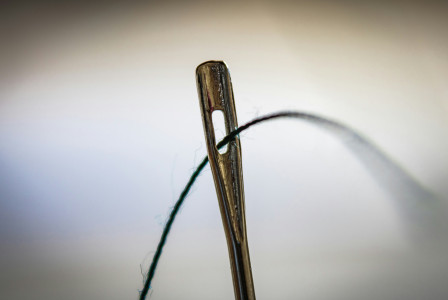
A clothing repair school in France is helping revive traditional repair techniques while equipping a new generation with practical skills that support garment longevity. The initiative highlights the growing importance of repair as an integral part of the fashion value chain.
Ecole de la Réparation
Topics
Albania
Armenia
Austria
Belgium
Bosnia and Herzegovina
Bulgaria
Croatia
Cyprus
Czechia
Denmark
Estonia
EU-27
Finland
France
Georgia
Germany
Greece
Hungary
Iceland
Ireland
Italy
Kosovo
Latvia
Liechtenstein
Lithuania
Luxembourg
Malta
Moldova
Montenegro
Netherlands
North Macedonia
Norway
Poland
Portugal
Romania
Serbia
Slovakia
Slovenia
Spain
Sweden
Switzerland
Türkiye
Ukraine
Other
Consumer Organisations
Local Authorities
National authorities
Networks and Federations / Confederations
Regional Authorities
-
Transition Pathway's building blocks
-
-
Sustainable competitiveness
-
-
Industrial ecosystems
-
-
Textile
-
-
Textiles ecosystem areas
-
-
Waste management, reuse and repair
-
Share
Repairing garments was once considered a common household skill, but in recent decades it has gradually become less widespread as clothing consumption patterns changed. A new educational initiative in France is working to reverse this trend by placing clothing repair at the centre of fashion training, demonstrating how craftsmanship and technical expertise can contribute to extending the lifespan of textile products.
The clothing repair school provides specialised training in garment assessment, alteration, visible and invisible mending, fabric restoration and finishing techniques. Students develop practical skills while learning how to preserve the quality, functionality and appearance of garments that might otherwise be discarded. The programme combines traditional craftsmanship with contemporary methods, ensuring that repair remains relevant within today's fashion industry.
Beyond technical instruction, the initiative promotes a broader understanding of product longevity and responsible garment care. Repair is presented not simply as a corrective measure but as an essential service that adds value throughout the lifecycle of clothing. This perspective encourages future professionals to consider durability and maintenance alongside design and production.
The programme also responds to the increasing demand for skilled repair specialists from brands, retailers and independent businesses seeking to expand aftercare services. As more organisations invest in repair programmes and garment maintenance, the availability of trained professionals becomes increasingly important for supporting these activities.
The initiative provides a structured 11-month training programme that combines practical repair techniques with fashion history, entrepreneurship and industry placements. Launched in September 2025 with an inaugural cohort of 20 students in Roubaix, the school aims to prepare participants for careers in garment repair while responding to the growing demand for skilled professionals across the fashion sector. Although it does not yet award a state-recognised diploma, graduates receive professional certification and gain experience through internships with established fashion companies.
By reconnecting fashion education with repair skills, this initiative helps preserve valuable craftsmanship while preparing students for evolving opportunities within the textile sector. It demonstrates that repair can play an important role in supporting product quality, customer engagement and resource efficiency, while reinforcing the value of technical expertise that has been developed over generations.
Comments (0)
Connected Partnership Opportunities
See also
Introducing the ‘Themed Discussion Days’ on the EU Textiles Ecosystem Platform
- Categories
- Infrastructure Investments and funding R&I, techniques and technological solutions +26 more
ECOSYSTEX Insight Series #22 highlighted skills for the textile ecosystem’s transition
- Categories
- R&I, techniques and technological solutions Skills Social dimension +13 more
A platform that connects, informs and inspires: highlights from the 2025 community engagement survey
- Categories
- Infrastructure Investments and funding R&I, techniques and technological solutions +28 more