

Articles
25 November 2026
From product passports to smart products
Articles
25 November 2026
Login / create an account to be able to react
-
4
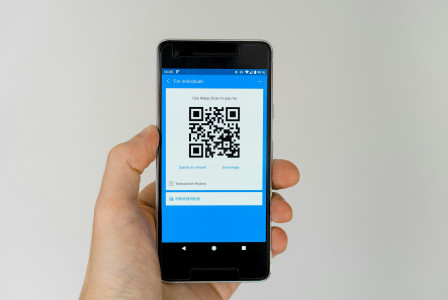
The whitepaper “From Product Passports to Smart Products” explores how the Digital Product Passport can evolve from a compliance tool into the foundation of a product-centric business model. Through the concept of Product Lifetime Value and a progressive Smart Product framework, it outlines how brands can extend value across the product lifecycle, improve operational efficiency and lay the groundwork for future applications of Physical AI.
"Black Sea Route" Association
"In the footsteps of Saint Paul, the Apostle of the nations" - Cultural Route European Grouping of Territorial Cooperation
"Kliment Timiryazev" Agricultural Vocational High School
"VIKSVOS" - handmade natural clothing for a sustainable everyday
"Ștefan cel Mare" University
#Test
-
110+ Initiative
21st Europe
3D Research Srl
3D-CIRCULAR, European Health and Digital Executive Agency
3DCP Group
SPIN
Topics
Albania
Armenia
Austria
Belgium
Bosnia and Herzegovina
Bulgaria
Croatia
Cyprus
Czechia
Denmark
Estonia
EU-27
Finland
France
Georgia
Germany
Greece
Hungary
Iceland
Ireland
Italy
Kosovo
Latvia
Liechtenstein
Lithuania
Luxembourg
Malta
Moldova
Montenegro
Netherlands
North Macedonia
Norway
Poland
Portugal
Romania
Serbia
Slovakia
Slovenia
Spain
Sweden
Switzerland
Türkiye
Ukraine
Other
Company with 250 or more employees
-
Transition Pathway's building blocks
-
-
Infrastructure
-
R&I, techniques and technological solutions
-
-
Industrial ecosystems
-
-
Textile
-
-
Textiles ecosystem areas
-
-
Research and Innovation
-
Technology and Machinery
-
Share
The Digital Product Passport (DPP) represents more than a regulatory requirement for the fashion industry: it could provide the infrastructure for a new, product-centric approach to retail. In its November 2026 whitepaper From Product Passports to Smart Products, the Smart Products Infrastructure Network (SPIN) explores how brands can leverage DPP investments to move beyond compliance, connecting product identity, data and lifecycle operations to unlock new sources of value.
The report introduces the concept of Product Lifetime Value (PLV), shifting the focus from customer-centric models towards the physical product as a persistent economic asset. While Customer Lifetime Value focuses on acquisition, retention and customer engagement, PLV considers how value can be protected, recovered and created throughout a product's lifecycle, including authentication, care and repair, resale, refurbishment and recycling. Achieving this requires more than a digital label: products must remain identifiable and actionable across systems, ownership changes and services.
To support this transition, the whitepaper outlines a three-stage Smart Product Playbook: Product Foundation, Product Operations and Product Intelligence. It highlights the importance of interoperable infrastructure, lifecycle-grade product identity and systems capable of connecting product state, events, permissions and actions. A case study involving a live deployment in a luxury fashion environment illustrates how product-level visibility can improve operational efficiency, reducing product-location time from hours to seconds within the deployment perimeter.
Looking ahead, the report identifies Physical AI as a potential next step in the evolution of Smart Products. By combining reliable product identity, lifecycle information, verifiable evidence and governed permissions, products could become increasingly legible to AI systems, enabling new operational capabilities and services. The central message is that DPP implementation should be approached as a long-term infrastructure investment, capable of supporting both regulatory requirements and broader business transformation.
Comments (0)
Connected Partnership Opportunities
See also

Realism over optimism in Europe’s textile-to-textile recycling future
- Categories
- Investments and funding R&I, techniques and technological solutions Sustainable competitiveness +11 more
Introducing the ‘Themed Discussion Days’ on the EU Textiles Ecosystem Platform
- Categories
- Infrastructure Investments and funding R&I, techniques and technological solutions +26 more
Shedding to Solutions report identifies solutions to reduce microfibre pollution from textile production
- Categories
- R&I, techniques and technological solutions Textile Fibres, yarns and fabrics +3 more