

Best practices
29 July 2026
Next-gen materials and diversification strategies of European tanneries: the case of Heller-Leder
Best practices
29 July 2026
Login / create an account to be able to react
-
26
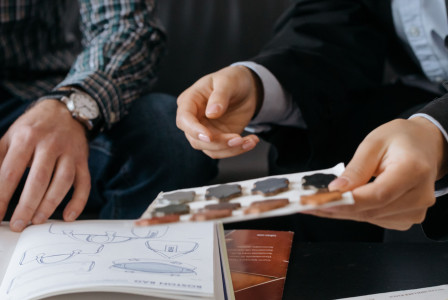
The range of innovative bio-based materials has been expanding in the textile sector. However, scaling up their production and achieving market entry can still be challenging. Against this backdrop, Heller-Leder, a large tannery, provides an example of how an established player in the ecosystem can embrace innovative materials to access new demand segments and diversify beyond its core leather business.
Heller Leder
Topics
Albania
Armenia
Austria
Belgium
Bosnia and Herzegovina
Bulgaria
Croatia
Cyprus
Czechia
Denmark
Estonia
EU-27
Finland
France
Georgia
Germany
Greece
Hungary
Iceland
Ireland
Italy
Kosovo
Latvia
Liechtenstein
Lithuania
Luxembourg
Malta
Moldova
Montenegro
Netherlands
North Macedonia
Norway
Poland
Portugal
Romania
Serbia
Slovakia
Slovenia
Spain
Sweden
Switzerland
Türkiye
Ukraine
Other
Academic / Research and VET Institutions
Business Support Organisation
Company with 250 or more employees
Cluster Organisations
Consumer Organisations
Cultural and Heritage Organisations
Destination Management & Marketing Organisations
EU Institutions
Financial Institutions and Investors
Industry Associations and Chambers of Commerce
International Organisations
Local Authorities
Media / Journalist Organisations
National authorities
Networks and Federations / Confederations
NGOs / Non-profits
Notified Bodies
Regional Authorities
SMEs (a company with less than 250 employees)
Social Economy Entity
Trade Unions
Other
-
Transition Pathway's building blocks
-
-
R&I, techniques and technological solutions
-
Sustainable competitiveness
-
-
Industrial ecosystems
-
-
Textile
-
-
Textiles ecosystem areas
-
-
Leather and fur
-
Research and Innovation
-
Share
Heller Leder at a glance
Founded in 1920, Heller Leder is a large tannery based in Hehlen (Germany). The company employs around 300 people and reports a turnover exceeding EUR 50 million in 2024.1 Its leather is used in automotive, home furnishings, leather goods and clothing, serving premium brands such as Porsche.
The company operates as a full-service tannery, meaning that all stages, from the untreated raw hide to the finished leather, are carried out at its own site, where production facilities process up to 1,500 hides per day. Its sister company, Helcor-Leder-Tec, specialises in the finishing of leather and other carrier materials, including microfibre materials.
Its entire product portfolio is certified according to the Blue Angel and OEKO-TEX® standards.
Heller-Leder has an established track record in developing environmentally innovative solutions for leather production. Examples include its participation in KeratoFILTAN, a German-funded project under the Industrielle Bioökonomie (Industrial Bioeconomy) programme, aiming to transform keratin recovered from hair residues into bio-based filling and retanning agents; and its participation in the ReeL project, funded under the r+Impuls - Impulse für industrielle Ressourceneffizienz (Impulses for Industrial Resource Efficiency), which focused on converting leather residues and plant biomass into retanning agents.
Expanding business opportunities by leveraging innovative materials and established know-how
In 2025, Heller Leder began working with INNOVERA™, an innovative material developed by the biomaterials technology company Modern Meadow using plant-based proteins, biopolymers and recycled rubber. More than 80% of the carbon contained in the material comes from bio-based or recycled sources rather than virgin fossil resources. Among the key reasons behind Heller-Leder’s decision to select it were its environmental profile and material characteristics, including the use of recycled raw materials and durability.
Since INNOVERA™ is designed to be integrated into existing tannery processes and can be treated much like conventional leather using Heller-Leder’s tannery equipment, the company can purchase it in a semi-finished form and then re-tan, dye, and finish it through its standard production processes. This compatibility was a key factor in Heller-Leder’s decision to select the material.
Through these processes, Heller-Leder can tailor the material’s colour, softness, surface appearance and technical properties to the requirements of different customers and applications, leveraging its tanning expertise, processing technologies and market knowledge.
By expanding its portfolio to include this material, Heller-Leder can serve a segment of the market seeking solutions free of animal components that combine sustainability features with a look and feel comparable to leather.
Its established commercial network also places the company in a strong position to introduce innovative solutions to the market, building on long-standing relationships with leading brands in end-use markets.
New opportunities for the future arising from collaborations
The Heller-Leder case shows how collaboration with companies developing innovative materials can create opportunities that go beyond simply adding a new product to the portfolio. Since the semi-finished material is currently manufactured in the United States, Heller-Leder and Modern Meadow have established a joint venture to produce it at a new facility near Heller-Leder’s German site, combining Modern Meadow’s material technology with Heller-Leder’s industrial expertise, processing capabilities and knowledge of European markets. Production is expected to begin in late 2026.
Conclusion
As shown by the Heller-Leder case, cooperation between material innovators and tanneries can support access to emerging market segments and industrial scale-up, leveraging existing industrial assets and specialised leather-processing skills. While the broader uptake of similar initiatives will depend on the pace and scale of market demand for new material solutions, this approach can create new opportunities for diversification.
1. Orbis database, Bureau van Dijk / Moody’s Analytics.
Comments (0)
See also

Driving circularity through waste-derived materials in Textiles and Leather
- Categories
- Sustainable competitiveness Textile Fibres, yarns and fabrics +4 more
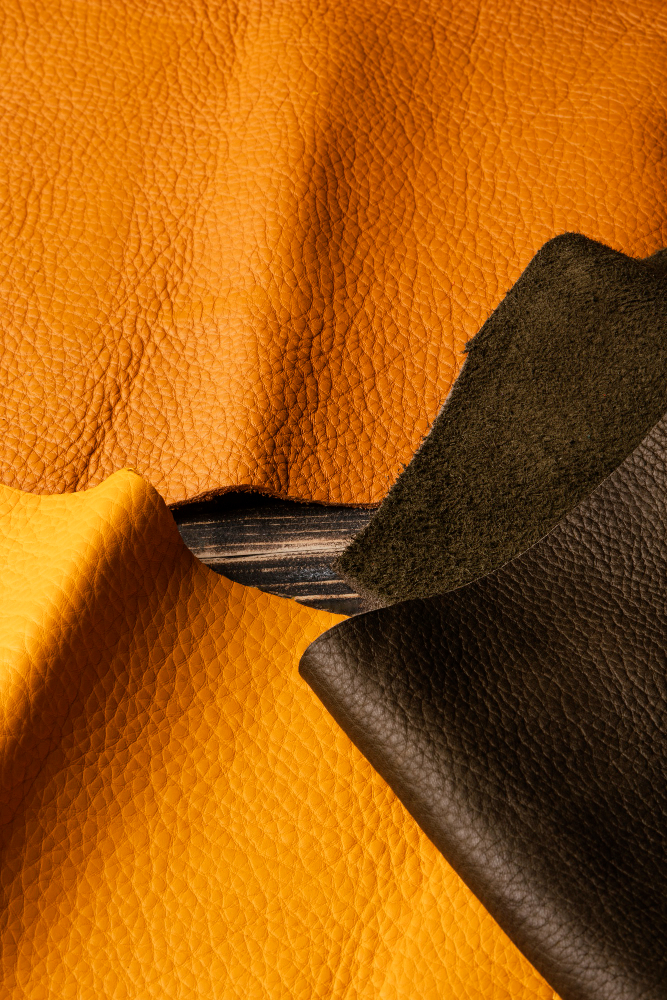
Recovery of Tannery Residues: Industrial Symbiosis Models from the Italian Leather Value Chain
- Categories
- R&I, techniques and technological solutions Sustainable competitiveness Textile +2 more
Industrial symbiosis: textile waste as a resource for furniture production
- Categories
- Infrastructure Investments and funding R&I, techniques and technological solutions +10 more