

Best practices
30 June 2026
Protection through innovation: EU strategic autonomy and the case of Sioen
Best practices
30 June 2026
Login / create an account to be able to react
-
116
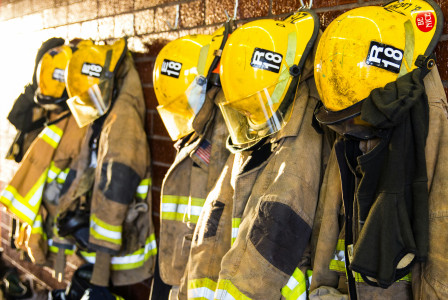
Open strategic autonomy depends on Europe’s capacity to produce the materials essential to sectors such as defence and public safety, as well as maritime, energy and industry. Sioen Industries, a Belgian technical textiles group, illustrates how a vertically integrated, innovation-driven, and predominantly European production base can secure the supply of high-performance protective and technical textiles.
Sioen NV
Topics
Albania
Armenia
Austria
Belgium
Bosnia and Herzegovina
Bulgaria
Croatia
Cyprus
Czechia
Denmark
Estonia
EU-27
Finland
France
Georgia
Germany
Greece
Hungary
Iceland
Ireland
Italy
Kosovo
Latvia
Liechtenstein
Lithuania
Luxembourg
Malta
Moldova
Montenegro
Netherlands
North Macedonia
Norway
Poland
Portugal
Romania
Serbia
Slovakia
Slovenia
Spain
Sweden
Switzerland
Türkiye
Ukraine
Other
Academic / Research and VET Institutions
Business Support Organisation
Company with 250 or more employees
Cluster Organisations
Consumer Organisations
Cultural and Heritage Organisations
Destination Management & Marketing Organisations
EU Institutions
Financial Institutions and Investors
Industry Associations and Chambers of Commerce
International Organisations
Local Authorities
Media / Journalist Organisations
National authorities
Networks and Federations / Confederations
NGOs / Non-profits
Notified Bodies
Regional Authorities
SMEs (a company with less than 250 employees)
Social Economy Entity
Trade Unions
Other
-
Transition Pathway's building blocks
-
-
Ecosystem's readiness to support EU strategic autonomy and defence efforts
-
R&I, techniques and technological solutions
-
Sustainable competitiveness
-
-
Industrial ecosystems
-
-
Aerospace and defence
-
Textile
-
-
Textiles ecosystem areas
-
-
Fibres, yarns and fabrics
-
Technical textiles
-
Share
Technical textiles and strategic resilience
Technical textiles are essential inputs for defence and other critical value chains, including healthcare, construction, transport, energy, and personal and environmental protection. Products such as protective clothing are strategic goods for which European production capacity is increasingly important. As strategic dependencies, particularly on raw materials, components, and specialised inputs, remain a structural concern for the ecosystem’s competitiveness and resilience, companies with a broad and integrated industrial base in Europe can play a key role by shortening supply chains, reducing reliance on imports, and preserving the capacity to scale or reorient production when needed.
Sioen: a long history and a global leadership
Sioen Industries is a family-owned company founded in 1960 and headquartered in Belgium, focused on technical textiles and professional protective clothing. The company has a global footprint: it employs around 6,000 people (of which 850 are in Belgium) and operates across more than 20 countries, with over 30 locations worldwide in Europe, the US, Asia and Australia. In 2024, the group reported consolidated turnover of EUR 703 million. The group operates through three divisions that together span the full textile value chain: Technical Textiles (extrusion of synthetic yarns, weaving and non-wovens, and the coating of technical fabrics), Colouring Solutions (fine chemicals such as pigment pastes, inks and varnishes), and Protective Clothing (professional protective and work garments).
Controlling the value chain to serve a wide portfolio of strategic sectors
The defining feature of Sioen’s model is that several critical production stages are kept in-house and largely within Europe. The group weaves and coats its fabrics, produces pigments and dyes through its chemicals division, and manufactures the finished garments itself. By internalising these steps, the company gains control over quality, traceability and lead times, and limits its dependence on third-country suppliers. Sioen is selectively relocating labour-intensive garment production to lower-cost countries, including in Asia, while continuing to invest in higher-value production and logistics activities in Europe. For example, Sioen is investing in a new hall in Belgium (Ardooie) for the production of sun-protection products, whereas in Italy, the company is expanding its geotextile production, manufacturing specialised textiles for road and infrastructure works.
This integrated, European base translates into the capacity to serve a range of strategic markets, including:
- Defence and security. Through its dedicated units, Sioen Ballistics and Sioen Military, the group designs, manufactures and tests ballistic and stab-resistant protection, including overt, covert and tactical vests, hard plate carriers, shields, explosive ordnance disposal (EOD) suits and chemical, biological, radiological and nuclear (CBRN) defence suits. End users include armed forces, police and law-enforcement bodies, United Nations missions and humanitarian organisations. The group maintains in-house ballistic testing laboratories in both Belgium and Finland.
- Public safety and emergency response. Sioen is the European market leader in firefighter clothing and has supplied protective garments to fire services for decades. Its ability to control the full supply chain from yarn to finished product within Europe was a decisive factor in winning a major tender to clothe French firefighters, where European production was an explicit requirement.
- Maritime safety. The group produces life jackets, flotation and immersion suits and certified marine fire-safety kits, as well as military dry suits, maritime tactical vests and military lifejackets.
- Energy, infrastructure and industry. The group’s technical textiles serve construction and infrastructure (geotextiles, tensile architecture and tarpaulins), transport and automotive, and energy and industrial applications.
Across these markets, the group manufactures around 3.5 million protective and work garments a year.
Innovation for circularity at the end of life
In late 2024, Sioen partnered with Resortec, a leader in textile eco-design and end-of-life waste management, to create workwear that combines durability with circularity, while meeting the highest safety standards. More specifically, the innovation consisted of integrating heat-dissolvable sewing threads (Smart Stitch), which facilitate garments being automatically disassembled at the end of life.
Another field of innovation is improving product traceability to enhance the information available to consumers by adding woven QR codes to all garments. Some of the products, particularly Fire Fighting PPE, already feature RFID tags. Most of the company’s apparel production sites will place QR codes by the end of 2026, integrating them into the manufacturing process (see related pledge here).
Conclusion
Sioen illustrates how a vertically integrated and predominantly European industrial base can contribute to the resilience and open strategic autonomy of the EU textiles ecosystem. The model also reflects the wider competitiveness logic of the Transition Pathway: durable leadership in high-value-added, hard-to-replicate segments, supported by in-house research, testing, and certification. While full vertical integration on this scale reflects decades of investment and cannot be reproduced in the short term, the underlying principles offer transferable lessons for other technical-textile and protective-equipment manufacturers seeking to strengthen the resilience and strategic relevance of European production.
Comments (0)
Connected Partnership Opportunities
See also
The role of trade fairs in supporting an ecosystem approach: the case of Textiles Recycling Expo
- Categories
- Infrastructure Investments and funding R&I, techniques and technological solutions +11 more

EU Ecolabel reinforces trust in circular economy at the EU Green Week 2025
- Categories
- Infrastructure R&I, techniques and technological solutions Social dimension +26 more

Share your views: Take part in the Stakeholder Support Platform (SSP) survey by 8 May 2026
- Categories
- Infrastructure Investments and funding R&I, techniques and technological solutions +28 more