

Legislative developments
26 May 2026
New EU rules to stop the destruction of unsold clothes and shoes
Legislative developments
26 May 2026
Login / create an account to be able to react
-
360

The European Commission, on 9 February 2026 adopted new measures under the Ecodesign for Sustainable Products Regulation (ESPR) to prevent the destruction of unsold apparel, clothing, accessories and footwear.
The rules will help cut waste, reduce environmental damage and create a level playing field for companies embracing sustainable business models, allowing them to reap the benefits of a more circular economy.
Topics
Albania
Armenia
Austria
Belgium
Bosnia and Herzegovina
Bulgaria
Croatia
Cyprus
Czechia
Denmark
Estonia
EU-27
Finland
France
Georgia
Germany
Greece
Hungary
Iceland
Ireland
Italy
Kosovo
Latvia
Liechtenstein
Lithuania
Luxembourg
Malta
Moldova
Montenegro
Netherlands
North Macedonia
Norway
Poland
Portugal
Romania
Serbia
Slovakia
Slovenia
Spain
Sweden
Switzerland
Türkiye
Ukraine
Other
Academic / Research and VET Institutions
Business Support Organisation
Company with 250 or more employees
Cluster Organisations
Consumer Organisations
Cultural and Heritage Organisations
Destination Management & Marketing Organisations
EU Institutions
Financial Institutions and Investors
Industry Associations and Chambers of Commerce
International Organisations
Local Authorities
Media / Journalist Organisations
National authorities
Networks and Federations / Confederations
NGOs / Non-profits
Notified Bodies
Regional Authorities
SMEs (a company with less than 250 employees)
Social Economy Entity
Trade Unions
Other
-
Transition Pathway's building blocks
-
-
Regulation and public governance
-
-
Industrial ecosystems
-
-
Cultural and creative industries
-
Retail
-
Textile
-
-
Textiles ecosystem areas
-
-
Fibres, yarns and fabrics
-
Apparel and clothing accessories
-
Household/interior textiles
-
Technical textiles
-
Leather and fur
-
Footwear
-
Research and Innovation
-
Technology and Machinery
-
Waste management, reuse and repair
-
Business support and Communication
-
Not area specific (interested in more than one of the above)
-
Share
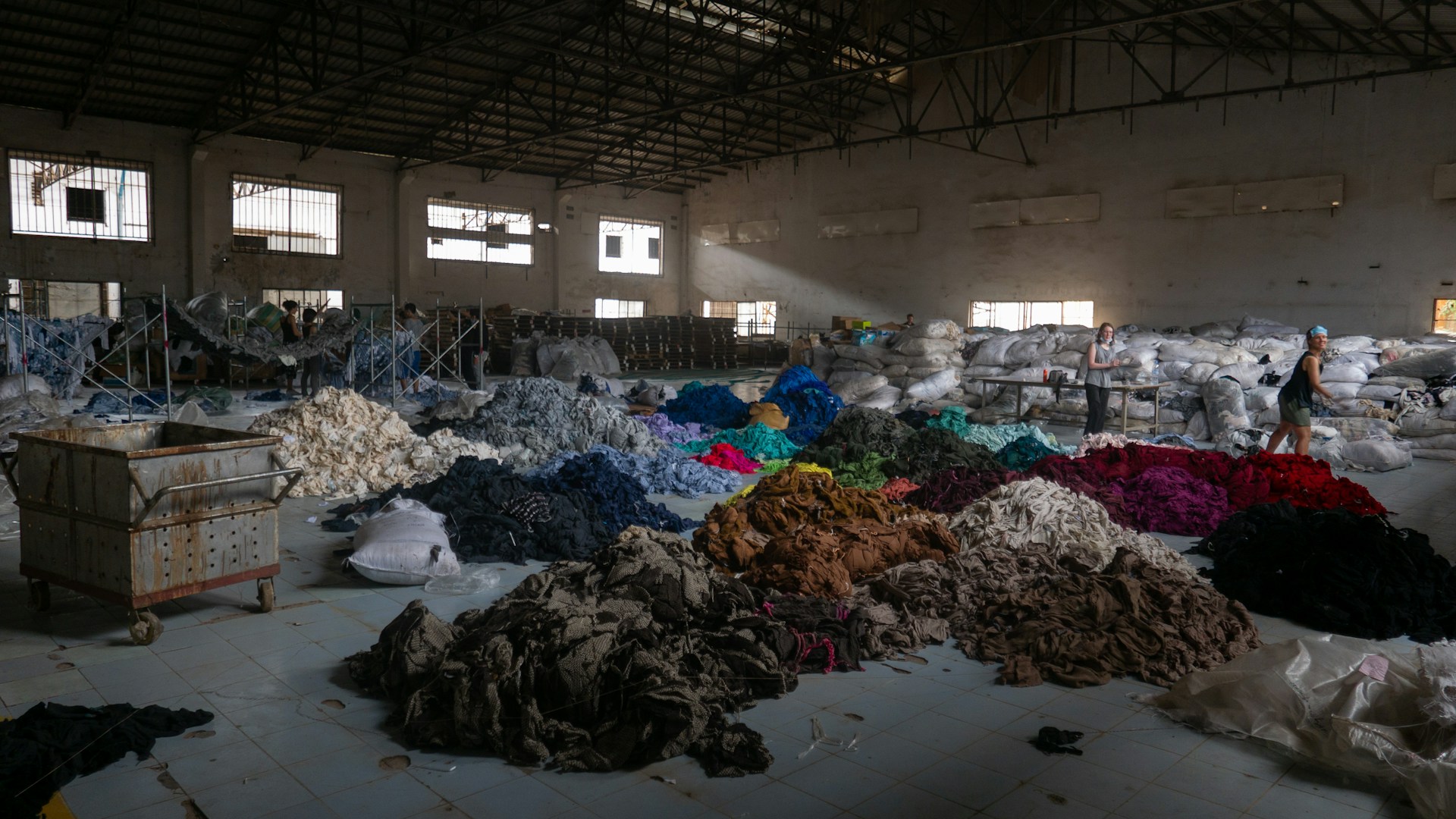
Every year in Europe, an estimated 4-9% of unsold textiles are destroyed before ever being worn. This waste generates around 5.6 million tons of CO2 emissions – almost equal to Sweden’s total net emissions in 2021.
To help reduce this wasteful practice, the ESPR requires companies to disclose information on the unsold consumer products they discard as waste. It also introduces a ban on the destruction of unsold apparel, clothing accessories and footwear.
The Delegated and Implementing Acts adopted on 9 February 2026 will support businesses in complying with these requirements by:
- Clarifying derogations
- Facilitating disclosure
Instead of discarding stock, companies are encouraged to manage their stock more effectively, handle returns, and explore alternatives such as resale, remanufacturing, donations, or reuse.
The ban on destruction of unsold apparel, clothing accessories and footwear and the derogations will apply to large companies from 19 July 2026. Medium-sized companies are expected to follow in 2030. The rules on disclosure under the ESPR already apply to large companies and will also apply to medium-sized companies in 2030.
For latest information on the Delegated and Implementing Acts, including deadlines, refer to the official European Commission webpage.
Links to the legal texts:
- Delegated regulation - EU - 2026/296 - EN - EUR-Lex
- Implementing regulation - EU - 2026/2 - EN - EUR-Lex
Read Opinions and join the conversation on the issue here.
Comments (0)
Connected Partnership Opportunities
See also

European Innovation Act
- Categories
- Aerospace and defence Agri-food Construction +21 more

Governance of the Energy Union and Climate Action
- Categories
- Aerospace and defence Agri-food Construction +21 more
Revised Waste Framework Directive enters into force to boost circularity of textile sector and slash food waste
- Categories
- Agri-food Construction Cultural and creative industries +20 more