

Library and support resources
28 April 2026
Processing-property relationships in melt processing of polyamide-elastane textile blends
Library and support resources
28 April 2026
Login / create an account to be able to react
-
52

The study shows that melt processing can effectively recycle polyamide-elastane textiles, with processing conditions playing a key role in balancing material strength, flexibility, and circular application potential.
Topics
Albania
Armenia
Austria
Belgium
Bosnia and Herzegovina
Bulgaria
Croatia
Cyprus
Czechia
Denmark
Estonia
EU-27
Finland
France
Georgia
Germany
Greece
Hungary
Iceland
Ireland
Italy
Kosovo
Latvia
Liechtenstein
Lithuania
Luxembourg
Malta
Moldova
Montenegro
Netherlands
North Macedonia
Norway
Poland
Portugal
Romania
Serbia
Slovakia
Slovenia
Spain
Sweden
Switzerland
Türkiye
Ukraine
Other
Academic / Research and VET Institutions
Company with 250 or more employees
Cluster Organisations
Industry Associations and Chambers of Commerce
Networks and Federations / Confederations
SMEs (a company with less than 250 employees)
-
Transition Pathway's building blocks
-
-
R&I, techniques and technological solutions
-
Sustainable competitiveness
-
-
Industrial ecosystems
-
-
Textile
-
-
Textiles ecosystem areas
-
-
Fibres, yarns and fabrics
-
Technical textiles
-
Research and Innovation
-
Technology and Machinery
-
Waste management, reuse and repair
-
Share
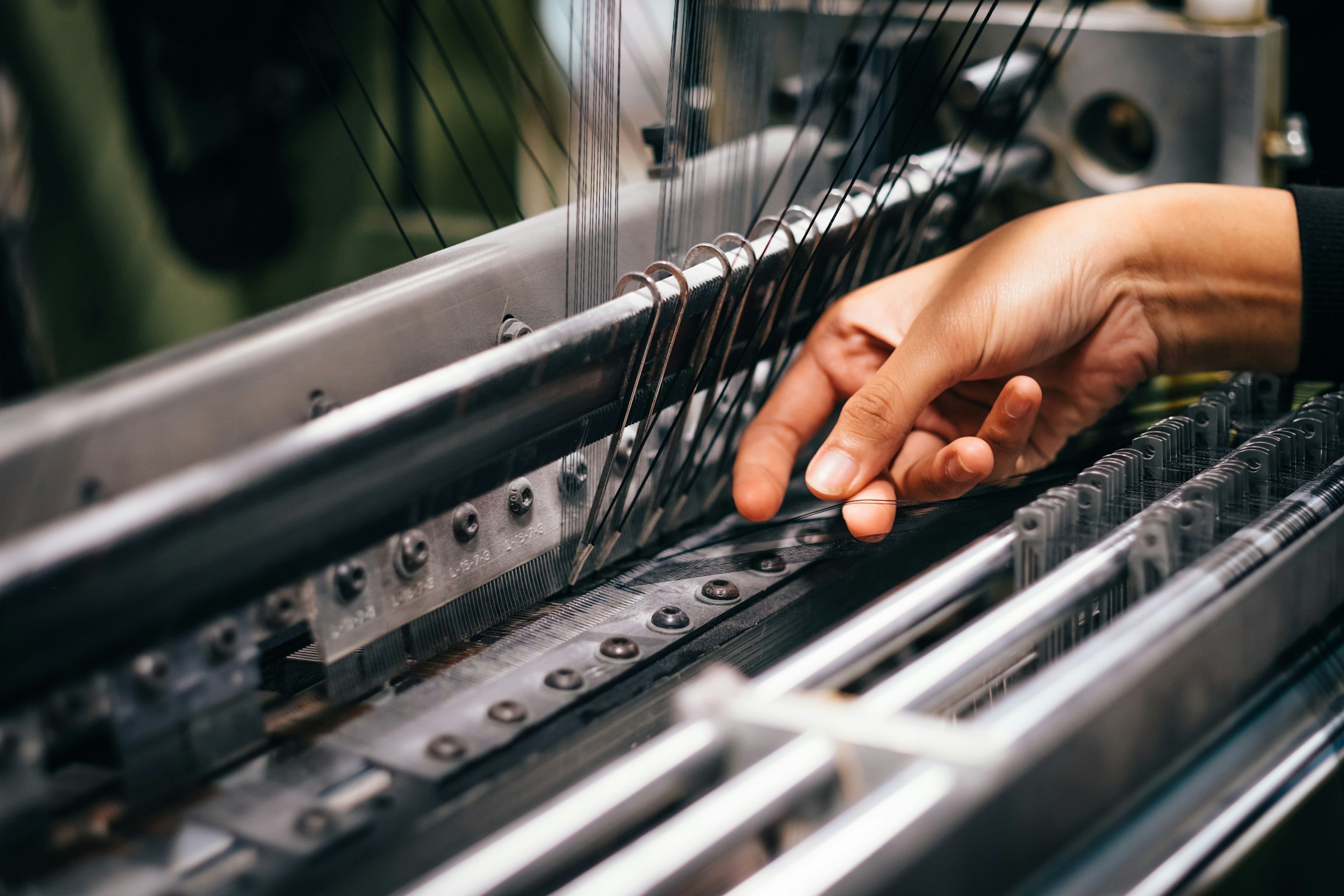
‘Processing-Property Relationships in Melt Processing of Polyamide-Elastane Textile Blends’, published in AppliedChem (MDPI), by Sabrina Bianchi et al., examines how different melt processing conditions affect the structure and performance of recycled polyamide-elastane (PA/EL) textile blends. The study focuses on mechanical recycling through extrusion, analysing how parameters such as temperature, screw type, and speed influence morphology, viscosity, and thermo-mechanical properties of the resulting materials.
Key takeaways:
- Mechanical recycling via melt processing is a viable alternative to solvent-based methods for PA/EL textile waste, offering lower environmental impact and simpler processing routes.
- Processing temperature is a critical factor: moderate conditions (around 230 °C) preserve elastane structure, while higher temperatures (around 260 °C) lead to degradation and changes in material behaviour.
- The addition of elastane improves ductility and impact resistance of polyamide, though it reduces stiffness, indicating a trade-off in material performance.
- Morphological analysis shows that elastane acts as a dispersed phase within the polyamide matrix, influencing toughness through mechanisms such as crack bridging and energy dissipation.
- Optimal processing conditions (moderate temperature and appropriate screw design) provide a balanced combination of strength, flexibility, and impact performance.
- While suitable for applications such as injection-moulded parts or non-critical products, these blends are more aligned with open-loop recycling due to material limitations.
The study highlights the potential of melt processing as a scalable and efficient approach to recycling mixed-fibre textiles, while also underlining the importance of optimising processing conditions to balance performance and material integrity. For full details, refer to the original publication.
For more details, read the entire research paper on MDPI – Applied Chem website.
Comments (0)
Connected Partnership Opportunities
See also

Feasibility study on measures to incentivise circularity in textiles and fashion in the EU
- Categories
- Investments and funding R&I, techniques and technological solutions Skills +15 more
The EU’s 2024 Industrial Report reveals green and digital pathways for textiles transformation
- Categories
- Infrastructure Investments and funding R&I, techniques and technological solutions +16 more
The first Report on Stakeholder Pledges is out!
- Categories
- Infrastructure Investments and funding R&I, techniques and technological solutions +19 more