

News
28 July 2026
New rules to stop the destruction of unsold clothes and shoes enter into application, fostering the EU circular economy
News
28 July 2026
Login / create an account to be able to react
-
129

New rules under the Ecodesign for Sustainable Products Regulation (ESPR) have entered into application, prohibiting large companies from destroying unsold apparel, clothing accessories, and footwear. The measures aim to reduce textile waste, encourage reuse and recycling, improve transparency around unsold products, and accelerate the transition towards a more circular and resource-efficient European textile sector.
Topics
Austria
Belgium
Bulgaria
Croatia
Cyprus
Czechia
Denmark
Estonia
EU-27
Finland
France
Germany
Greece
Hungary
Ireland
Italy
Latvia
Lithuania
Luxembourg
Malta
Netherlands
Poland
Portugal
Romania
Slovakia
Slovenia
Spain
Sweden
Business Support Organisation
Company with 250 or more employees
Cluster Organisations
Consumer Organisations
EU Institutions
Industry Associations and Chambers of Commerce
Networks and Federations / Confederations
SMEs (a company with less than 250 employees)
-
Transition Pathway's building blocks
-
-
Sustainable competitiveness
-
Regulation and public governance
-
-
Industrial ecosystems
-
-
Retail
-
Textile
-
-
Textiles ecosystem areas
-
-
Apparel and clothing accessories
-
Footwear
-
Waste management, reuse and repair
-
Business support and Communication
-
Share
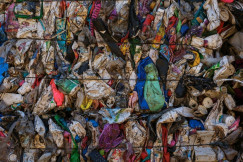
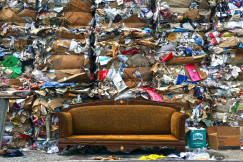
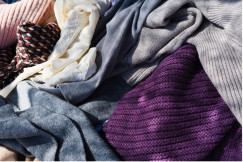
On Sunday, 19 July, new rules banning the destruction of unsold apparel, clothing accessories and footwear under the Ecodesign for Sustainable Products Regulation (ESPR) will enter into application for large companies. Medium-sized companies are expected to follow in July 2030. By promoting reuse and recycling, these rules will support a more rational use of resources, reduce environmental damage and create a level playing field for companies. As a result, the textile sector can move faster towards more circular practices.
Every year in Europe, an estimated 4-9% of unsold textiles are destroyed before ever being worn. This waste generates around 5.6 million tonnes of CO2 emissions. The ESPR, which entered into force in July 2024, aims to significantly improve the sustainability of products placed on the EU market by improving their circularity, energy performance, recyclability and durability. The ban of destruction of unsold textiles is one of the first concrete measures under the ESPR. The law also requires companies to disclose information on the unsold consumer products they discard as waste, in the simplest possible way without adding extra administrative burden. This responds to consumers' growing concerns about textile waste due to the environmental and social impacts of fast fashion.
Under the new rules, companies will have to prioritise keeping products in use by selling them, donating them to charities or social enterprises, or preparing them for reuse. Destruction will only be allowed under specified circumstances and must be carried out in line with the waste treatment hierarchy. In February 2026, the Commission already adopted measures to clarify under which circumstances this destruction will be permitted – for instance, due to safety reasons or product damage.
Find more information on the entry into application of rules on destruction of unsold goods online.
Comments (0)
Related content
Connected Partnership Opportunities
See also

Contribute to the European Commission survey on Product Safety Information & E-Vulnerability
- Categories
- Social dimension Sustainable competitiveness Regulation and public governance +23 more

EU Ecolabel reinforces trust in circular economy at the EU Green Week 2025
- Categories
- Infrastructure R&I, techniques and technological solutions Social dimension +26 more

EU Calls on Textile Stakeholders to Shape the Future of Sustainable Products
- Categories
- Infrastructure Investments and funding R&I, techniques and technological solutions +28 more