

Policy background
11 June 2026
Commission presents first ever Strategy on Intergenerational Fairness
Policy background
11 June 2026
Login / create an account to be able to react
-
19
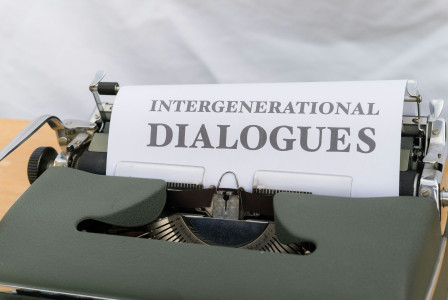
On March 5, 2026, the European Commission adopted its first Strategy on Intergenerational Fairness, to further develop the reflex of long-term thinking in EU policymaking, while giving greater weight to the views and concerns of young people. The EU's overarching goal is to guarantee that current decisions are made with the future in mind, ensuring a fair balance of benefits and burdens across all generations.
Topics
EU-27
Academic / Research and VET Institutions
Business Support Organisation
Company with 250 or more employees
Cluster Organisations
Cultural and Heritage Organisations
EU Institutions
Local Authorities
National authorities
NGOs / Non-profits
Notified Bodies
Regional Authorities
SMEs (a company with less than 250 employees)
Social Economy Entity
-
Transition Pathway's building blocks
-
-
Regulation and public governance
-
-
Industrial ecosystems
-
-
Aerospace and defence
-
Agri-food
-
Construction
-
Cultural and creative industries
-
Digital
-
Energy intensive industries
-
Energy-renewables
-
Health
-
Mobility, transport, automotive
-
Proximity and social economy
-
Retail
-
Textile
-
Tourism
-
-
Textiles ecosystem areas
-
-
Fibres, yarns and fabrics
-
Apparel and clothing accessories
-
Household/interior textiles
-
Technical textiles
-
Leather and fur
-
Footwear
-
Research and Innovation
-
Technology and Machinery
-
Waste management, reuse and repair
-
Business support and Communication
-
Share
The Strategy on Intergenerational Fairness aligns with global efforts for a long-term approach in planning and policies, such as in the UN Declaration on Future Generations. It is shaped around the concept of an ‘Intergenerational Contract', built on a threefold foundation:
- Fair policymaking, by applying a ‘youth check' and foresight tools;
- Fair opportunities, to address the risk of age discrimination;
- Fair places, so that the region you are born in doesn't define your future.
It adopts a long-term perspective, looking at how complex challenges, such as demographic change, geopolitical shifts, labour market changes, climate change, digitalisation and artificial intelligence among many others, affect both present and future generations. The Strategy recognises that such challenges illustrate both the scope and the urgency of this issue.
To achieve this goal, the Strategy sets out a number of actions, including:
- Intergenerational Fairness Index to identify opportunities and gaps, inform policy decisions and promote fairness across generations;
- Multilingual Future Oriented Policymaking package to support the development of future literacy in public administrations across EU Member States;
- Organising a demography forum to exchange on demographic developments;
- Voices of the Future initiative to be launched in partnership with the Committee of the Regions, inviting local and regional authorities to engage in shaping their regions' future.
The Strategy also provides a common direction for different EU initiatives that are already contributing to intergenerational fairness, underlining its cross-cutting nature. Competitiveness and promoting a strong European Social Model are prioritised. From inclusive education and affordable housing to strong care systems and environmental justice, the Strategy helps embed intergenerational fairness across all policy areas.
Refer to the official European Commission webpage for additional information and background.
Read stakeholders’ Opinions and join the conversation
Comments (0)
Connected Partnership Opportunities
See also
Cross-industry and sectoral social dialogue
- Categories
- Infrastructure Investments and funding R&I, techniques and technological solutions +28 more

Threading change: the EU Strategy for Sustainable and Circular Textiles
- Categories
- Aerospace and defence Agri-food Construction +21 more

Building skills for the future: The EU’s sectoral blueprint approach
- Categories
- Infrastructure Investments and funding R&I, techniques and technological solutions +28 more