

Event resources
16 November 2026
Taking stock: How does EU funding work for my business in Tourism?
Event resources
16 November 2026
Login / create an account to be able to react
-
24
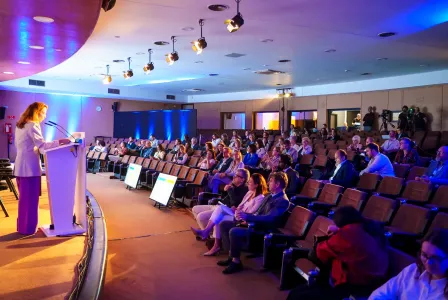
On 9 October 2026, more than 100 tourism businesses, public authorities, and support organisations joined the conference How does EU funding work for my business in Tourism? in Seville and online. Organised by the European Commission under the Building Capacity for Tourism pilot project, the event offered practical guidance on preparing stronger applications and building more competitive and resilient businesses through EU funding.
The conference set out a clear pathway for businesses: start with a genuine need, identify the funding route that best supports it, and build a realistic plan with the right partners. Participants put this approach into practice through the new interactive toolkit, thematic roundtables and exchanges with EU representatives, evaluators and funded SMEs.
Editorial team
European Commission
Topics
Albania
Armenia
Austria
Belgium
Bosnia and Herzegovina
Bulgaria
Croatia
Cyprus
Czechia
Denmark
Estonia
EU-27
Finland
France
Georgia
Germany
Greece
Hungary
Iceland
Ireland
Italy
Kosovo
Latvia
Liechtenstein
Lithuania
Luxembourg
Malta
Moldova
Montenegro
Netherlands
North Macedonia
Norway
Poland
Portugal
Romania
Serbia
Slovakia
Slovenia
Spain
Sweden
Switzerland
Türkiye
Ukraine
Other
Academic / Research and VET Institutions
Business Support Organisation
Company with 250 or more employees
Cluster Organisations
Consumer Organisations
Cultural and Heritage Organisations
Destination Management & Marketing Organisations
EU Institutions
Financial Institutions and Investors
Industry Associations and Chambers of Commerce
International Organisations
Local Authorities
Media / Journalist Organisations
National authorities
Networks and Federations / Confederations
NGOs / Non-profits
Notified Bodies
Regional Authorities
SMEs (a company with less than 250 employees)
Social Economy Entity
Trade Unions
Other
-
Specific types of tourism
-
-
Adventure tourism
-
Coastal, maritime and inland water tourism
-
Cultural tourism
-
Ecotourism
-
Education tourism
-
Festival tourism
-
Gastronomy tourism
-
Health and medical tourism
-
MICE tourism
-
Mountain tourism
-
Religious tourism
-
Rural tourism
-
Sports tourism
-
Urban/city tourism
-
Wellness tourism
-
-
Transition Pathway Strategic Areas
-
-
Accessible tourism services
-
Best practices, peer learning and networking
-
Changes in tourism demand and opportunities
-
Circularity of tourism services
-
Coordinated information on travelling
-
Cross-border travelling
-
Digitalisation of tourism SMEs and destinations
-
Equal and fair tourism jobs
-
Funding and support measures
-
Governance of tourism destinations
-
Green Transition of Tourism Companies and SMEs
-
Improving formal education
-
Improving statistics and indicators
-
Innovative tourism services
-
Multimodal travelling
-
Online visibility of tourism offer
-
Pact for skills
-
Promoting PEF/OEF methods for tourism
-
R&I on climate-friendly tourism
-
R&I on digital tools for tourism
-
Short-term rentals
-
Skills needs for twin transition
-
Sustainable mobility
-
Tools for data on tourism
-
Tourism strategies
-
Training opportunities
-
Well-being of residents
-
-
Business activities
-
-
Activities of amusement parks and theme parks
-
Activities of associations and other organisations supporting tourism
-
Air passenger transport
-
Camping grounds, recreational vehicle parks and trailer parks
-
Events catering and other food services
-
Festivals, cultural and entertainment activities
-
Gardens and nature reserves activities
-
Holiday Housing / Apartments and other short stay accommodation
-
Hotel and similar accommodation
-
Mobile beverage services
-
Mobile food services
-
Museums
-
Operation of historical sites
-
Other
-
Other accommodation
-
Other amusement and recreation activities
-
Other food and beverage services
-
Other holiday reservation services
-
Other tourism transportation activities
-
Rail Passenger transport
-
Recreational and sport activities
-
Restaurants, cafes and bars (Food and Beverage serving activities)
-
Road passenger transport
-
Tour operator activities
-
Travel agency activities
-
Water (sea, coastal and inland) passenger transport
-
Share
Making EU funding accessible
EU funding may be available, but that does not make it accessible to tourism businesses. Opening the conference, former Member of the European Parliament Claudia Monteiro de Aguiar said Building Capacity for Tourism addressed this gap with practical tools shaped by listening to the sector’s needs.
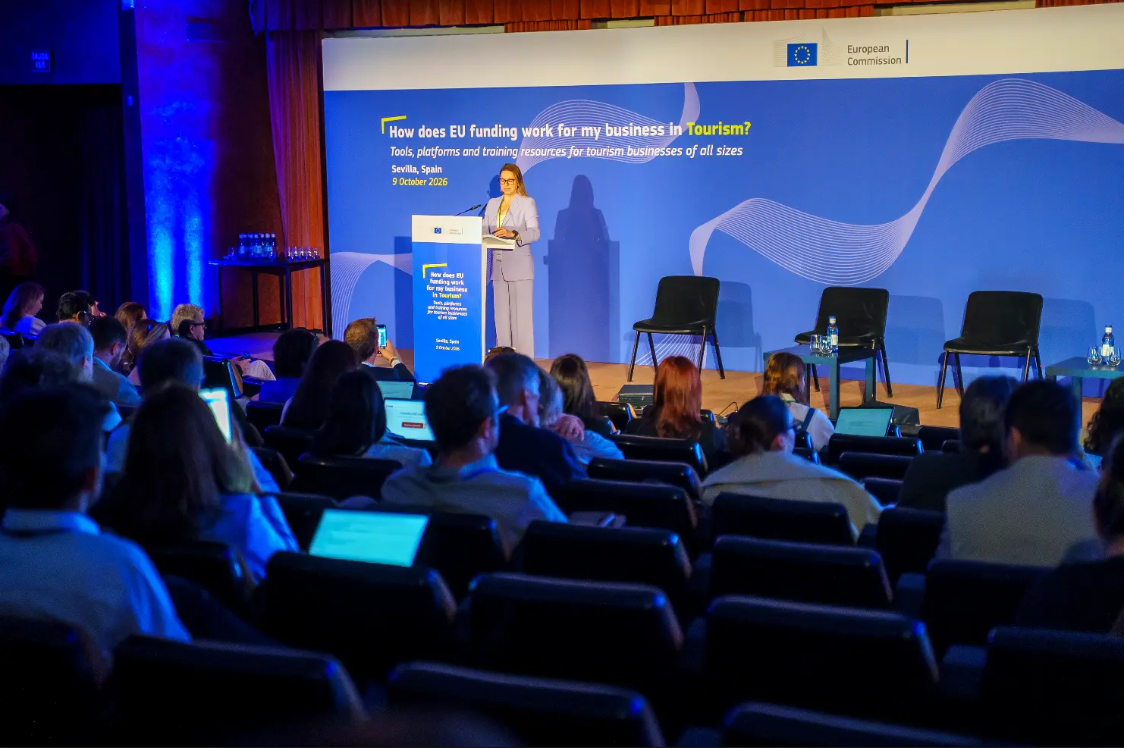
Former Member of the European Parliament Claudia Monteiro de Aguiar delivering keynote speech.
For tourism businesses, the starting point should be the change they want to achieve, not the funding itself. They should first define their goal, then assess whether they have the capacity to deliver it and finally identify the EU funding or support that best fits their needs. As Monteiro de Aguiar underlined, “Funding is a means, rather than an objective. A successful funding journey starts with a clear business challenge, not with a search for available money.”
EU funding can finance greener operations, digital tools, new services and other investments that make tourism businesses more competitive. Andreea Staicu, Deputy Head of Tourism at DG MOVE, presented EU grants, regional programmes, and support designed specifically for SMEs.
Checking your readiness and finding the right support
Once a business has defined its needs, it must decide whether it is ready to apply and which funding route fits its plans. Miguel Vaz Alexandre, Senior Policy Officer at the European Commission’s Directorate General for Mobility and Transport, introduced a new interactive toolkit that brings this information together. Its step-by-step guide and quality check help tourism businesses to assess their readiness, compare funding options and identify what they need before starting an application.
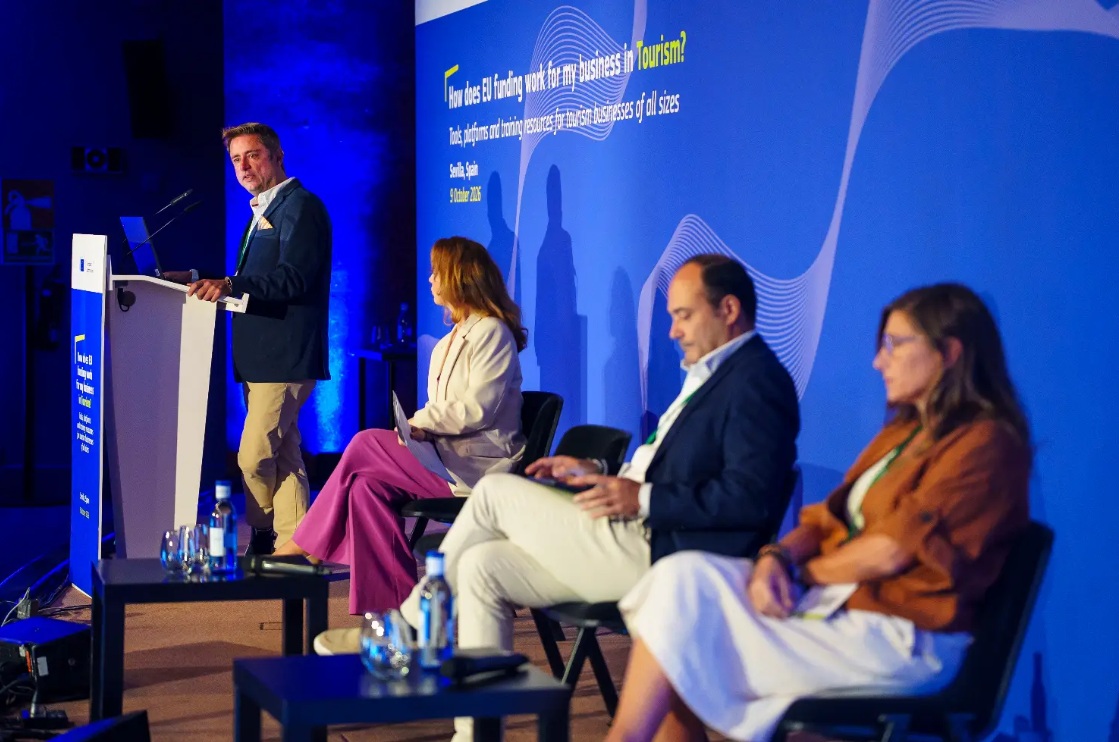
Miguel Vaz Alexandre presentating the interactive toolkit
An application takes time and resources, so preparation is essential. Before starting, businesses should check whether they have the capacity to apply, understand which costs can be financed and map the steps needed to develop a strong proposal.
Miguel Vaz Alexandre, Senior Policy Officer at the European Commission’s Directorate General for Mobility and Transport
No programme fits every project, and SMEs do not have to navigate the process alone. Luis Campos, EU Affairs Representative at the Portuguese Tourism Office in Brussels, advised businesses to “knock at the right doors”. Organisations at European, national and regional levels can point applicants towards suitable programmes, strengthen their application skills and introduce experienced partners. Lucía Díaz Martín, Project Manager at the Enterprise Europe Network, presented the network as one practical route, combining local expertise with European connections to open access to relevant funding opportunities and potential partners.
From a strong idea to a convincing proposal
Opening the evaluator’s panel, Dolores Ordóñez, General Director at AnySolution, explained, “There is no formula for winning funding.” Tourism SMEs should define the challenge, the change they want to achieve and who will benefit, then tailor their proposal to the call and their business needs. Wout Steurs, an evaluator and EU funding programmes expert from KPMG’s EU Office and WeSolutions, compared a strong proposal to a “movie”: every element should support the same clear purpose while keeping the evaluator engaged.
Once the purpose is clear, applicants should set out a plan explaining what they will do, who will do it, and how the activities, timetable, budget, results and indicators align. They must also check all administrative requirements. “If unsuccessful, feedback, training and partner advice can strengthen the next proposal” suggested evaluator Andrea Cenderello, EU Project Manager, trainer, and consultant.
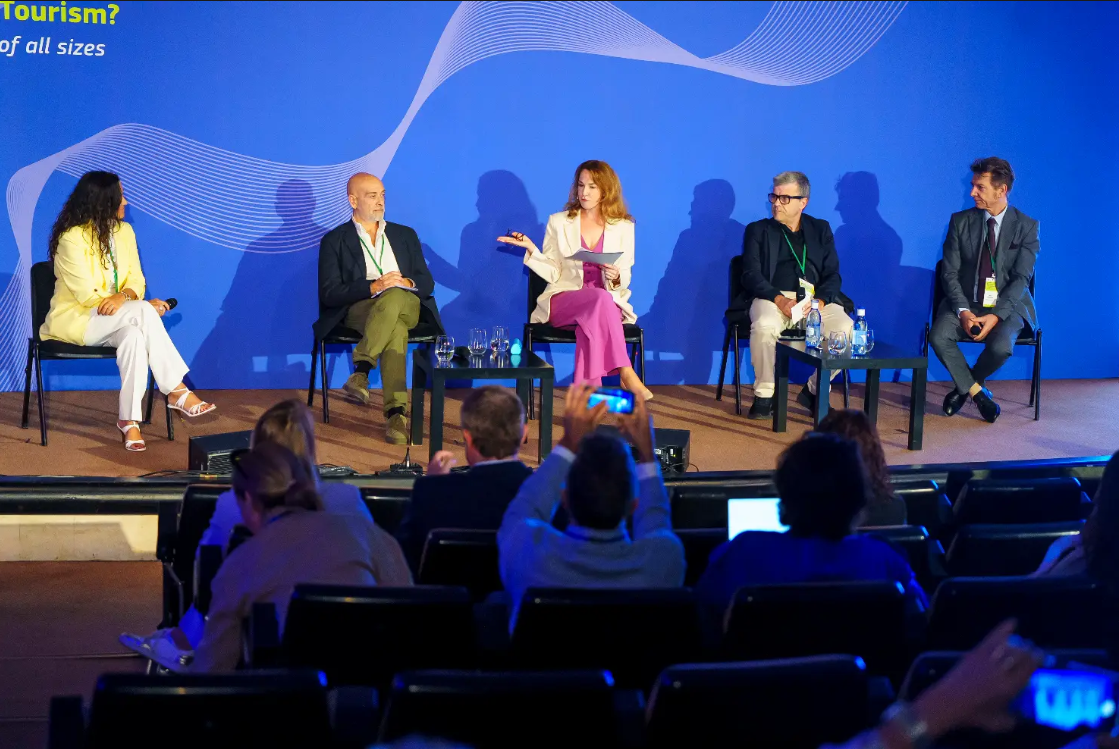 Panel with experts from EU funding programmes
Alongside a sound plan, the right team can be just as important as the idea itself. Each partner should bring relevant expertise and take on a clear role that strengthens the project. This is especially important as “competition for EU funding grows: although proposals are assessed individually against transparent criteria, applicants still need to show that they understand the call and can deliver a realistic project” stated Hervé Busschaert, Programme Advisor, EISMEA, European Commission. In this process, artificial intelligence can support research, drafting and final checks, but it cannot create a genuine business need, build trusted partnerships or replace the judgement and experience behind a convincing proposal.
Creating lasting value for tourism businesses
The experiences of KONTURE, B&B Parco Alta Murgia, Turismo Vivencial and the Merill Rural Network showed what EU funding can deliver in practice: digital tools, new visitor experiences, more sustainable services and stronger links between travellers and local communities. Their projects also reinforced a central lesson: funding creates the greatest value when it supports a solution to a genuine business need. As Antonio Martín, Director of Turismo Vivencial, explained, his project developed from a business need into an innovative solution with the help of EU funding.
Beyond these immediate results, the funding journey can strengthen the business itself, as Manuela Roppo, founder, owner and host at B&B Parco Alta Murgia, highlighted. Entrepreneurs gained new skills, trusted partners, greater visibility and the confidence to develop further ideas. By building on these assets and combining different sources of support over time, even a small business can improve its operations, launch new offers, reach more customers and secure a stronger position in the tourism ecosystem.
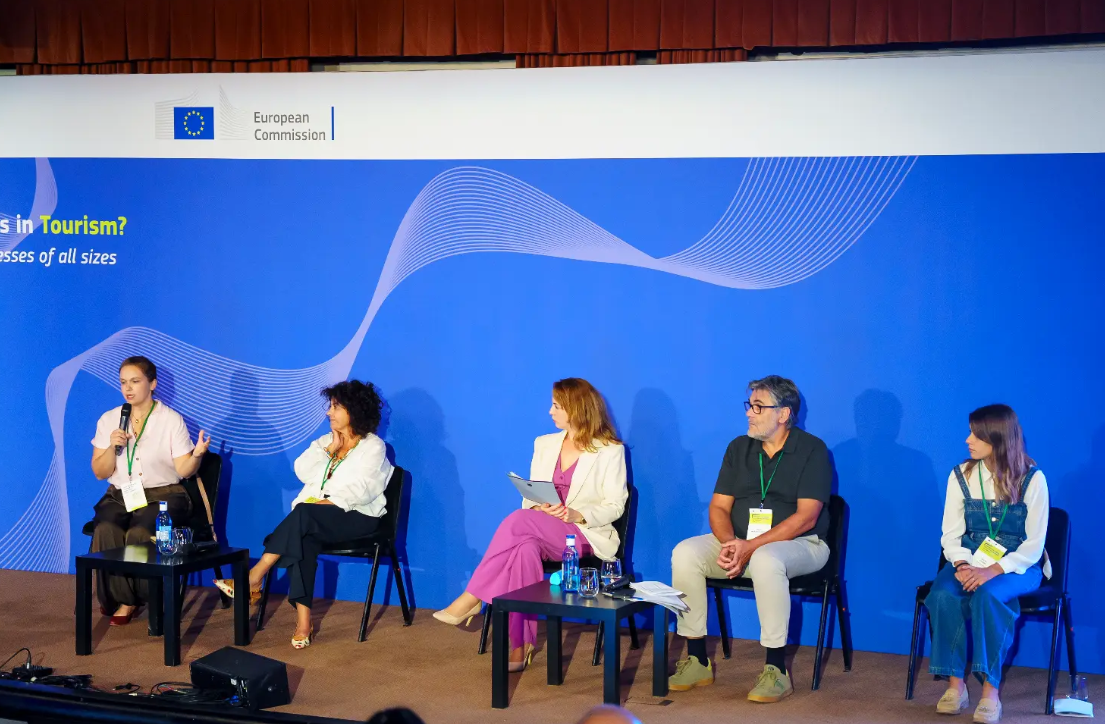
Tourism SMEs sharing lessons, challenges and learnings
These opportunities also come with responsibilities. As Ines Poljak Aritonović, Managing Director at KONTURE, underlined, grants involve reporting duties, delivery commitments and potential cash flow risks. Businesses should therefore assess their finances and internal capacity before applying. Funding works best when it accelerates a sound business plan rather than becoming the business model itself. Silvia Gilberti, Social Enterprise Development Manager for the Merill Rural Network, similarly advised businesses to treat funding as a catalyst for action, not as a financing model. Overall, to create lasting value, projects must be realistic, relevant and designed to deliver benefits beyond the end of the grant.
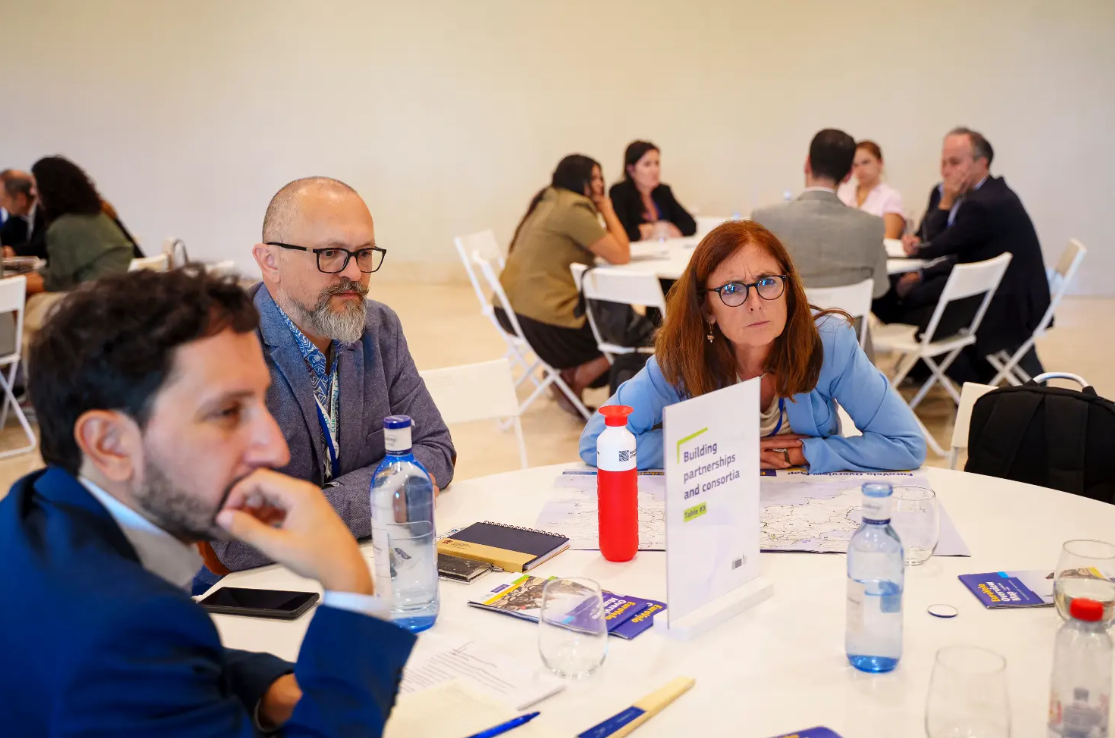
Roundtable: Building partnerships and consortia
Ready to explore EU funding for your business? Use the interactive toolkit to assess your readiness, compare funding routes and prepare your next steps.
Key takeaways:
- Start with a genuine business need, not a search for money, and choose funding that supports the change you want to achieve.
- Use the interactive toolkit and support organisations to assess your readiness and identify the right funding route and partners.
- Build a coherent proposal tailored to the call, with clear partner roles and aligned activities, timetable, budget and results.
- Treat funding as a catalyst for a sound business plan, not the business model, and design benefits that last beyond the grant.
Watch the sessions:
Comments (0)
Connected Partnership Opportunities
See also
2nd EU Tourism Platform Onboarding Workshop Material
- Categories
- Coastal, maritime and inland water tourism Cultural tourism Ecotourism +64 more

Workshop resources "Unbalanced Rollercoaster: EU Tourism tools for a Smoother Ride"
- Categories
- Coastal, maritime and inland water tourism Cultural tourism Ecotourism +64 more

Webinar resources "Connecting Europe: Multimodal Travel for Sustainable Tourism"
- Categories
- Coastal, maritime and inland water tourism Cultural tourism Ecotourism +64 more