

Knowledge documents
28 April 2026
Small Businesses, Big Impact: Strengthening Europe’s Hospitality Sector
Knowledge documents
28 April 2026
Login / create an account to be able to react
-
50
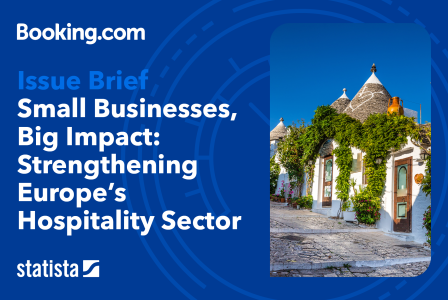
This issue brief examines the role of small and medium-sized enterprises (SMEs) in Europe’s hospitality sector and argues that their competitiveness is central to the future of European tourism. Drawing on European Accommodation Barometer findings and external research, it highlights how access to finance, skills development, and digital technology adoption can help smaller accommodation providers improve productivity and create greater value for travelers, employees, and local communities
Statista
Booking.com
Booking.com
Statista
Topics
Albania
Armenia
Austria
Belgium
Bosnia and Herzegovina
Bulgaria
Croatia
Cyprus
Czechia
Denmark
Estonia
EU-27
Finland
France
Georgia
Germany
Greece
Hungary
Iceland
Ireland
Italy
Kosovo
Latvia
Liechtenstein
Lithuania
Luxembourg
Malta
Moldova
Montenegro
Netherlands
North Macedonia
Norway
Poland
Portugal
Romania
Serbia
Slovakia
Slovenia
Spain
Sweden
Switzerland
Türkiye
Ukraine
Other
Academic / Research and VET Institutions
Business Support Organisation
Company with 250 or more employees
Cluster Organisations
Consumer Organisations
Cultural and Heritage Organisations
Destination Management & Marketing Organisations
EU Institutions
Financial Institutions and Investors
Industry Associations and Chambers of Commerce
International Organisations
Local Authorities
Media / Journalist Organisations
National authorities
Networks and Federations / Confederations
NGOs / Non-profits
Notified Bodies
Regional Authorities
SMEs (a company with less than 250 employees)
Social Economy Entity
Trade Unions
Other
-
Specific types of tourism
-
-
Adventure tourism
-
Coastal, maritime and inland water tourism
-
Cultural tourism
-
Ecotourism
-
Education tourism
-
Festival tourism
-
Gastronomy tourism
-
Health and medical tourism
-
MICE tourism
-
Mountain tourism
-
Religious tourism
-
Rural tourism
-
Sports tourism
-
Urban/city tourism
-
Wellness tourism
-
-
Transition Pathway Strategic Areas
-
-
Best practices, peer learning and networking
-
Changes in tourism demand and opportunities
-
Digitalisation of tourism SMEs and destinations
-
Equal and fair tourism jobs
-
Governance of tourism destinations
-
Green Transition of Tourism Companies and SMEs
-
Improving formal education
-
Innovative tourism services
-
Online visibility of tourism offer
-
Pact for skills
-
Skills needs for twin transition
-
Tourism strategies
-
-
Business activities
-
-
Activities of amusement parks and theme parks
-
Activities of associations and other organisations supporting tourism
-
Camping grounds, recreational vehicle parks and trailer parks
-
Events catering and other food services
-
Festivals, cultural and entertainment activities
-
Gardens and nature reserves activities
-
Holiday Housing / Apartments and other short stay accommodation
-
Hotel and similar accommodation
-
Other
-
Other accommodation
-
Tour operator activities
-
Travel agency activities
-
Share
Key learnings
Europe’s tourism sector is a major economic engine, accounting for an estimated 5.1% of gross value added and supporting more than 20 million jobs. SMEs are at the heart of this ecosystem, representing the vast majority of accommodation businesses. Yet they continue to face structural disadvantages compared with larger and chain-affiliated hotels, particularly around financing, visibility, technology, staff training and development.
The issue brief, produced by Statista in partnership with Booking.com, identifies digital adoption as a key lever for productivity and competitiveness. Online travel platforms have already helped smaller properties reach global customers, generate bookings, and improve operations, while emerging technologies such as AI, data analytics, and AR/VR offer further opportunities to personalize guest experiences, improve revenue management, reduce waste, and support staff training.
However, SMEs will only be able to capture these gains if policymakers and industry partners address the dual bottleneck of finance and skills. The report calls for better alignment between funding and upskilling, improved access to public and private finance, open data infrastructure for SME support, stronger SME-platform collaboration, and simpler compliance requirements so smaller hospitality businesses can move from survival to durable competitiveness.
Documents
Comments (0)
Related content


Connected Partnership Opportunities
See also
“Key updates and trends in 2024” Summary
- Categories
- Coastal, maritime and inland water tourism Cultural tourism Ecotourism +64 more
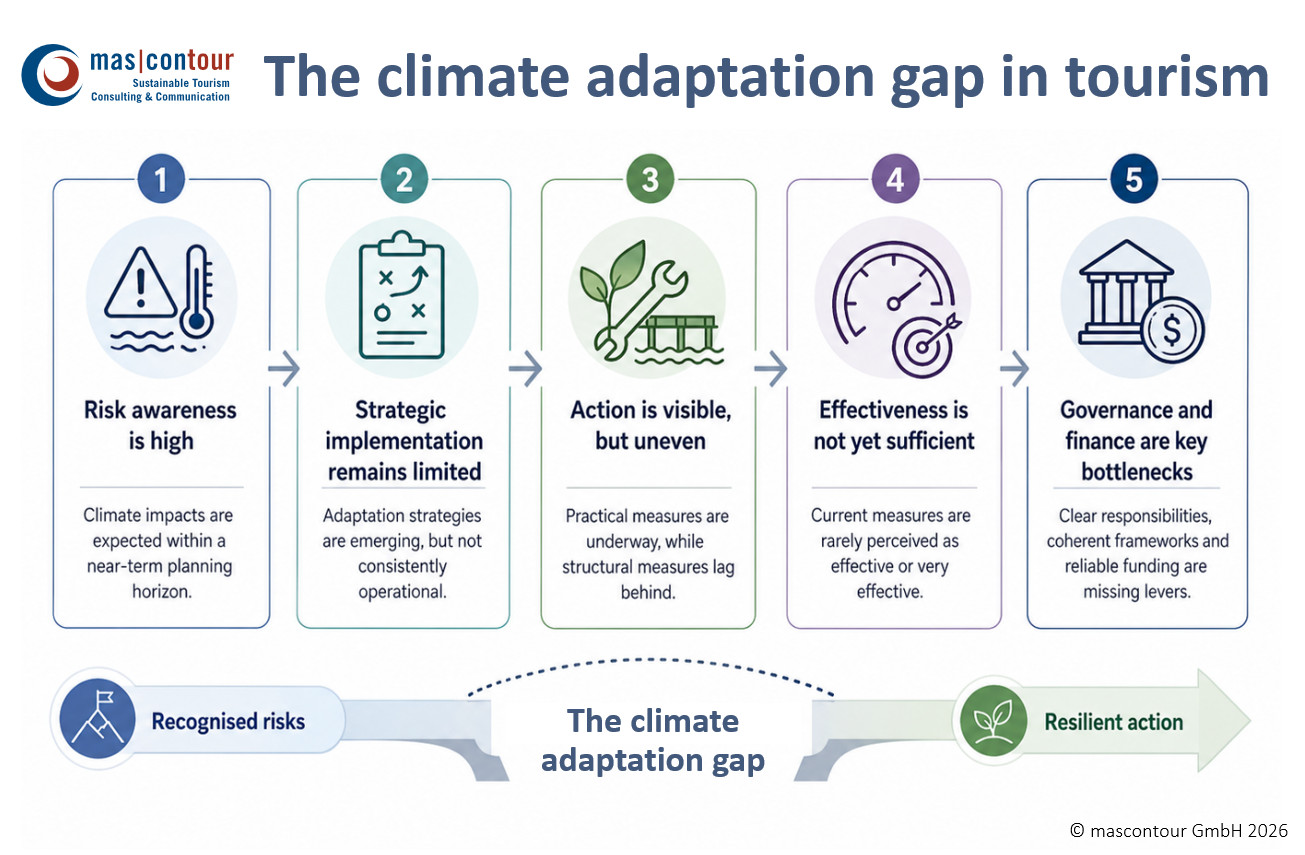
Climate Adaptation in Tourism: New Global White Paper Reveals the Tourism Sector’s Adaptation Gap
- Categories
- Coastal, maritime and inland water tourism Cultural tourism Ecotourism +64 more

"Awareness of changes in tourism demand and twin transition" Summary
- Categories
- Coastal, maritime and inland water tourism Cultural tourism Ecotourism +64 more