

Policy
05 November 2026
EU Sustainable Tourism Strategy sets out 10 action areas for the sector
Policy
05 November 2026
Login / create an account to be able to react
-
52
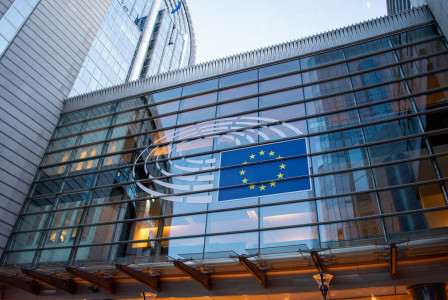
On 4 November 2026, the European Commission adopted the EU Sustainable Tourism Strategy (COM(2026) 777), a common framework for making tourism more competitive, sustainable and resilient. It sets six strategic goals and 10 action areas under three pillars, from simplification and data to destination management and crisis preparedness.
Editorial team
European Commission - DG MOVE
Topics
EU-27
Consumer Organisations
Destination Management & Marketing Organisations
EU Institutions
Industry Associations and Chambers of Commerce
Local Authorities
National authorities
Regional Authorities
SMEs (a company with less than 250 employees)
Trade Unions
-
Specific types of tourism
-
-
Adventure tourism
-
Coastal, maritime and inland water tourism
-
Cultural tourism
-
Ecotourism
-
Education tourism
-
Festival tourism
-
Gastronomy tourism
-
Health and medical tourism
-
MICE tourism
-
Mountain tourism
-
Religious tourism
-
Rural tourism
-
Sports tourism
-
Urban/city tourism
-
Wellness tourism
-
-
Transition Pathway Strategic Areas
-
-
Accessible tourism services
-
Funding and support measures
-
Governance of tourism destinations
-
Improving statistics and indicators
-
Multimodal travelling
-
Skills needs for twin transition
-
Tools for data on tourism
-
Tourism strategies
-
-
Business activities
-
-
Activities of associations and other organisations supporting tourism
-
Air passenger transport
-
Hotel and similar accommodation
-
Other holiday reservation services
-
Rail Passenger transport
-
Tour operator activities
-
Travel agency activities
-
Share
The Strategy takes forward the 2022 Transition Pathway for Tourism and the Council’s European Agenda for Tourism 2030, and responds to calls from the Parliament, the Council and stakeholders for a stronger EU-level response. It starts from the sector’s weight: close to 600 million international tourists arrived in the EU in 2025, tourism directly accounts for 4.1% of EU gross value added (10.1% including indirect effects), and it employs more than 20 million people in around 5 million companies, 99% of them SMEs. Its goals are to strengthen competitiveness, promote Destination Europe, spread the benefits of tourism across regions and seasons, move from volume to value for local communities, build resilience and accessibility, and drive the clean and digital transitions, while fully respecting national competences under Article 195 TFEU.
Key updates: on competitiveness, the Commission will present a proposal to modernise VAT rules for travel and tourism by the end of 2026, launch an EU Simplification Initiative for tourism and focused support for SMEs’ clean and digital transitions in 2027, and set up an EU Tourism Observatory in the first half of 2027. It will also propose to modernise the regulation on European tourism statistics in the second half of 2027 and support the full deployment of the Common European Tourism Data Space by 2029. On skills and connectivity, it plans an EU Tourism Academy in the second half of 2027 and a study on working conditions in 2028, a revision of the Air Services Regulation and legislation on cross-border use of rental cars in the second half of 2027, and work on EU-wide interoperability of local transport ticketing in the first half of 2028.
On sustainability and resilience, the Commission will develop a toolkit for SMEs on the clean transition and present renewed EU Ecolabel criteria for tourist accommodation in 2028. In the second half of 2027 it will launch a common EU Model for Tourism Management and propose a draft Council Recommendation on Balanced Tourism Management together with an EU Toolbox, and it will set up an EU Tourism Crisis Coordination Network. For travellers, it will propose a targeted revision of passenger rights legislation to improve accessibility and set up an information point on tourists’ rights and accessible tourism on the EU Tourism Platform in 2027 and 2028. On international cooperation and governance, it foresees a cooperation framework with UN Tourism, an enhanced Destination Europe Framework in the first half of 2028, an EU Tourism Alliance to steer implementation, a new European Capitals of Tourism Award and the first Tourism Europe Days, all in the second half of 2027.
The Strategy also notes that tourism is expected to have benefited from around €18 billion of EU support under the 2021 to 2027 budget, mostly through the Recovery and Resilience Facility and the European Regional Development Fund, and invites Member States to allocate sufficient national investment. For destinations, businesses and authorities, it sets the calendar of EU initiatives that will shape the sector over the coming years.
#EUTourismStrategy #TourismStrategies #SustainableTourism #DestinationManagement #ResilienceInTourism
Documents
Comments (0)
Connected Partnership Opportunities
See also

Share Your Feedback on the Transition Pathways Platform - Survey Open Until 8 May
- Categories
- Coastal, maritime and inland water tourism Cultural tourism Ecotourism +64 more
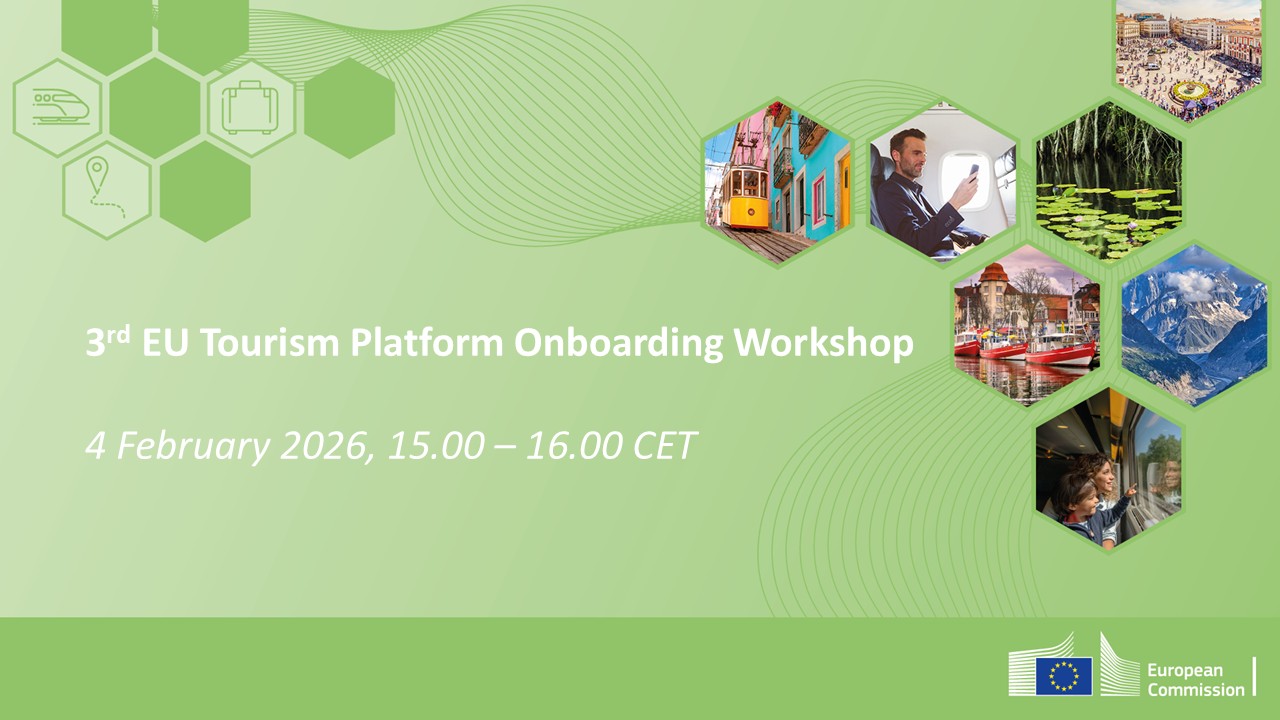
Last chance to register for the upcoming EU Tourism Platform Onboarding Workshop
- Categories
- Coastal, maritime and inland water tourism Cultural tourism Ecotourism +64 more
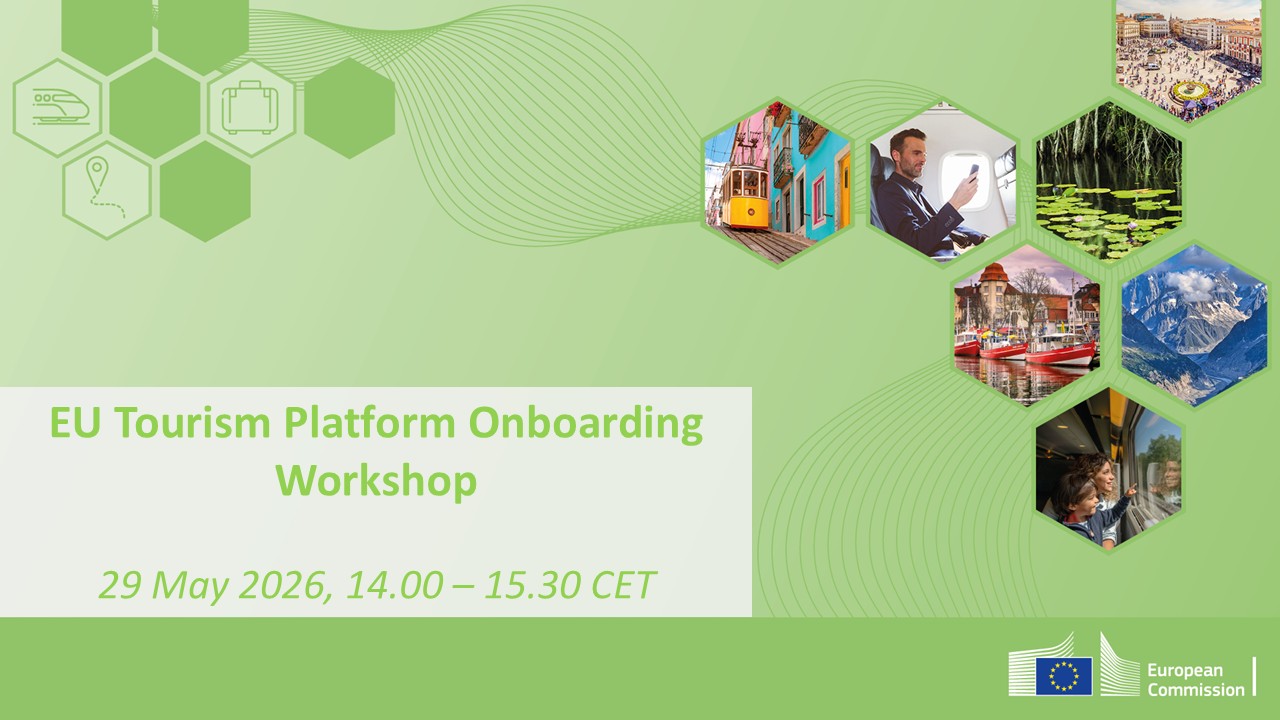
Last chance to register for the EU Tourism Platform Onboarding Workshop on 29 May 2026
- Categories
- Coastal, maritime and inland water tourism Cultural tourism Ecotourism +64 more