

Publications
08 October 2026
Household study finds avoidable food waste can be reduced by a quarter
Publications
08 October 2026
Login / create an account to be able to react
-
<a href="/user/login?destination=/agri-food/publications/household-study-finds-avoidable-food-waste-can-be-reduced-quarter%23comment-form">Log in</a> or <a href="/user/register?destination=/agri-food/publications/household-study-finds-avoidable-food-waste-can-be-reduced-quarter%23comment-form">register</a> to post comments
-
11
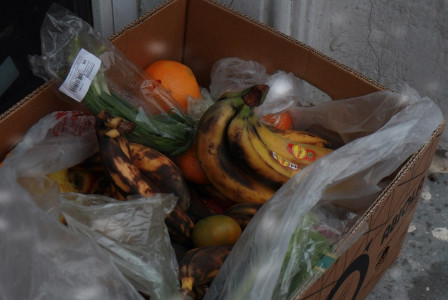
In the research project DiFo 2.0, 222 German households recorded their food waste in a digital kitchen diary before and after taking part in a campaign action, documenting a 27.1% drop in avoidable food waste per person per day. The results are relevant to the EU target of cutting food waste per capita by 30% by 2030 across retail, food services and households, and they show how difficult it is to attribute behaviour change to short interventions alone.
Editorial team
Technische Universität Berlin
Topics
Germany
Academic / Research and VET Institutions
National authorities
NGOs / Non-profits
-
Agri-food strategic objectives
-
-
Food loss and waste
-
Share
Total documented waste fell by 16.1%, from 83.9 to 70.5 grams per person per day, and avoidable waste fell from 45.5 to 33.2 grams, while unavoidable waste such as bones and inedible peel barely changed. Waste discarded because of spoilage or mould fell most clearly, which points to storage, stock management and timely use of food at home as practical priorities.
A randomised study with 420 participants found that one-off psychological prompts, such as reflecting on past waste or setting if-then plans, produced no additional reduction compared with a control group, and the researchers note that the daily logging itself may have influenced behaviour. They recommend focusing communication on reducing avoidable waste rather than on a zero-waste goal, and call for better measurement methods, as self-recorded quantities were clearly below official estimates for German households. The project was carried out by TU Berlin and Slow Food Deutschland and funded by the German federal agriculture ministry.
#FoodLossAndWaste #ResourceEfficientFood
Comments (0)
Connected Partnership Opportunities
See also
EU Common Fisheries Policy: A Decade of Mixed Results on Sustainability and Economic Performance
- Categories
- Food loss and waste A climate – neutral food chain Circular and resource-efficient food chain +3 more
Study on sustainability in the context of food contact materials (FCM) in view of a possible revision of the FCM legislation
- Categories
- A climate – neutral food chain Circular and resource-efficient food chain Sustainable food supply chain +1 more

Cedefop report: Skills empower workers in the AI revolution
- Categories
- Food loss and waste A climate – neutral food chain Circular and resource-efficient food chain +3 more